

By Alan Clement
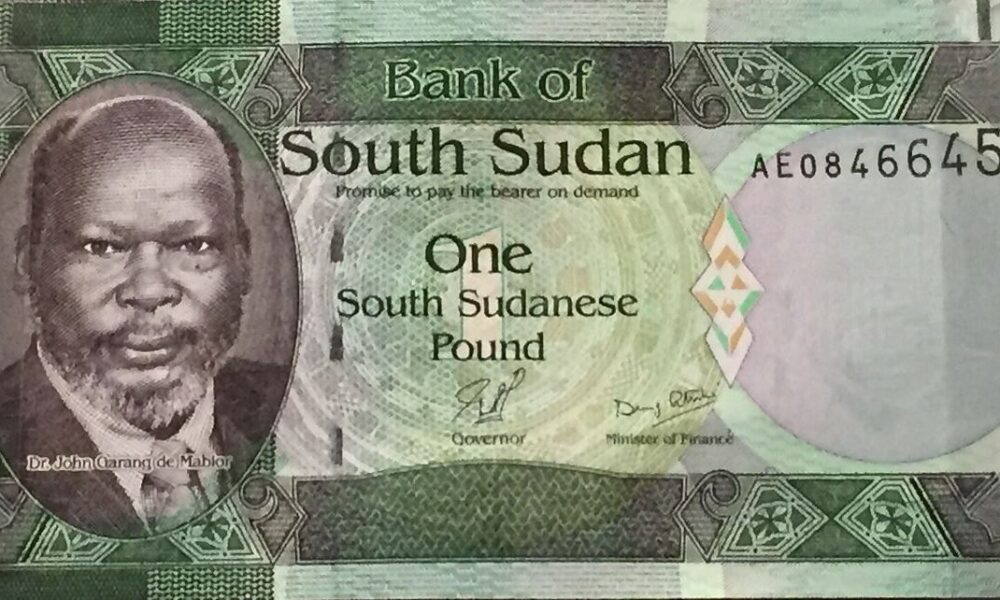
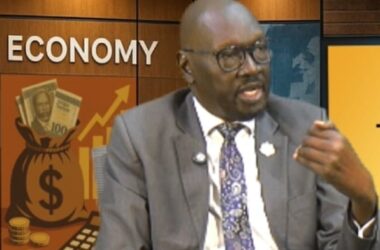
Economist Abraham Maliet has called for an investigation into a viral video showing large quantities of South Sudanese pound banknotes, urging holders of the cash to return it to the Bank of South Sudan.
A video circulating widely on social media platforms in recent days appeared to show a storage facility stacked with bundles of small-denomination South Sudanese pounds, sparking public debate about the origin of the cash and the country’s struggling currency.
Speaking in response to the footage, Dr. Abraham said he believes the video is genuine and not artificially generated, noting that the sheer volume of low-value banknotes seen in the clip reflects a broader economic reality in South Sudan. “I saw that video with a lot of small notes. To me, it’s not AI, it’s not fake. It is true,” Dr. Abraham said.
He explained that the presence of large quantities of small-denomination banknotes such as SSP 5 and SSP 10 is consistent with the current state of the local currency, where declining purchasing power has forced many transactions to rely on large bundles of cash.
“Because there are so many small notes that are maybe stored somewhere, they become a burden on people who are carrying them, even those who are displaying them,” he said.
The economist suggested that those who shared the video online may have intended it as a form of humor, highlighting the unusual situation where citizens must carry stacks of banknotes to purchase everyday goods.
“I don’t think they are displaying them as goods. They are displaying them as just a comedy or a funny thing,” he said asking, “What will you do with five pounds, ten pounds? What will you buy?”
According to Dr. Abraham, the prevalence of low-value banknotes has created practical challenges for citizens and businesses alike, particularly when it comes to transportation and storage of cash.
“For you to buy water, you need many bundles of that. So this is also causing a logistical nightmare,” he said. “How do you transport it? How do you carry it?” he asked.
The circulation of small-denomination currency has become increasingly common in South Sudan as inflation and currency depreciation have eroded the value of the local currency. Over the years, the South Sudanese pound has weakened significantly against foreign currencies, contributing to rising prices of goods and services.
The situation has forced traders and consumers to rely heavily on bundles of low-value notes for everyday transactions, a development economists say reflects the broader economic pressures facing the country.
Dr. Abraham also raised concerns about the legality and economic impact of individuals or institutions keeping large quantities of cash outside the formal banking system. “But the evidence is there that there are people keeping this money in their houses,” he said.
He clarified that the facility shown in the video is unlikely to belong to the government, suggesting instead that it could be linked to a private financial institution or another private entity. “That store is not a government store. It must be a private bank or a private place where they are keeping the money,” he said.
Nevertheless, the economist emphasized that keeping large amounts of cash privately is problematic because it removes money from the financial system and limits its circulation in the wider economy.
In response, he urged individuals or institutions holding such quantities of cash to return the money to the Bank of South Sudan, the country’s central monetary authority responsible for regulating currency circulation and financial stability.
“These people who are keeping this money should take it to the rightful owner, which is the Bank of South Sudan,” he said.
According to him, returning the banknotes to the central bank would allow authorities to exchange them for higher-value denominations or channel them back into the financial system through formal banking deposits.
“If they can be exchanged to higher notes, then these people can take that money back to the market,” Maliet explained adding, “If not, then they keep it to deposit in the bank and in their bank accounts.”
He added that such measures would help restore the money into circulation and ease some of the logistical challenges associated with handling large bundles of low-value currency. “But keeping them at home itself is illegal. It’s wrong,” he said.
The economist further called on authorities to establish the source of the footage and determine where the cash was stored, saying such an inquiry would help clarify the circumstances surrounding the video. “So I asked the guys to investigate where this video is coming from,” he said.
The video has sparked widespread reactions on social media, with many users expressing concern over the state of the national currency and the challenges posed by inflation and declining purchasing power.
The economist said addressing such issues will require broader monetary and fiscal reforms aimed at stabilizing the currency and strengthening confidence in the financial system.
For now, Dr. Abraham Maliet maintains that the immediate step should be ensuring that any large stockpiles of banknotes are returned to the formal banking system where they can be properly managed by the country’s monetary authorities.