

By Lodu William Odiya
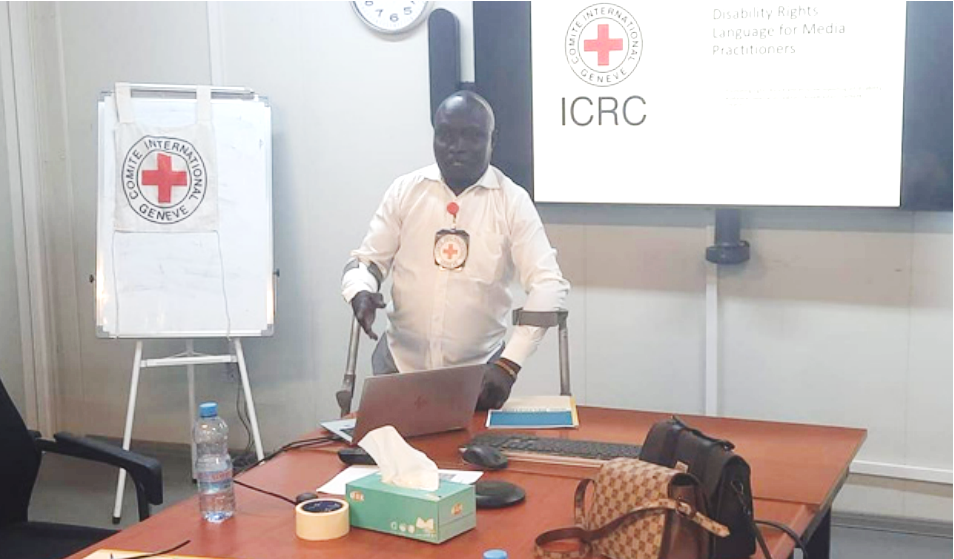
The International Committee of the Red Cross (ICRC) has called on journalists and media practitioners in Juba to adopt more inclusive and dignified language when reporting on persons with disabilities.
Speaking during a media workshop, Daniel Bunnskog, ICRC Head of Delegation in South Sudan underscored that reporting should move beyond portraying disability as a source of pity or limitation. He emphasized on the powerful role words play in shaping public perception.
“You can play a very active role in this through the words that you choose, through the expressions, and how you portray the different stories that you’re portraying. Language, it shapes how people think” he said.
He stated that media practitioners should instead highlight strength, resilience, and the capacity of individuals to thrive despite challenges.
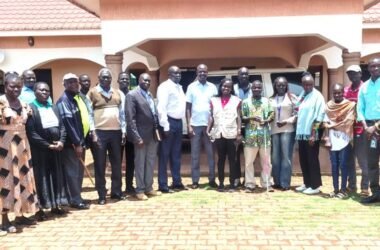
The session brought together media professionals to reflect on how everyday language choices can either reinforce harmful stereotypes or promote respect and inclusion.
He noted that many expressions used in daily communication are often unconscious habits.
“We often don’t think about it ourselves, with our expressions and our day-to-day lives, we don’t even think that we’re using them, but we are. They’re automatisms” Bunnskog said.
The workshop aimed to encourage open and honest dialogue among journalists on how to rethink such language patterns.
The Journalists were urged to critically assess the words and phrases they use in their reporting, particularly when covering stories involving vulnerable groups.
According to Bunnskog, even subtle changes in wording can influence how audiences perceive persons with disabilities.
He highlighted that disability should not be framed solely through the lens of hardship, adding that reporters should present balanced narratives that also capture achievements, leadership, and contributions made by persons with disabilities in their communities.
Drawing from experiences in South Sudan, he pointed to numerous examples of resilience among individuals living with disabilities.
Many had overcome difficult circumstances, including injuries from accidents or conflict-related incidents, to rebuild their lives and contribute meaningfully to society.
According to Bunnskog, each story, they stressed, is unique and deserves to be told with dignity and accuracy.
“There is no single story of disability. Every individual has a different journey, and it is important that the media reflects that diversity rather than generalizing experiences” he said.
Participants were reminded that adopting more inclusive communication is an ongoing process that requires awareness, commitment, and continuous learning.
By choosing words carefully and portraying stories responsibly, journalists were told they have the power to challenge stigma and promote a more inclusive society.
The head of delegation also encouraged media practitioners to focus not only on the challenges faced by persons with disabilities but also on their strengths and achievements.
The initiative is part of broader efforts by the ICRC to promote respect for human dignity and support vulnerable populations.
Engaging the media, the organization noted, is critical in shaping narratives that influence public attitudes and policy discussions.
Meanwhile, Langoya James Ochan advises the media practitioners to avoid some terminologies that can change people’s thinking.
“People with disabilities also contribute to the country’s GDP. So, let us focus on inclusion because people with disabilities need to be supported” he said.
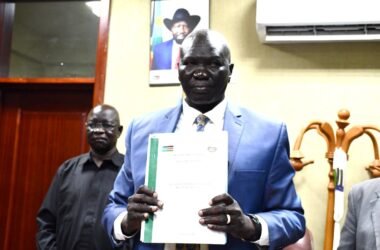
On his part, Julious Moilinga, a member of the Transitional National Legislative Assembly highlighted that “there is nothing strange about disability”.
He noted that modern technology, policy frameworks, and social support systems had made it possible for persons with disabilities to lead productive and impactful lives.
“Especially in our country, South Sudan. We need to harness some of the laws which have been, you know, passed. Whether by ICRC, by this Convention of People with Disability was also signed on the 25th” he said.
“On the 24th of March or February 2023. And it was passed on the 25th. Now we are members of the UN Convention of People with Disability” he added.
Moilinga cited global examples such as Stevie Wonder and Ray Charles as individuals who rose above physical limitations to achieve greatness in music, while South African Paralympian Oscar Pistorius was referenced for his historic achievements on the track, reinforcing the message that “disability is not inability.”