



By Chol D. Johnson
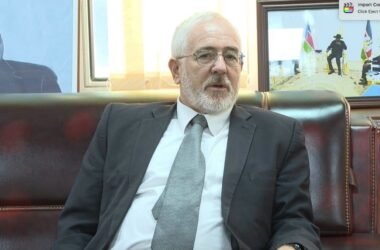
The South Sudan Youth Union Chairperson, Taban Paride Lokasmoi, has urged the pubic to avoid labeling the South Sudan youth as lazy people.
Speaking on Wednesday in Juba, Paride expressed concern over the lack of infrastructure and recreational space for the youth.
“I urge the public to avoid labelling youth as lazy, noting that many are struggling due to systemic issues beyond their control,” said Taban.
Taban particularly noted some circumstances, like the disappearance of football grounds and community areas due to urban expansion.
He warned that limited access to such spaces contributes to rising social problems among young people.
“There are no proper places for youth to develop their talents. These push some into negative activities,” Taban said.
His remarks came during the Certificate Awarding Ceremony for Government Officials under Youth Enterprise Development and Capacity Building (YEDCB) on Wednesday in Juba.
The YEDCB project training was supported by the Ministry of Youth and Sports in partnership with UNDP, the African Development Bank, and the African Development Fund.
The YEDCB awarded certificates to over 230 government officials from different institutions trained on basic computer skills, project management, and leadership management in two components.
Taban commended the young people of South Sudan for demonstrating resilience, hard work, and determination.
He said that despite ongoing economic and social challenges, stressing that youth are not only the future but also active leaders of today.
Taban further highlighted several success stories of young South Sudanese entrepreneurs who have built businesses from scratch.
He cited an example of a 33-year-old industrial owner in Luri, describing him as a symbol of youth potential and self-reliance.
“You might think he comes from a wealthy family, but he started from nothing. This is the kind of testimony we want leaders to see,” Taban said.
However, Taban raised concerns over challenges facing young entrepreneurs, including excessive taxation and delayed payments for contracts.
He said many youth-led businesses collapse due to financial pressures, leading to job losses in the country.
“We have youth employing over 40 people, but when payments are delayed, they go bankrupt; this leaves many without jobs,” Taban explained.
Taban further called on the government to establish designated centres and markets where youth can showcase and sell their products, similar to practices in other countries.
He further raised alarm over the growing frustration among young people, linking it to reports of increasing deaths among youth in Juba.
Taban also urged the government of South Sudan to take responsibility and address the underlying causes of the Luri victims.
He called on young people to remain focused on development and avoid being influenced by divisive or non-productive agendas.
“We must think about our future and the development of this country,” Taban said.
Early last month, the senior presidential adviser, Kuol Manyang Juuk, stated that the youth in South Sudan are lazy to produce food for themselves.