



By Sabri Dibaco
Residents of the Kabu South residential area in Juba County have appealed to the government to urgently improve road infrastructure, establish a health facility, build schools, and increase access to clean water, saying the lack of basic services continues to cost lives.
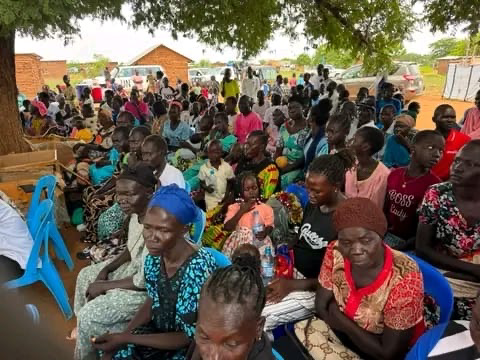
The appeal was made during a Community Care Programme Public Declaration organised by Women for Justice and Equality (WOJE) in partnership with UNICEF, UNMISS, and other stakeholders.
The event brought together government officials, traditional leaders, women, youth, and civil society organisations to reaffirm their commitment to ending sexual and gender-based violence (SGBV) while promoting safer communities.
Speaking during the event, Kabu South Chief Emmanuel Joseph Machar described poor road infrastructure as the community’s biggest challenge, saying it has left more than 7,300 residents without adequate access to healthcare, education, clean water, and security services.
“The biggest challenge facing our community is the lack of roads. Without roads, we cannot access healthcare, education, clean water, or other government services,” Machar said.
He said Kabu South has no health facility, forcing patients to travel several kilometres to seek medical treatment.
Because vehicles and ambulances cannot reach many parts of the community, patients are often transported using wheelbarrows or carried by relatives to the nearest accessible road before they can continue to hospital.
“When someone falls sick, especially at night, we have no option but to wait until morning because no transport can reach us. We leave their lives in God’s hands,” he said.
Machar revealed that five pregnant women died last year after developing labour complications while being transported to the hospital, blaming poor road conditions and the absence of emergency health services for the delays.
The chief also said only two boreholes serve the entire population, leaving many households struggling to access safe drinking water. Water trucks rarely reach the area due to impassable roads, forcing residents to pay high prices whenever water is available.
He further noted that Kabu South has no school, compelling many children to walk long distances to neighbouring communities while others remain out of school altogether.
Machar also raised concerns over land disputes and increasing cases of gender-based violence, calling on the government to intervene urgently.
Juba County Commissioner Eng. Samuel Emiliano Wani Pitia said ending violence against women and girls requires collective action from government institutions, traditional leaders, communities, and development partners.
He urged communities to eliminate harmful practices such as child, early, and forced marriages while promoting peace, dignity, and equal opportunities for women and girls.
WOJE Executive Director Zabib Musa Loro said the public declaration demonstrates communities’ growing commitment to protecting women, girls, and other vulnerable groups.
She called for greater investment in education, healthcare, and community protection mechanisms while thanking UNICEF and partners for supporting local initiatives.
The UNMISS representative, Pelden Dorji, encouraged young people to reject criminal activities and cooperate with community leaders and law enforcement agencies to improve security.
UNICEF Greater Equatoria Field Officer Solla Asea reaffirmed the agency’s commitment to supporting education, social services, and awareness programs aimed at preventing gender-based violence and improving access to essential services.
The Community Care Programme seeks to strengthen community ownership in preventing violence, promote positive social norms, and improve access to protection and support services for survivors of gender-based violence.
Kabu South Residential Area, established in 2010 on the outskirts of Juba, is home to more than 7,300 residents but lacks a health facility, school, and adequate water supply.
Community leaders say poor road infrastructure has severely limited access to emergency healthcare, education, security, and other public services.
Residents hope that improving roads and investing in essential services will reduce preventable deaths, improve livelihoods, and strengthen protection for women, children, and other vulnerable members of the community.