


By Sabri Dibaco
Journalists and media stakeholders in South Sudan have called for media freedom and stronger protection of journalists ahead of the country’s anticipated December 2026 general elections, warning that restrictions on press freedom could undermine the credibility of the electoral process.
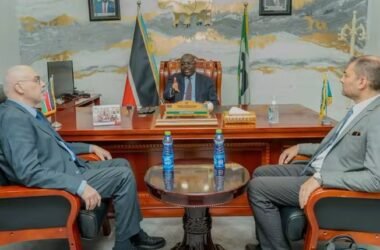
The call was made during a roundtable discussion in Juba that brought together government officials, members of the media, civil society organisations, development partners, and human rights defenders to deliberate on the protection of civic and political space before South Sudan’s first elections since gaining independence in 2011.
Speaking during the forum, Union of Journalists of South Sudan (UJOSS) President Oyet Patrick Charles said journalists continue to face obstacles that prevent them from reporting independently and professionally.
Charles expressed concern over censorship, intimidation, and what he described as the broad and unclear interpretation of issues related to national security, saying these continue to limit journalists’ ability to inform the public.
“A free and independent media is essential for credible elections. Journalists should be able to report without fear of intimidation, censorship, or arbitrary restrictions. The ambiguity surrounding the definition of national security should not be used to limit press freedom,” the statement partly reads
He stressed that protecting journalists is vital to ensuring citizens have access to accurate and balanced information during the election period.
The European Union (EU) also used the forum to call on South Sudanese authorities to guarantee freedom of expression and protect civic space ahead of the polls.
EU representatives emphasised that journalists, civil society organisations, human rights defenders, and ordinary citizens should be able to express their views freely without fear of harassment or reprisals.
According to the EU, an open civic and political environment is fundamental to peaceful, inclusive, and credible elections.
“Journalists and citizens must be able to exercise their rights freely. A vibrant media and active civic space are essential pillars of democratic elections and public participation,” the statement reads
Government representatives acknowledged that challenges affecting civic and political freedoms remain but maintained that the country should continue preparations for the elections while addressing existing shortcomings through dialogue and institutional reforms.
Officials argued that waiting for perfect conditions could delay the country’s democratic transition indefinitely.
“There are challenges that need to be addressed, but these should not stop South Sudan from moving forward with elections. The process can continue while reforms and dialogue take place to strengthen democratic institutions,” the statement reads in parts
Participants at the roundtable discussed the importance of creating an environment where journalists can work safely, political actors can campaign freely, and citizens can access information necessary to make informed electoral choices.
Civil society representatives also called for the implementation of laws protecting freedom of expression, increased respect for media independence, and an end to harassment of journalists covering political developments.
Several participants noted that public trust in the electoral process will depend not only on the conduct of polling day but also on whether citizens have equal access to information and diverse political viewpoints throughout the campaign period.
The discussions concluded with renewed calls for cooperation among government institutions, media organisations, political parties, and international partners to safeguard civic freedoms and ensure a peaceful electoral environment.
South Sudan is preparing to hold its first general elections since gaining independence in July 2011. The elections, expected in December 2026, are regarded as a significant milestone in implementing the Revitalised Agreement on the Resolution of the Conflict in South Sudan (R-ARCSS), signed in 2018.
In recent years, local and international organisations have repeatedly raised concerns over restrictions on civic and political space, including reports of intimidation of journalists, arbitrary arrests, media censorship, and limitations on freedom of expression.
Media advocacy groups have consistently urged authorities to fully implement constitutional guarantees and media laws protecting press freedom.