


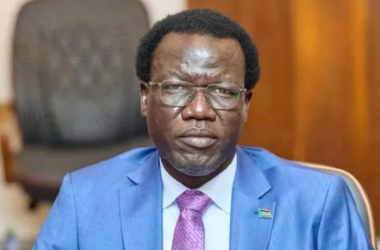

Writer: Hon. Mogga Charles Guya
South Sudan continues to experience a severe liquidity crisis characterised by shortages of physical cash, high transaction costs, limited access to financial services, and reduced confidence in the banking sector. These challenges have negatively affected businesses, public servants, traders, and ordinary citizens, slowing economic activity and undermining national development.
The adoption of electronic banking (E-banking) and electronic money (E-money) presents a practical and immediate solution to ease liquidity shortages while laying the foundation for a modern, inclusive, and resilient financial system. By initially strengthening digital financial services in urban areas and gradually extending mobile money services to rural communities, South Sudan can stimulate economic growth, improve financial inclusion, and enhance economic stability.
The Economic Importance of E-Banking and E-Money
Electronic transactions reduce dependence on banknotes by allowing payments, transfers, and purchases to be completed digitally. This minimises pressure on the banking system during periods of cash shortages and enables economic activities to continue without interruption.
Many South Sudanese, particularly those in remote areas, lack access to traditional banking services. Mobile money enables citizens to send, receive, save, and access money using mobile phones, bringing financial services closer to underserved communities.
Digital payments enable businesses to pay suppliers, employees, and government taxes efficiently. Faster transactions improve cash flow, reduce operational costs, and encourage investment and commercial expansion.
Electronic payment systems improve transparency and accountability in tax collection, customs duties, utility payments, and government service fees. Digital records reduce opportunities for corruption and increase domestic revenue mobilisation.
As more citizens use electronic banking, commercial banks can better manage available liquidity, reduce operational costs associated with cash handling, and expand access to financial products such as savings accounts and digital credit.
Electronic transactions create verifiable records that improve financial accountability for both public institutions and private businesses. This contributes to stronger governance and helps combat financial crimes.
The implementation should begin in major urban centres such as Juba, Wau, Malakal, Bor, Yei, and other municipalities where banking infrastructure and telecommunications networks are more developed.
Following successful urban implementation, mobile money services should be expanded into rural communities through partnerships with telecommunications companies, commercial banks, microfinance institutions, and local agents. This expansion would allow farmers, traders, teachers, healthcare workers, and rural households to participate in the formal financial system without having to travel long distances to bank branches.
The short-term economic benefits would include reduced liquidity shortages by shifting transactions from cash to digital payments, increased business confidence and market efficiency, faster salary and pension payments, improved trade between urban and rural markets, etc.
Policy Recommendations
To achieve these objectives, the government of South Sudan should:
- Develop a comprehensive national digital payments policy.
- Strengthen telecommunications infrastructure nationwide.
- Encourage partnerships between banks and mobile network operators.
- Introduce consumer protection and cybersecurity regulations.
- Promote financial literacy and digital skills across all communities.
- Digitise government payments, including salaries, taxes, pensions, and public services.
- Encourage merchants to adopt electronic payment systems through incentives.
- Strengthen oversight by the Bank of South Sudan to ensure financial
Conclusion
The adoption of e-banking and e-money is not merely a technological advancement but a strategic economic reform capable of addressing South Sudan’s immediate liquidity challenges while creating the foundation for sustainable economic transformation.
Through phased implementation beginning in urban centres and expanding to rural communities via mobile money services, South Sudan can strengthen financial inclusion, promote transparency, stimulate commerce, and accelerate national economic recovery.
A modern digital financial ecosystem will help reduce reliance on physical cash, improve confidence in the banking sector, and position South Sudan for long-term economic growth, stability, and prosperity.
About the Author:
Mogga Charles Guya is the secretary for foreign affairs of the South Sudan National Movement for Change (SSNMC).
Disclaimer: Any opinion published on our platforms does not represent the view of the company or its editorial policy.