

By Yang Ater
Farmers across several counties in Lakes State have expressed concern over poor rainfall distribution and a prolonged dry spell, warning that the situation is threatening crop production and increasing fears of food insecurity.
Ranben John, a farmer from Mathiang-Awetdit Village in Rumbek East County, said the lack of consistent rainfall has left many farmers unable to continue cultivation.
“We started cultivating in May, but since then the rains have been very unreliable,” he said. “Some areas are receiving rain while others are not.”
John noted that farmers in Gok Akon Village have continued working in their fields because they have received rainfall, while residents of Mathiang-Awetdit remain idle due to the dry conditions.
“It rained only twice over the past two days in Thon-Aduel, the county headquarters, but nearby villages have received nothing,” he said.
He added that the prolonged dry spell has severely affected crops.
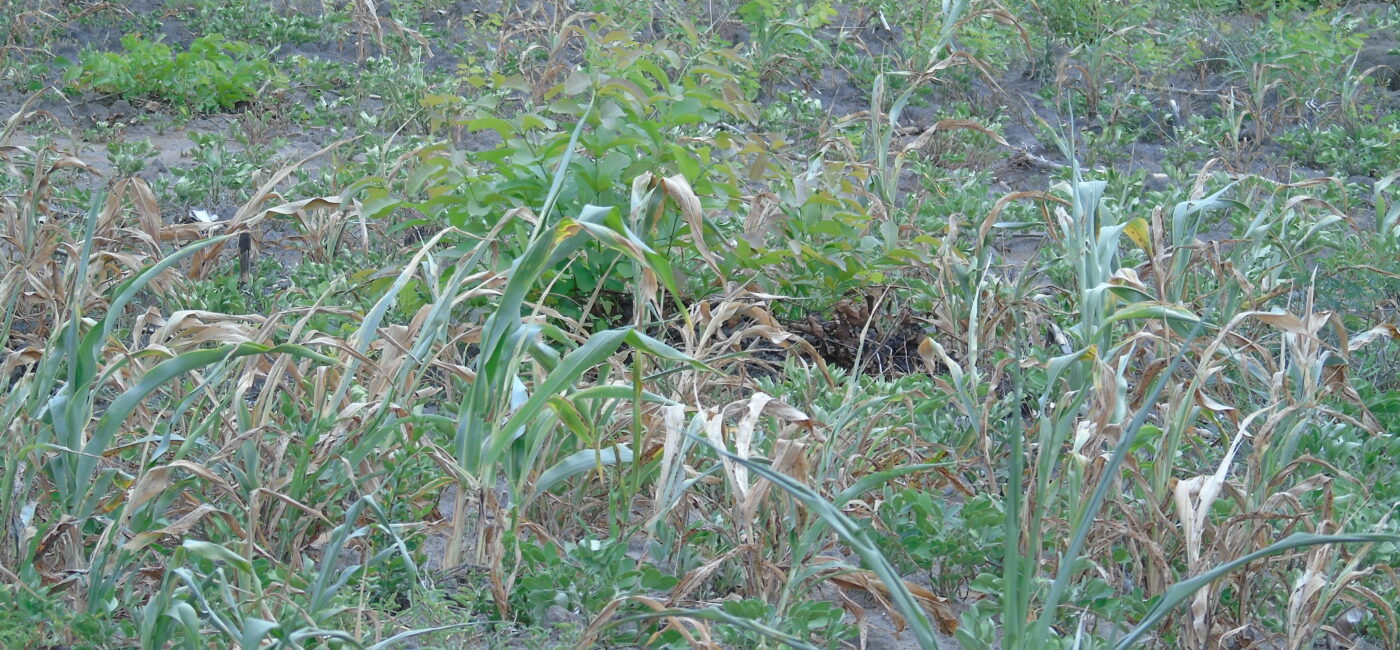
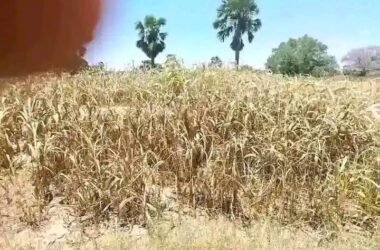
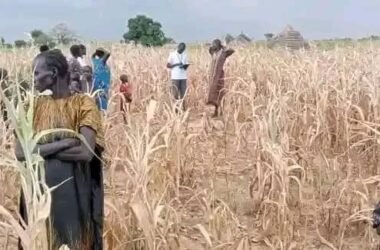
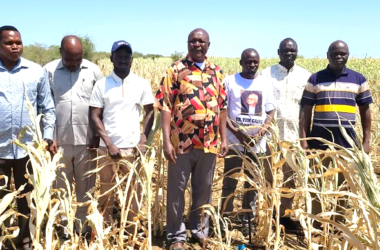
“If you visit our gardens, you will find crops suffering from severe water stress. They are drying up because of the intense heat,” he explained.
Adhieu Ater Majok, chairperson of the Akut-Door Women’s Farming Group in Rup and Kuei Payams, said women farmers in Malok Village had cultivated 25 feddans of groundnuts during the early rainy season.
“We started planting from March to April when rainfall was frequent,” she said. “But since May up to today, July 23, there has been almost no rain.”
According to Majok, crops planted earlier in the season—including groundnuts, sorghum, maize, pumpkin, okra, and dura—have been destroyed by prolonged heat.
“Everything we planted has been burned by the extreme heat. It is a huge loss for us,” she lamented.
She said there is little hope of recovering the damaged crops.
“Now goats are roaming freely through the gardens because there is nothing left. We are still keeping the few seeds we have, hoping the rains will return, but every morning we wake up without seeing any sign of rain,” she said.
Majok recalled that by the same period last year, families were already harvesting fresh groundnuts, maize, and other short-season crops.
“This year, everyone is surprised by the absence of rain,” she added.
Meanwhile, the director of crop production and irrigation at the Lakes State Ministry of Agriculture, Mabor Kau Lam, attributed the poor harvest outlook to climate change.
“Climate change is a natural hazard that has affected rainfall patterns,” Lam said. “What we can do is encourage farmers to adopt climate-smart agricultural practices.”
He said the ministry is advising farmers to plant short-maturing crop varieties instead of long-season crops because rainfall has become unpredictable.
“There are significant variations in rainfall across the state. Some counties are harvesting groundnuts, while others have not even managed to plant,” he explained.
Lam said many crops remain under severe moisture stress while farmers wait for rainfall.
“Based on reports from our agricultural extension officers, many farmers have not achieved their expected production because of climate change,” he said.
He also stressed the importance of environmental conservation, warning that deforestation and excessive charcoal burning contribute to worsening climate conditions.
“We encourage tree planting and urge communities to reduce logging. Environmental conservation is one of the best ways to improve our climate in the long term,” Lam said.
He added that extension workers, together with development partners, continue to educate farmers on climate adaptation measures, including the use of short-season crop varieties and sustainable farming practices to help communities cope with changing weather patterns.