

By Lodu William Odiya
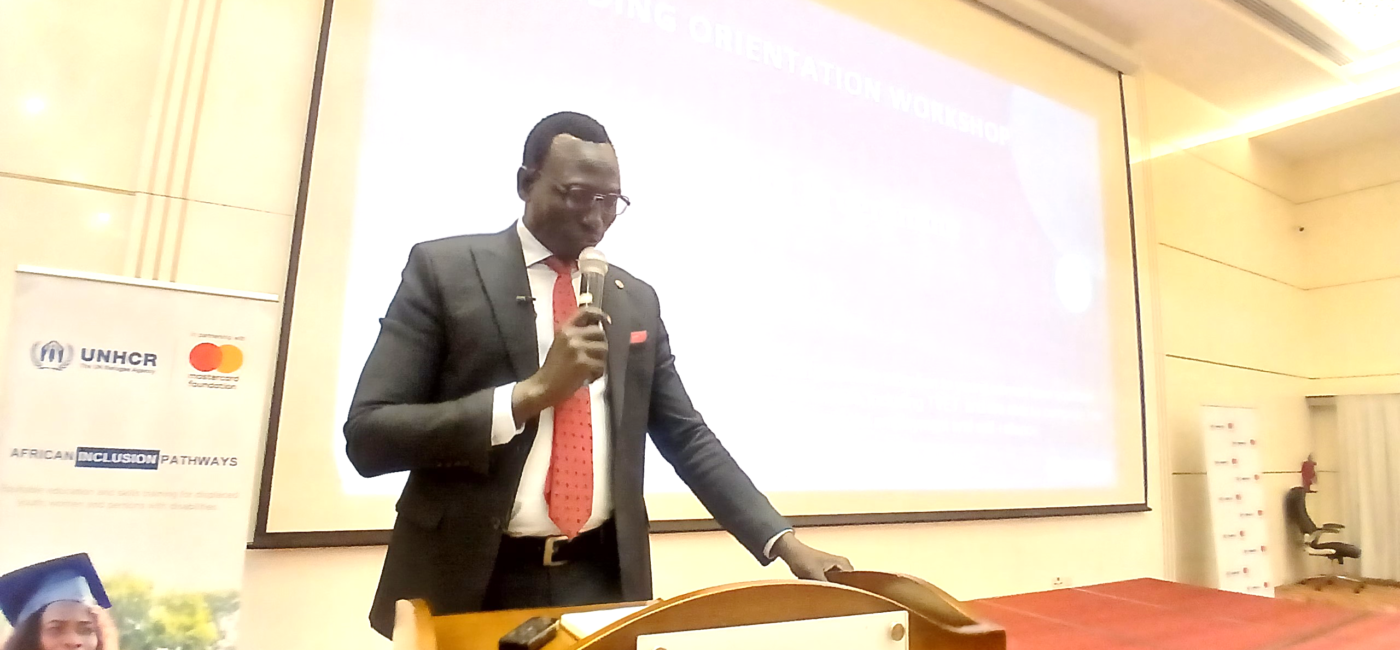
Deputy Director for Protection and Refugee Welfare at the Commission for Refugee Affairs, Nawasa Daud Kintha, has urged scholarship students to remain focused on their education and avoid distractions, warning them that they had come to Juba to “collect papers, not children.”
Speaking to students who had arrived in the capital to pursue their studies, the official said education was an opportunity that could transform their lives and enable them to make a meaningful contribution to South Sudan.
“You guys are here starting a journey of success, a journey that can take you far in life and a journey that can really make you make a difference in the country,” he said.
He reminded the students that their parents and families had made sacrifices to ensure they received an education and urged them to concentrate on obtaining their degrees.
“We are here to study, and then you get papers. Don’t come to Juba and disappoint your family back where you came from,” he added.
The official warned that some students who come to the city with the intention of pursuing education end up distracted by relationships and other activities.
“Some people came to Juba to collect papers, to go to school, but they end up collecting children,” he said. “They went back as mothers; they went back as fathers.”
He also advised the students to be cautious while moving around Juba, warning them about criminal groups popularly known as “Torontos,” who target people and snatch valuable items, particularly mobile phones.
The official encouraged students to protect their belongings and remain alert, especially when travelling on the streets of the capital.
He further called for unity and cooperation between communities, noting that South Sudan hosts refugees from neighbouring countries, including Ethiopia, while South Sudanese citizens have also sought refuge in other countries.
“We have refugees who are from Ethiopia who are here, and we have our own people who are in Ethiopia as refugees,” he said. “That means we need to work together.”
Drawing from his personal experience, the official said faith, extracurricular activities, and education had played an important role in shaping his life.
He encouraged students to seek guidance from religious leaders and participate in sports and other extracurricular activities, saying such activities could also open doors to opportunities.
The official said he had personally benefited from an athletic scholarship in the United States after pursuing his talent as a runner.
“I did not get an academic scholarship, but I got an athletic scholarship. I’m a runner and an athlete,” he said.
He urged students to identify and develop their talents alongside their academic work, noting that the Mastercard Foundation scholarship program was providing them with a valuable opportunity to study.
“Education is the key, and we need to take it seriously,” he said, while also appreciating the Government of South Sudan for its support toward education.
“You guys are here starting a journey of success, a journey that can take you far in life and a journey that can take you to really make a difference in the country. I want to encourage you guys also that you are here to collect degrees, right? We are here to study, and then you get papers. But don’t come to Juba because your parents really made an effort to put something on your head to make you make it here today, to this level,” he said.
Meanwhile, Tabasum Noor Jamal, Protection Officer at the United Nations High Commissioner for Refugees (UNHCR), honoured the newest recipients of the DAFI Scholarship program.
The event served as both a tribute to academic perseverance and a testament to the transformative power of higher education for forcibly displaced youth.
Addressing a packed room of scholars, Noor highlighted that true humanitarian protection extends beyond immediate physical safety and legal status.
While UNHCR has operated under a UN General Assembly mandate since December 1950, protecting refugees, asylum seekers, and stateless persons worldwide, she emphasised at the event that higher education represents one of the most enduring forms of long-term protection available today.