

Writer: Ajak John Ateng
South Sudan needs to prepare now for a strengthening El Niño. The World Meteorological Organisation (WMO) says the phenomenon is already firmly established and is expected to strengthen, with a near-certain chance of persisting through February 2027.
For South Sudan, this should be a clear warning to prepare early, before climate-related challenges develop into a full-blown emergency.
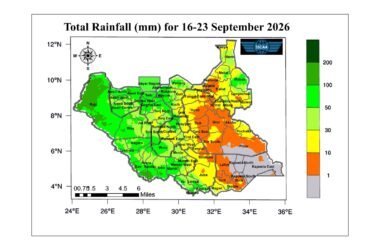
The IGAD Climate Prediction and Applications Centre (ICPAC) has warned that rainfall and temperature patterns across the Greater Horn of Africa are becoming increasingly unpredictable.
Some areas may face dry conditions and rising temperatures, while others could experience heavier rainfall and flooding. South Sudan must therefore be ready for both possibilities rather than putting all its eggs in one basket.
This warning matters because millions of South Sudanese depend directly on agriculture, livestock, and natural resources for their livelihoods.
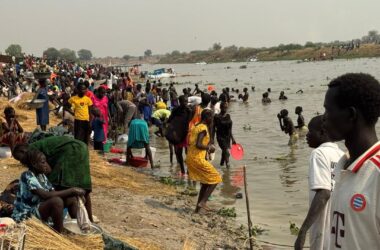
Prolonged dry conditions can reduce water availability, pasture, and agricultural production, while torrential rainfall can destroy crops, damage infrastructure, and displace communities.
When it rains, it pours, and South Sudan has already experienced the devastating consequences of extreme weather.
The government must urgently strengthen its early-warning and anticipatory-action systems so that climate information from WMO, ICPAC, and national authorities reaches farmers, pastoralists, counties, and Payams quickly and in a form they can easily understand.
Taking preventive action before a crisis is far more effective and less costly than responding after communities have already lost their homes, crops, and livestock.
FAO and WFP have urged South Sudan to scale up anticipatory action through cash assistance, climate-resilient seeds, livestock protection, water harvesting, and stronger early-warning systems.
Building on the successful early interventions in Budi and Kapoeta North, the country has an important opportunity to strengthen resilience, protect vulnerable communities, and reduce the impact of drought and flooding before disaster strikes.
El Niño cannot be prevented, but its consequences can be significantly reduced through timely planning, early preparedness, and collective action.
South Sudan has a critical window of opportunity to strengthen its resilience before the next climate crisis unfolds.
Government institutions, humanitarian organisations, development partners, and local communities must work together because the warning signs are clear. The time to act is now, not later.
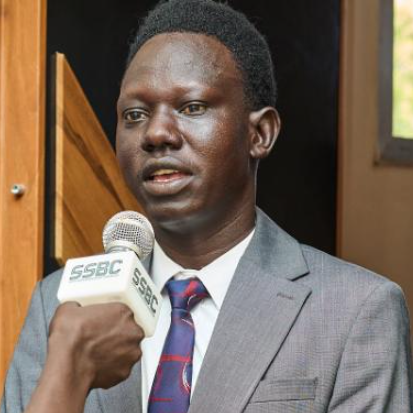
Ajak John Ateng, President of the Geological Society of South Sudan, can be reached by email at geosssinfo21@gmail.com.
Disclaimer: Any opinion published on our platforms does not represent the views or position of the company.