




By Sabri Dibaco
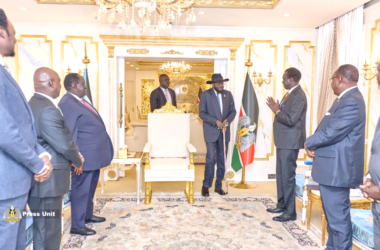
President Salva Kiir Mayardit has appointed a 10-member Board of Directors to oversee the National Bureau of Statistics (NBS), in a move aimed at strengthening the institution’s management, independence, and reliability.
The board was appointed through a presidential decree dated September 7, 2026, according to an announcement issued by the NBS on Wednesday.
Former Finance Minister Dr. Dier Tong Ngor has been appointed chairperson of the board, as well as other members.
Dr. Augustino Ting Mayai, the Director General of the National Bureau of Statistics, will serve as an executive officer member of the board.
According to the NBS announcement, the newly appointed board will provide strategic leadership, oversight, and guidance to the institution while ensuring that it operates with integrity, transparency, and professionalism.
The board is also expected to support the production and dissemination of reliable statistical information to guide government planning, policymaking, and national development programs.
The appointment comes as South Sudan continues to face challenges in collecting, managing, and making accurate and timely data available for development planning.
The National Bureau of Statistics is the country’s official institution responsible for producing, coordinating, and disseminating statistics used by government institutions, development partners, and other stakeholders.
The bureau traces its roots to 1994, when the Sudan Relief and Rehabilitation Association established a Database and Monitoring Unit to monitor humanitarian assistance and food security in areas controlled by the Sudan People’s Liberation Movement.
The unit later contributed to the development of an early-warning system that helped predict the 1998 famine in Bahr el Ghazal.
Reliable statistics on population, the economy, health, education, and agriculture are considered essential for setting national priorities and allocating public resources.
However, gaps in statistical information have continued to present challenges to government planning and the implementation of development programs across South Sudan.
The new board is therefore expected to strengthen institutional oversight of the NBS and help improve the quality, reliability, and availability of official data.
Improved statistical information could also support evidence-based decision-making by government institutions and development partners as the country plans and implements national development programs.
The board’s work will be closely linked to efforts to strengthen the NBS as a professional institution capable of providing the data needed to understand the country’s social and economic conditions and guide national policy.