


By Lodu William Odiya
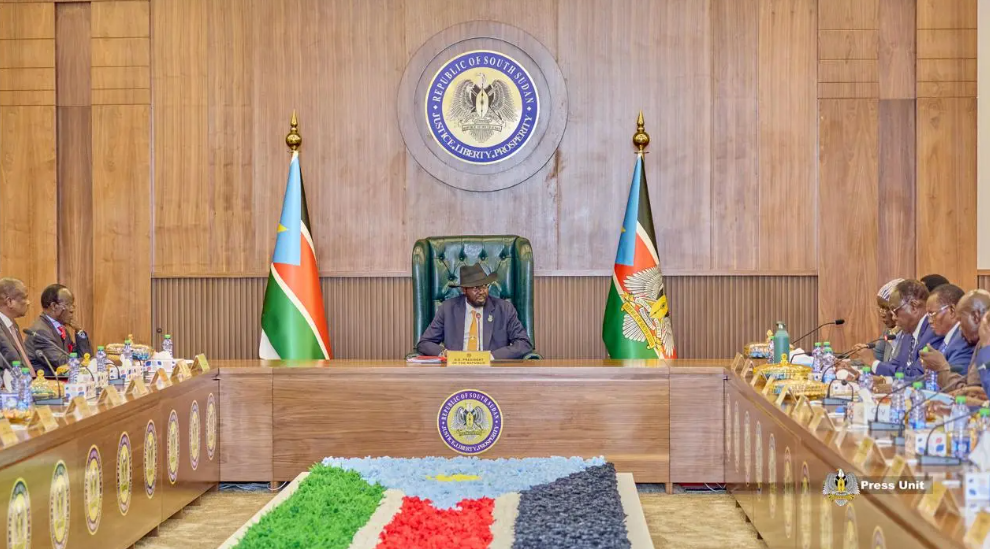
The Council of Ministers, chaired by President Salva Kiir Mayardit, has approved several resolutions covering elections, public administration, trade, and education as the country prepares for the December 2026 general elections.
In a statement by the presidential press unit, among the key decisions is the approval of amendments to the Elections Act 2012, aimed at providing an updated legal framework for the conduct of the forthcoming elections.
The amendments were presented by the Minister of Justice and Constitutional Affairs, Dr Wek Mamer Kuol, and contain provisions considered necessary for the electoral process.
“According to the government, the approved amendments will now be submitted to the Transitional National Legislative Assembly for consideration and ratification before being presented to the President for assent,” the statement read.
The Cabinet also approved a resolution to amend the Emolument Act 2012, particularly provisions concerning housing and other benefits for constitutional post-holders.
Under the proposed amendment, constitutional post-holders leaving office would be entitled to remain in government accommodation for a limited period following the end of their tenure.
In the trade sector, the Council of Ministers approved a memorandum presented by the Minister of Trade and Industry, Dr Margaret Labanya Mathya, concerning the construction of a one-stop border post at Nimule.
The proposed facility is intended to streamline border operations, reduce duplication of procedures, and improve the movement of people and goods between South Sudan and Uganda.
The decision comes as Nimule remains a major entry and exit point for goods and services into the country, making efficient border procedures important for trade and economic activity.
The Council also endorsed adjustments to the national education calendar to allow candidates sitting for national primary and secondary school examinations to complete their examinations in November, ahead of the December general elections.
The adjustment is expected to ensure that students undertaking national examinations are able to complete the process before election-related activities intensify.
The resolutions form part of broader government preparations for the December elections while also addressing institutional, administrative, trade, and public-service matters.
The government said resolutions requiring legislative action will proceed through the constitutional process, including consideration by the Transitional National Legislative Assembly, before presidential assent.
The decisions highlight the government’s efforts to put in place legal, administrative, and logistical arrangements ahead of the planned elections.
With the electoral amendments now moving to the legislature, attention will turn to lawmakers to consider and ratify the proposed changes before they can become part of the legal framework governing the electoral process.