


By Lodu William Odiya
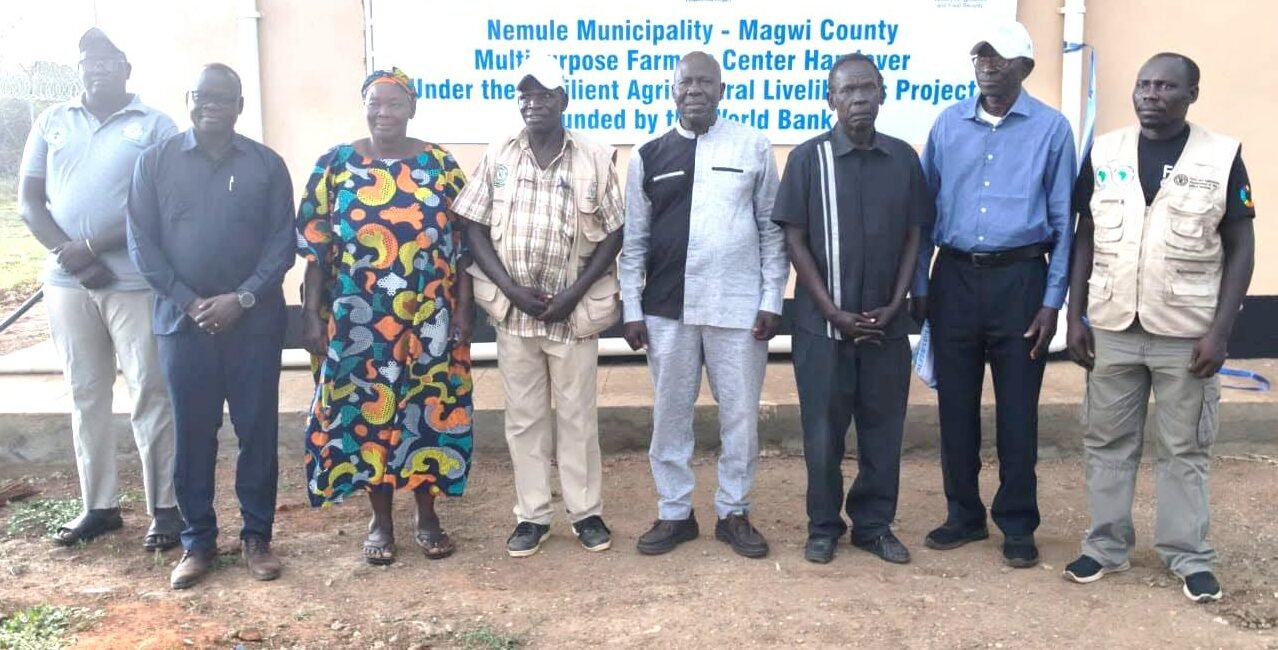
The Ministry of Agriculture and Food Security (MAFS) has handed over new agricultural and fisheries facilities to communities in Nimule Municipality, Magwi County, Eastern Equatoria State.
In a statement by the MAFS press unit, the facilities included the Multipurpose Community Farmers’ Centre at Olikwi, a fish shade and selling area at Loa in Pageri Payam, and a cold chain facility at Nimule Market.
According to the ministry, these investments would improve farmers’ access to agricultural advice, support fish handling and storage, reduce losses, and expand opportunities for local production and trade.
Evans Kenyi, Technical Advisor to MAFS, encouraged communities to use the facilities productively and manage them responsibly to sustain their benefits.
“The infrastructure and assets we are handing over today are investments to improve our farming practices; they can also act as a springboard to wider development,” he said.
“When farmers and fishers organise production, protect quality, and reach buyers reliably, they are better placed to earn from their work,” he added.
He stated that the Olikwi farmers’ centre would host training, demonstrations, and farmer meetings, with county agriculture staff providing guidance on planting, crop care, harvesting, storage, and marketing.
The Loa fish selling facility and Nimule Market cold chain facility will improve fish handling, preservation, and sales, supported by regular cleaning, careful product handling, equipment maintenance, and clear operating rules.
Tabule Noah, RALP Project Manager, stressed that the facilities must remain active and responsive to producers’ needs.
“The centre will justify the investment when the knowledge gained here improves decisions on farms and within farmer organisations,” he said.
“These facilities are an opportunity to enhance the value of fishers’ work, improve their income, improve household resilience, and create more local jobs,” Tabule stated.
RALP is a government of South Sudan project led by MAFS, with implementation support from the Food and Agriculture Organisation of the United Nations (FAO).
Its financing covers 13 counties in seven states, providing training, inputs, and productive infrastructure to strengthen farmer organisations, improve production, and build climate resilience.
MAFS thanked the World Bank, FAO, the Ministry of Livestock and Fisheries, local authorities, implementing partners, and beneficiary communities for their contributions.
The ministry called for continued cooperation to ensure that the facilities remain functional, help families earn more, and strengthen the local rural economy.