



By Yiep Joseph
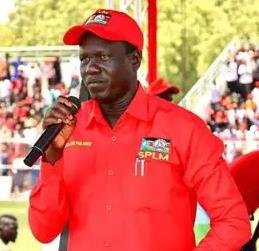
The Secretary-General of the Sudan People’s Liberation Movement (SPLM), Akol Paul Kordit, said elections allow citizens to remove underperforming leaders, comparing the process to washing dirty clothes.
Kordit said he used the analogy to explain elections to local people who wanted to understand their purpose and importance.
He compared governments that remain in power for too long without seeking a fresh mandate to clothes that become dirty and faded.
“When you put on your clothe for too long, it normally gets dirty, gets dusty, and may even fade and change colour,” Kordit said.
He explained that, just as people wash dirty clothes with soap, elections allow citizens to assess their leaders and decide whether they deserve another term.
“When the government stays long without going back to the people, it becomes dusty politically. It gets infected,” he said.
Kordit argued that voting provides an opportunity for citizens to renew leadership by retaining effective leaders and replacing those who fail to deliver.
“So, the only way you sanitise it is for people to vote,” he said, explaining how elections empower citizens to choose.
He added that voters ultimately determine which leaders remain in office based on their performance and ability to meet public expectations.
“People will decide those who did not do well; they will remain at home. Those who did fine, they go in,” Kordit said.
His remarks emphasise elections as a tool for political accountability, allowing citizens to express approval or dissatisfaction with their leaders.
Credible elections require fair competition, free participation, respect for voters’ choices, and transparent procedures to ensure results reflect the people’s will.
Kordit’s analogy presents elections as an opportunity for political renewal, allowing citizens to reconsider their leaders and decide who should govern.