


By Lodu William Odiya
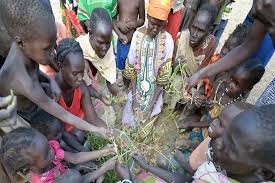
Thousands of families in South Sudan’s Jonglei State are facing worsening hunger, with many children surviving on leaves, water lilies, and seeds meant for planting as conflict and displacement push parts of the country closer to famine, according to Save the Children.
The humanitarian organisation warned that escalating violence since March has disrupted aid operations across eastern Jonglei, leaving vulnerable communities without access to life-saving assistance.
The conflict has forced the suspension of humanitarian activities in several areas, including Akobo East, a key refuge for people fleeing insecurity.
Save the Children said it was compelled to relocate staff from Akobo East due to deteriorating security conditions.
Earlier this year, operations in Walgak were also suspended after armed groups looted and vandalised the agency’s offices, destroyed a healthcare facility, and seized three vehicles.
Aid workers in neighboring counties report alarming conditions, with families struggling to find food amid widespread flooding and insecurity. In some communities, mothers are walking for hours through flooded areas searching for anything edible for their children.
The crisis is also affecting education and child protection. Thousands of children have dropped out of school, while others are being pushed into child labour and early marriage as families adopt desperate coping mechanisms to survive.
Some children who still have access to schools are reportedly too weak from hunger to attend classes.
The latest findings from the Integrated Food Security Phase Classification (IPC) indicate that four counties, including Akobo and Nyirol in Jonglei State, are at risk of famine.
Nationwide, more than 7.8 million people, approximately 60 percent of South Sudan’s population, are experiencing acute food insecurity.
The report further estimates that 2.2 million children under the age of five require treatment for acute malnutrition, including nearly 700,000 suffering from severe acute malnutrition, the most life-threatening form of hunger.
At Bor Hospital, where Save the Children supports nutrition programs, health workers say malnutrition cases are increasing earlier than expected.
Tabisa Ajer, a healthcare worker at the facility, reported that more than 60 severely malnourished children are currently receiving treatment.
“We are just at the beginning of the rainy season, and the situation is already alarming,” Ajer said.
“Many children are arriving with severe malnutrition, diarrhea, and vomiting. Insecurity is preventing communities from cultivating food, making this year particularly dangerous.” She added.
Save the Children Country Director in South Sudan, Chris Nyamandi, called for urgent action to address both the humanitarian and political dimensions of the crisis.
“Solutions to extreme hunger are political. Greater investment in peace, social protection, and humanitarian assistance is needed to prevent more children from suffering,” Nyamandi said.
The organisation urged all parties to the conflict to protect civilians, allow unrestricted humanitarian access, and ensure aid reaches affected communities.
It also called on donors to increase funding for emergency response efforts as South Sudan faces one of its most severe hunger crises in recent years.
Humanitarian agencies warn that without immediate intervention, the combination of conflict, flooding, displacement, and food shortages could push vulnerable communities deeper into catastrophe in the months ahead.