




By Yiep Joseph
The government has launched a headcount and biometric registration exercise for the organised forces. The initiative is being spearheaded by the Ministry of Public Service and Human Resource Development, the Ministry of Finance and Planning, and the Ministry of Interior.
According to the officials, the process is aimed at establishing a single verified biometric database for personnel serving in the country’s organised forces.
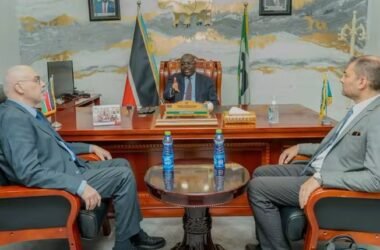
Speaking during the launch in Juba on Monday, Ezekiel Lol Gatkuoth, Public Service and Human Resource Development, said the exercise was sanctioned by President Salva Kiir Mayardit.
He cited that the initiative is intended to strengthen payroll integrity by eliminating duplicate entries and so-called ghost workers from the government payroll system.
“The exercise seeks to ensure that the right employee is paid in the right place and at the right time,” Gatkuoth said, adding that the initiative would provide a reliable foundation for workforce planning, budgeting, human resource management, and the eventual establishment of a unified biometric payroll system.
The registration exercise is being implemented with support from the World Bank through the Public Financial Management and Institutional Strengthening Project (PFMIS).
It forms part of the government’s broader efforts to modernise public administration, improve accountability, and strengthen the management of public sector human resources.
Gatkuoth emphasised that accurate personnel records are critical for effective planning and informed decision-making across government institutions.
He noted that the initiative would contribute to ongoing public sector reforms and support the country’s long-term development goals, including the implementation of Vision 2040.
Representatives from the National Police Service, National Prison Service, and National Civil Defence Service pledged their full support for the exercise.
They committed to mobilising personnel, facilitating data collection activities, and encouraging full participation throughout the registration process.
The minister also expressed appreciation to the Ministry of Interior, the organised forces, the World Bank, and other stakeholders for their cooperation and support in undertaking what he described as an important national reform initiative.
South Sudan has been pursuing civil service and public financial management reforms aimed at improving transparency, accountability, and efficiency in government institutions.
In recent years, concerns over payroll irregularities, including the presence of ghost workers and duplicate records, have prompted authorities to adopt digital systems to enhance personnel management.
Biometric registration is widely regarded as an effective tool for verifying employee identities, improving payroll accuracy, and reducing opportunities for fraud.
The latest exercise targeting the organised forces is expected to help the government establish a credible personnel database while strengthening oversight of public expenditure and human resource management.