
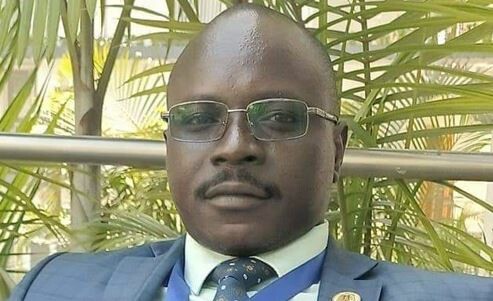

Writer: Okello Lawiri (MP)
My fellow South Sudanese, as we approach the historic date of December 22, 2026, for our first national elections since independence, we find ourselves at a critical crossroads. The dream of a democratic, stable, and prosperous nation—the dream for which we fought so hard—remains elusive.
While the decision to hold elections is a step forward, we must be honest about the shaky foundations upon which this democratic process is being built. The gaps in our constitutional framework, exacerbated by ongoing conflict and political uncertainty, pose an existential threat to the very democracy we seek to establish.
The Weight of a “Transitional” Constitution
We operate under a transitional constitution, a document drafted in haste and designed for a temporary period that has now stretched for over a decade. This document was crafted with a “strong president” in mind, a decision made to ensure stability following the volatile post-independence period.
However, this concentration of power has proven counterproductive. Our constitution effectively placed immense power in the executive, often blurring the lines between the three arms of government and undermining the checks and balances so vital to a functioning democracy.
The recent case of Justice Malek Mathiang Malek v The Minister of Justice, where the East African Court of Justice overruled a presidential decree to dismiss judges, highlights this very point. It is a triumph for the rule of law, yet it is deeply telling that our own judiciary could not provide this check, and the executive has failed to comply with the regional court’s order.
Gaps in Governance and the Rule of Law
The constitutional gaps are not merely theoretical; they are the root cause of our political instability. The absence of a permanent constitution has created a power vacuum where political will, rather than the rule of law, often dictates the course of governance.
This is evident in the “slow progress” on the permanent constitution-making process and the repeated postponement of benchmarks like the national census—a crucial tool for credible elections. By deferring the census and the completion of the permanent constitution until after the polls, parliament has cleared a path for elections, but it has also risked delegitimising them from the start.
We are essentially building a democratic house on a foundation that has not yet been fully laid.
The security situation is the most pressing symptom of this governance crisis. The failure to unify the armed forces, a key provision of the 2018 Revitalised Agreement on the Resolution of the Conflict in South Sudan (R-ARCSS), means the army remains divided along ethnic and political lines.
This is not a national army; it is a collection of militias under a fragile command structure. The recent warnings from the UN Mission in South Sudan (UNMISS) and peace monitors that the peace deal faces an “irretrievable breakdown” must be taken with the utmost seriousness. In such an environment, the very idea of a peaceful and credible election is dangerously naive.
Political Uncertainty and the Crisis of Trust
Our political landscape is defined by a profound lack of trust between the signatories to the peace agreement. The decision to amend parts of the 2018 peace deal without consensus has been a major source of contention, creating an atmosphere of unilateral action rather than collaborative governance.
This has only served to “exacerbate political polarisation,” as observed by UNMISS. The public sees this, and their trust in the political class erodes further.
Furthermore, the “enduring challenges of securing democratic accountability” are hamstrung by the dominance of tribal lines in political debates. Most of our citizens are “not aware of their rights and responsibilities,” making them susceptible to manipulation by elites seeking to consolidate power rather than serve the national interest.
The international community, while often a source of support, has also contributed to the uncertainty by applying pressure that sometimes overlooks the complex realities on the ground.
A Path Forward: A Call for Pragmatic Patriotism
The road ahead is undeniably difficult, but we cannot afford to give in to despair. As your representative, I believe we must take urgent, practical steps to salvage our democratic project.
First, there is an urgent need to de-escalate the political tensions. The government and the opposition must return to a spirit of consensus-based decision-making, as enshrined in the peace agreement. Unilateral actions only push us closer to the brink.
Second, security sector reform must be prioritised. Without a unified national army, any election will be held under the shadow of the gun. This is not a matter of political convenience but of national survival.
The unification of the command structure is the single most important precondition for a stable post-election environment.
Third, we must invest in civic education. A democracy cannot function if its citizens do not understand their rights or how to hold their leaders to account. We need to build a truly informed citizenry that can demand good governance from its leaders.
Finally, we must commit to completing the permanent constitution-making process immediately after the elections. This is not a task to be deferred indefinitely; it is the key to ensuring that the concentration of power that has plagued our country is never repeated.
As Mark A. W. Deng argues, a “democratic constitution and a federal system of government” is the true solution to the concentration of political power in Juba.
Building a democracy amidst conflict is a monumental task, but it is not impossible. It requires courage, sacrifice, and an unwavering commitment to the people of South Sudan. Let us not fail them.
Disclaimer: Any opinion published on our platforms does not represent the view or position of the company or its editorial policy.