



By Hou AKot Hou
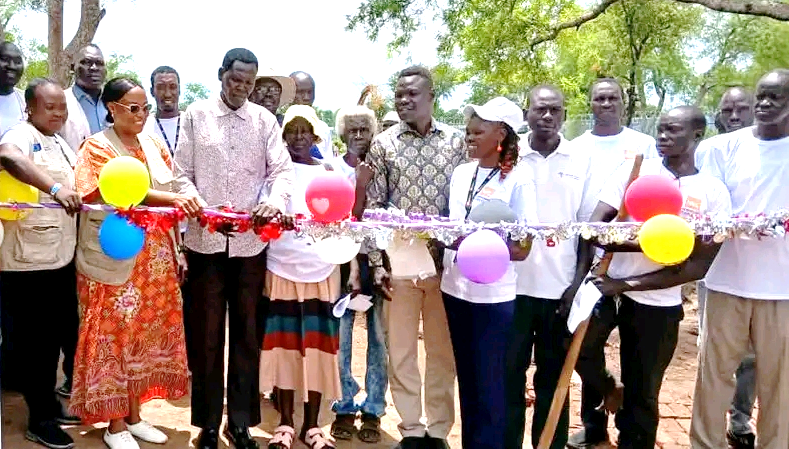
Refugees and the host community have received a newly constructed technical training center at Wedwill Refugee in an effort to help provide technical skills to the refugees and host community members who are interested in obtaining skills to run their own livelihood or fend for themselves.
Speaking at the launch ceremony last week, Norwegian Refugee Council’s area manager for Northern Bahr El Ghazal state, Ms. Mary Gitau, said the request has been a long-overdue request for the host and refugee.
“For this TVET Center, it has four classrooms. And we are training our youth, both from the host community and from the refugee community, in different skills, and the skills include masonry, carpentry, bakery, and cosmetics work,” said Gitau.
The Assistant Commissioner for Refugees’ Affairs, Garang Athian, appreciated the initiative that had been implemented by the implementing organisation, saying the facility will boost the skills of both refugees and the host community.
“This marks a significant milestone for the people of the Northern Bahr El Ghazal State as a whole and the refugees for having this important center which paves the way for the refugees and the host community to have the technical skills that will give them practical skills,” Garang noted.
As Sudan’s conflict is still raging, many refugees have flocked into different parts of the region, with many living in dire conditions in different parts of South Sudan despite the efforts of intervention being rendered by the international aid organisations, including the United Nations agencies.
Many among the well-off refugees have been receiving support from kith and kin abroad, which paves the way for them to quit refugee life and opt out for a better life outside the camp.
Some among the refugees still struggle to start businesses for themselves, but reports suggest that more needs to be done to help them stand on their own feet, especially if technical and financial assistance is provided to them to start a business in which they can liberate themselves from the economic bondages or woes they undergo.