


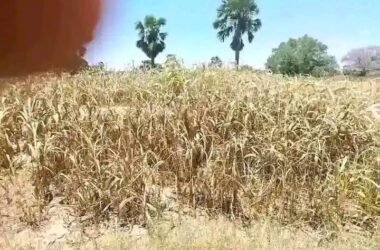
South Sudan’s farmers are facing a growing threat as drought and prolonged dry conditions damage crops and put household food security at risk.
For a country where a large share of the population depends on agriculture for food and income, the situation demands urgent attention from the government.
Farmers cannot be expected to carry the burden of a worsening climate crisis alone. When crops fail, families lose both their food supply and their main source of income.
The effects can quickly extend beyond rural communities, contributing to rising food prices, malnutrition, and increased dependence on food assistance.
The government should therefore treat support to farmers as an urgent national priority. Agricultural authorities need to work with state governments and humanitarian partners to provide farmers with drought-resistant seeds, farming tools, extension services, and practical advice on water conservation and climate-smart agriculture.
Investment in irrigation and small-scale water systems is equally important. South Sudan has significant water resources, yet many farmers lack the infrastructure needed to protect their crops during prolonged dry periods.
Supporting community-based irrigation projects could help farmers produce food more consistently and reduce their vulnerability to changing weather patterns.
The government should also consider emergency assistance for farmers who have already suffered significant crop losses.
Where possible, affected households should receive seeds and other inputs to enable them to replant when conditions improve.
At the same time, agricultural policies must focus on long-term resilience rather than temporary relief. Strengthening rural roads, storage facilities, and markets would help farmers reduce post-harvest losses and earn better incomes when production recovers.
South Sudan cannot achieve food security while its farmers remain without adequate support during climate-related shocks.
Helping farmers protect their crops is not simply an act of charity—it is an investment in the country’s food security, economy, and future.
The government must act now, before drought-related crop losses become a wider national food crisis.