




By Sabri Dibaco
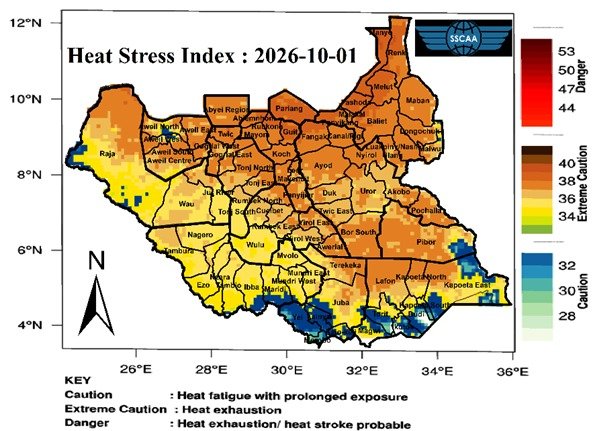
The South Sudan Meteorological Service (SSMS) has warned of extreme heat-stress conditions across several parts of the country, with temperatures expected to rise above 40°C in some northern and northeastern areas.
The weather alert issued for October 1, 2026, indicates that most counties across South Sudan could experience varying levels of heat stress, with particularly high temperatures forecast in Pariang, Abiemnhom, Rubkona, Guit, Panyikang, Fangak, Melut, Manyo, Renk, and Baliet.
The meteorological service says lower levels of heat stress are expected in parts of southern South Sudan.
SSMS is advising residents to take precautions during the hottest periods of the day and avoid unnecessary exposure to high temperatures.
The service urges people to drink water regularly, even when they do not feel thirsty, as dehydration can occur during prolonged exposure to heat.
“Stay hydrated by drinking water regularly, even when you are not thirsty,” the South Sudan Meteorological Service advises.
People are also encouraged to limit strenuous outdoor activities, particularly during the hottest hours, and take regular breaks in shaded or cool places.
Residents working or spending time outdoors are advised to wear lightweight and loose-fitting clothing, while hats and other forms of protection can help reduce direct exposure to sunlight.
The weather service has also called on communities to pay particular attention to children, older people, pregnant women, and people with existing health conditions, who may be more vulnerable to the effects of excessive heat.
“Avoid strenuous outdoor activities where possible and take frequent rest breaks in shaded or cool areas,” SSMS says.
People should also watch for signs of heat-related illness, including heavy sweating, dizziness, weakness, headache, nausea, or confusion, and move affected individuals to a cooler place while seeking medical assistance when necessary.
South Sudan regularly experiences periods of high temperatures, particularly during the dry and hot seasons. High temperatures combined with prolonged exposure to sunlight and inadequate water intake can increase the risk of heat-related illness.
The latest alert comes as the country continues to experience significant variations in weather conditions between northern, central and southern areas.
SSMS is encouraging the public to follow official weather updates and take preventive measures as temperatures rise.