

By Alan Clement
RJMEC’s 2025 reports have exposed serious breaches of South Sudan’s peace deal, including political detentions, stalled reforms, ceasefire violations, and humanitarian crises threatening the fragile R-ARCSS framework.
The Reconstituted Joint Monitoring and Evaluation Commission (RJMEC) is a body that Monitor and oversee all aspects of the implementation of the Agreement.
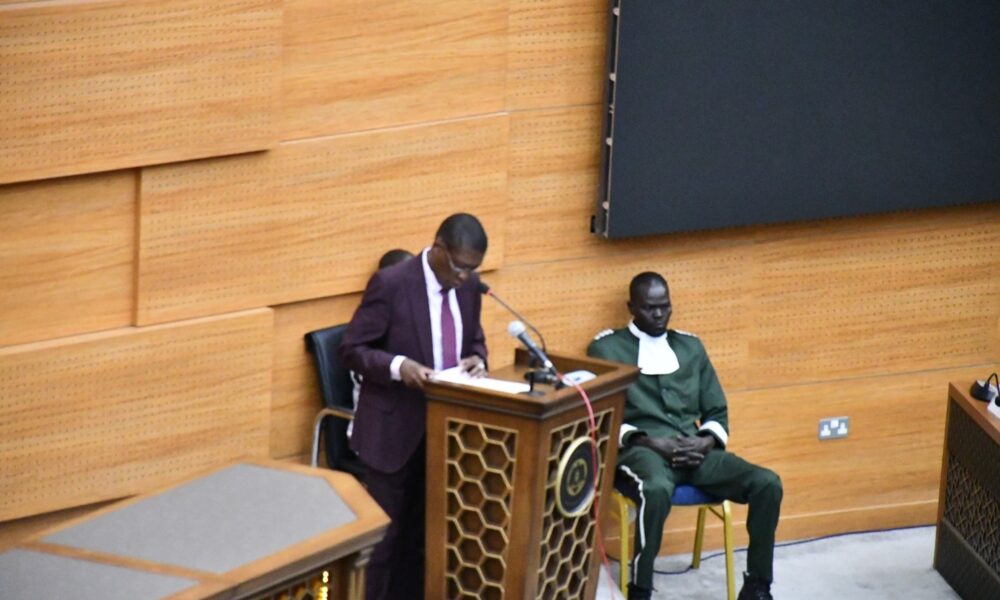
The reports were presented during its quarterly briefings to the Transitional National Legislative Assembly on Monday September 15th, 2025 at the 15th ordinary Assemble sitting.
During the presentation by its interim chairperson, Amb. Gen (rtd) George Aggrey Owinow, RJMEC painted a bleak picture of the country’s political and security environment, citing repeated ceasefire violations, political detentions, and stalled reforms.
The monitoring body noted that unless urgent measures are taken, South Sudan risks a relapse into nationwide conflict.
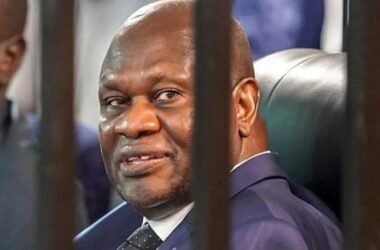
According to RJMEC, the political landscape has deteriorated sharply, with First Vice President Dr. Riek Machar placed under house arrest and several SPLM/A-IO officials either detained or forced into exile. These actions, the reports noted, represent a direct violation of the power-sharing framework enshrined in the R-ARCSS and have severely eroded trust among peace partners.
“The implementation of the peace agreement has been severely dented,” the RJMEC report noted, pointing to the house arrest of First Vice President Dr. Riek Machar, the detention of senior SPLM/A-IO officials, and unilateral political reshuffles that undermined the spirit of power-sharing. “These actions have negatively affected the peace process,” the reports added.
Th reports further revealed that the security conditions across the country have worsened, with repeated violations of the Permanent Ceasefire reported in Upper Nile, Jonglei, Central and Western Equatoria, and Western Bahr el Ghazal. According to RJMEC’s reports, investigations by the Ceasefire and Transitional Security Arrangements Monitoring and Verification Mechanism (CTSAMVM) have been obstructed by insecurity and denial of access.
Additionally, the unification of forces, seen as a cornerstone of the 2018 Revitalized Agreement on the Resolution of the Conflict in South Sudan (R-ARCSS) remains stalled with training centers abandoned after reported attacks, while plans for Phase II of training the unified forces have yet to begin.
According to the reports, despite the formation of the Judicial Reform Committee, Legislative and judicial reforms have also stalled and its recommendations remain largely unimplemented, and critical bills have yet to be passed warning that this legislative paralysis threatens the broader transition process.
The humanitarian situation is also very dire with over 130,000 people displaced in Upper Nile alone by mid-year, as conflict, flooding, cholera outbreaks, and food insecurity ravaged communities according to the reports which highlighted that Aid infrastructure has been looted or destroyed, and humanitarian access remains severely restricted.
RJMEC noted that during the reporting period, international and regional actors have increased pressure on Juba highlighted by IGADs summits in March and June, while the African Union and United Nations dispatched envoys to push for de-escalation. Also, Kenya’s President William Ruto appointed Raila Odinga as special envoy to South Sudan in March, signaling Nairobi’s deeper involvement.
RJMEC expressed concerns that these efforts have proved futile. “No significant breakthrough has been achieved despite these efforts,” read RJMEC’s report which urged the Transitional Government of National Unity (TGoNU) to release detainees, restore dialogue, and ensure inclusive participation in the peace process.
While RJMEC acknowledged some progress in economic reforms including improved non-oil revenue collection and payroll restructuring, it emphasized that these gains are overshadowed by the lack of movement on transitional justice, constitution-making, and election preparations.
“South Sudan risks a relapse to armed conflict,” RJMEC concluded, stressing that the 2018 peace agreement remains the “best means through which lasting peace can be accomplished.”
The reports for quarter one and two (January 1st- March 30th & April 1st to June 30th, 2025) have been committed to the parliamentary committee on Peacebuilding and Reconciliation and committee on Justice for scrutiny with their findings and recommendations to be presented within a fortnight.