

It is seven years since the Revitalized Agreement for the Resolution of Conflict in South Sudan (R-ARCSS) was signed. As such, the country stands at a critical juncture. The nation cannot afford another cycle of delay and betrayal.
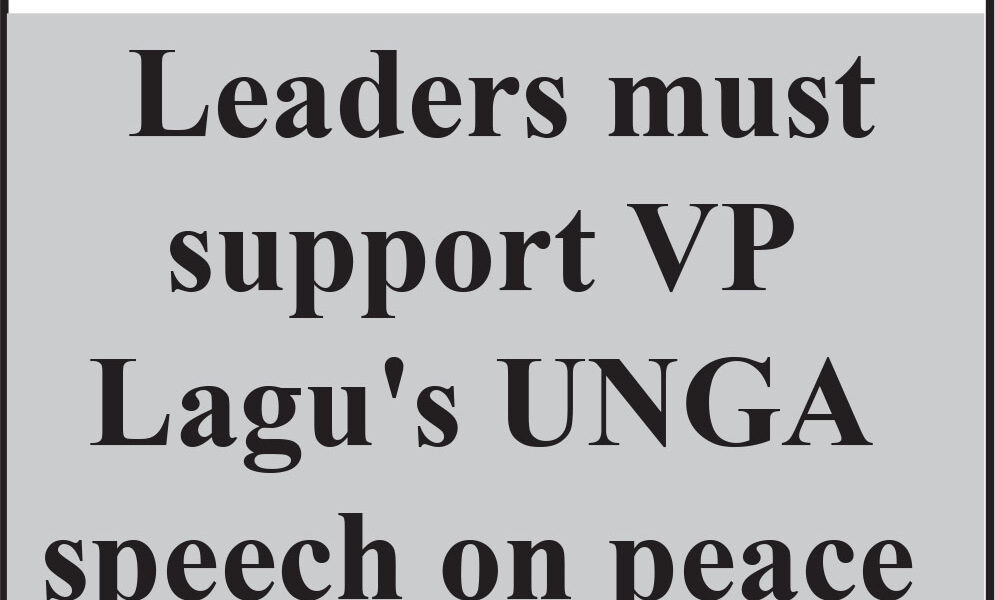
The recent address to the United Nations General Assembly by Vice President Josephine Lagu was more than a diplomatic gesture; it was a moral challenge to the country’s leaders to implement the peace deal fully, end the violence, and restore trust.
The strides of transitional government: trained unified forces, made financial reforms, and preparations for elections.
The ceasefire must not be treated as a tactical pause; it must be upheld as a moral and constitutional obligation. Every violation chips away at public faith and pushes the country closer to the brink.
Equally urgent is the need to confront corruption. The emphasis on independent audits and fiscal reforms must be matched by transparent investigations and accountability. Corruption is not a side issue; it is a structural threat to peace, justice, and public trust.
The revival of the Tumaini Peace Initiative is welcome, but it will only succeed if it is inclusive, people-centered, and backed by genuine political will. Silencing dissent or sidelining stakeholders is a recipe for further division.
South Sudan’s leaders must now prove that peace is not just a slogan for international forums but a lived reality for their citizens. The R-ARCSS is not a ceremonial document; it is a social contract and its implementation must be swift, credible, and people-centered. Implement it fully, credibly, and urgently. The time for excuses has passed. The time for peace is now.