

By Alan Clement
South Sudan has urged the United Nations (UN) to lift targeted sanctions and the arms embargo.
The country reiterated that the measures now hinder peace consolidation and institutional reform.
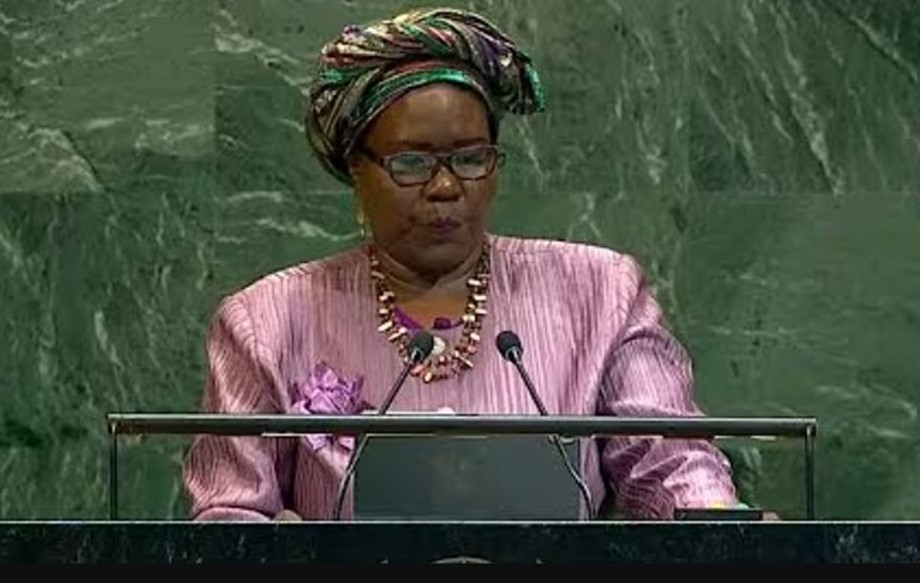
While addressing the 80th Session of the UN General Assembly (UNGA) on Thursday, Vice President Josephine Lagu Yanga called on the United Nations and International Community to lift arm embargo and sanctions.
“The government of South Sudan appeals for the removal of targeted individual sanctions and the arms embargo on South Sudan,” VP Lagu said.
The Vice President said Juba has made significant progress in implementing the Revitalized Peace Agreement despites ongoing challenges.
The appeal comes amid mounting pressure on South Sudan to implement security arrangement despites lack of weapons to deploy the existing Peace forces.
Vice President Lagu’s appeal reflects the belief that lifting sanctions and the arms embargo would enable South Sudan to reinforce its security sector, advance governance reforms, and consolidate peace ahead of the country’s first democratic elections in December 2026.
Lagu emphasized that South Sudan has respected the 2018 Revitalized Peace Agreement and is implementing key reforms despite financial and logistical challenges. She urged the international community to back Juba’s transition from conflict toward development.
The Vice President also called for broader UN reform, including African representation on the Security Council and the removal of sanctions on other “sisterly countries.” Her remarks reflect a growing push among African Union member states to reframe international engagement with post-conflict nations.
As the UN Security Council prepares to review the embargo’s renewal, South Sudan’s appeal adds pressure to a contentious debate over balancing peace enforcement with sovereignty and reform.
The United Nations Security Council had maintained an arms embargo on South Sudan which runs till May, 2026 since July 2018, imposed through Resolution 2428 in response to repeated ceasefire violations and conflict between SPLM-IG and SPLM-IO forces. It prohibits the supply, sale, or transfer of arms, military vehicles, and related assistance to all parties, aiming to limit the flow of heavy weapons and prevent further escalation.
To complement the embargo, the sanctions regime; first established under Resolution 2206 in 2015, includes asset freezes and travel bans targeting individuals deemed responsible for undermining peace and security. While the embargo has had limited impact on small arms circulation due to porous borders and internal diversion, it has reportedly restricted access to heavy weaponry such as tanks, attack helicopters, and drones.