


By Alan Clement
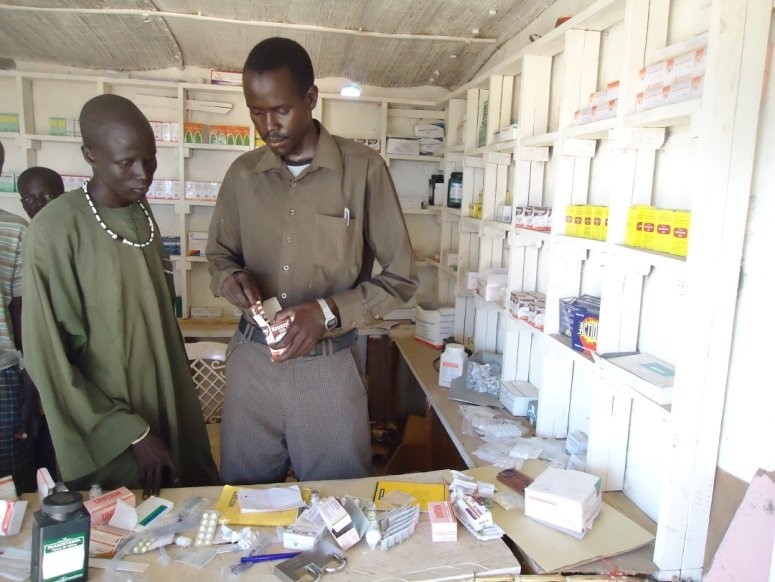
Senior Health officials have called for investment in local pharmaceutical manufacturing to reduce South Sudan’s dependence on imported medicines and the urgent need to prepare for future health emergencies.
Speaking during World Pharmacy Day celebrations in Juba on Friday September 25, 2025, Dr. Atem Nathan, representing the Undersecretary at the National Ministry of Health, said Africa’s delayed access to COVID-19 vaccines exposed the risks of relying solely on imports.
“You remember during COVID-19, vaccines were made and Africa had to wait. They were the last to be served with the vaccines,” Dr. Nathan said.
“That has prompted a move that there should be the ability to do some manufacturing here because we don’t know the next situation that will come. We cannot wait for things that are manufactured in other continents,” he continued.
Addressing over 200 pharmacists gathered for the event, Dr. Nathan encouraged professionals to begin experimenting with drug formulation and basic lab work. “It’s time to begin to experiment. Most of you do not have that small corner where you will be mixing A and B and maybe struggle over a new drug. You should have that small corner,” he encouraged the pharmacists.
During his speech, Dr. Nathan also decried unsafe and unregulated drug practices in parts of the country, where medicines are sold openly “like kodorowat” and even identified by color. He urged pharmacists’ professional associations to restore order, adding: “Those kinds of practices need to be eliminated. This is not the time for them, and nobody will do that. It is you people, with our help also,” he stressed.
His remarks were echoed by Dr. Wani Tom, representing the Central Equatoria State Minister of Health at the event, who praised the government’s efforts in training pharmacists and expanding pharmacy businesses in Juba.
However, he acknowledged persistent challenges including dependence on imported medicine and medical supplies, limited mini-labs at border areas for quality assurance, and lack of domestic funds for procurement.
“Our dependence on imported medicine and medical supplies remains a challenge. There is limited quality assurance at border points, inadequate storage facilities, high costs of drugs, and lack of government domestic funds for procurement,” Dr. Wani stressed.
Dr. Wani called for a coordinated response from government, donors, and institutions to invest in pharmacy education and research. “Let there be a call to integrate pharmacists more deeply into the public health strategy. A healthier world is only possible when pharmacists are empowered to do their best,” he appealed.
Both officials agreed that empowering pharmacists and promoting local production would be crucial to achieving safe, affordable, and sustainable healthcare. “When we think health, we must think pharmacy,” Dr. Tom concluded.
The speeches mark a growing consensus among health leaders that South Sudan must shift from dependency to self-reliance in pharmaceutical production. As Dr. Nathan concluded, “We are here for peace, and we have to build this country. Building is more difficult than destruction; but it starts with small steps.”