


By Jacob Onuha Nelson
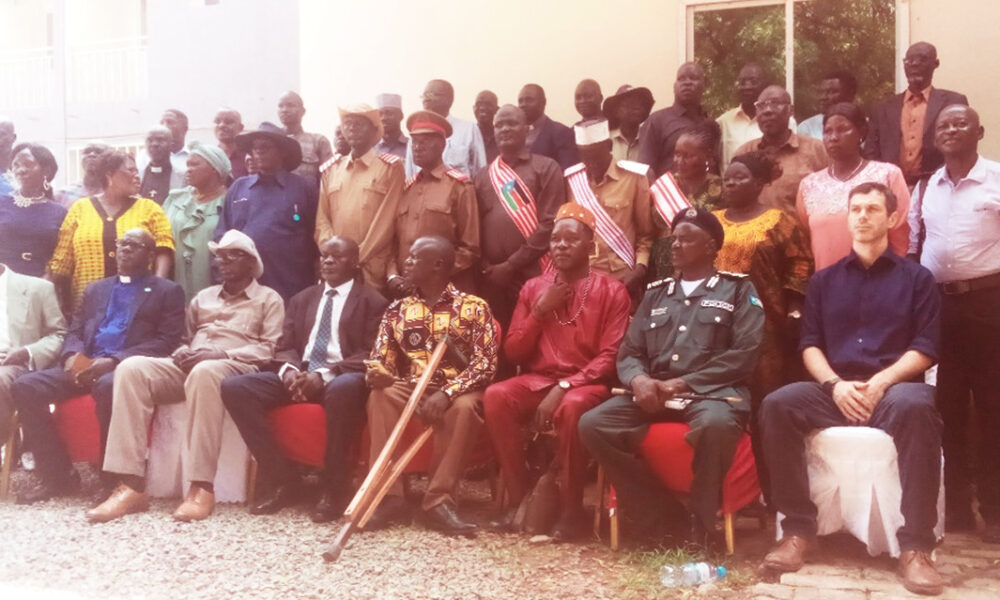
South Sudan Council of Churches (SSCC) have officially launched inclusive peacebuilding through Dialogue among communities in South Sudan.
Addressing the journalists at the Episcopal Church of South Sudan (ECSS) on Tuesday in Juba, Moses Telar Cindut, the Director of bureaus of Religious Affairs in the ministry of presidential affairs stated that the aim of the event, basically to advocate insecurity, hate speech, land dispute, safe civic space and trauma and intercommunal relations in the country.
“This is a duty for advocacy, as expressed in Matthew 5, verse 9. Blessed are the peacemakers, for they will be called sons of God. As we are now here today to make that an attempt, you will be called a son of God,” he stated.
John Nkunge, the program manager for Samaritan purse international Relief emphasized that partnership with Churches, local communities in establishing peace.
“Without peace, there’s no progress. Without peace, there’s no economic development. Without peace, there’s no prosperity,” Nkunge noted.
He underscored partners worked hard to empower through training and offering a lot of resources and support.
Nkunge added that the organization run by involving trauma healing through peace, reconciliation and forgiveness.
“We are programs that are involved in peace and reconciliation and forgiveness because we believe that is the roots of progress. And there’s always one statement I like that Raboteau keeps quoting that he says, we better learn to live together as brothers and sisters or we die together as fools,” he added.
Meanwhile, Sheikh Juma Abdullah, secretary for Humanitarian affairs stated that the Muslim always pray day and night to make sure there must be a collective achievement of peace building and equity among citizens.
“A message to our brothers, the director and the Islamic religious, as the church leaders, we are praying day and night for peace to prevail in our country,” Juma assured the public.
On his part, Rev. James Makuach Nyoi, South Sudan Presbyterian Evangelical Church, further underscored without peace, the country can’t achieve things citizens expect from the nation.
“For us to live in prosperity and enjoy our own probabilities that God gave us in this country, we need peace. We need peace for us as Christians to reach to our remotest areas with the message of salvation and feed each other,” Makuach urged the congregation.
However, South Sudan Council of Churches (SSCC) highlighted several critical challenges such as political deadlock, ongoing violence and insecurity, stagnation of peace agreement, erosion of public trust, severe economic hardship and corruption, Humanitarian crisis, and lack of inclusive dialogue to peacebuilding in South Sudan