



By Kei Emmanuel Duku
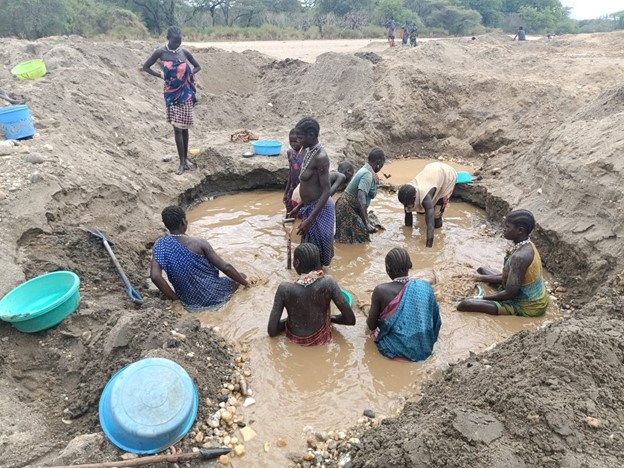
In a historic push to empower local communities, a proposed amendment to South Sudan’s mining law seeks to grant community landholders effective rejection power over mineral exploration and extraction on their land. This drastic shift was announced yesterday as the South Sudan Mining Act 2012 for Amendment was tabled before the Transitional National Legislative Assembly (TNLA).
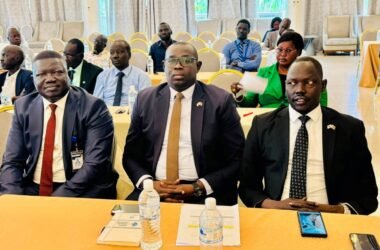
The dramatic legal shift was confirmed by the Minister of Justice and Constitutional Affairs, Dr. Joseph Geng Akech. He told the assembly that the new legislation introduces veto powers for landowners, specifically relating to mineral licenses laid out in Sections 84 to 85. These critical sections, the Minister stated, now prohibit a mining licensee from exercising any power on the land without first obtaining prior written consent from the relevant authority governing that land.
The proposed changes in the amendment bill aim to centralize and formalize the licensing process, introducing greater control and transparency. Once passed into law, the Act will empower the Minister of Mining to declare specific areas open for the grant of mining licenses through a system of public tender.
The proposed bill lays out a clear process for companies to submit their applications for an inspection license to the mining authority. Dr. Akech elaborated, noting that the Chapter five specifies a list of conditions the Minister must satisfy before granting a reconnaissance license, ensuring due diligence. Furthermore, the legislation will maintain strict safety standards during all reconnaissance operations in accordance with applicable law.
The new bill introduces tight controls on the scope of initial mineral searching. The Sixth Part details the application process for an exploration license to the mining authority and introduces new provisions that limit the area of land allowed for an exploration license to between 10 square kilometers and 600 square kilometers.
Additionally, according to the bill, any holder of an exploration license must get a written authorization from the Minister before conducting tests that involve the limited production of mineral resources. The bill also dedicates a section to small-scale miners, providing the application procedure for a small-scale mining license, which must be accompanied by a crucial community development program.
For large-scale operations, the Eighth Part of the proposed legislation ensures strong government oversight and participation. To obtain a large-scale license, the application process must be submitted directly to the mining authority. This section grants the government full participation in the venture, including a corresponding percentage of voting rights tied to the interest it holds in the large-scale mining license. Furthermore, the Eighth Part mandates that the license holder must allow scientific surveys to be carried out by educational institutions, research institutions, and government agencies before engaging in mineral exploitation.
The bill introduces stricter retention standards. The Ninth Part tightens the requirements for continued license retention, demanding the Ministry of Mining review any retention license that lasts for more than one year. This is deemed important to mandate every license holder to submit updated versions of all studies and assessments originally provided under the license.
In a major move to control the flow of minerals, the bill will prohibit any trading in minerals without first obtaining a mineral trading license. The Tenth Part directs the Director-General of the mining authority to grant this license within 30 days of application if the applicant meets the legal requirements. Once granted, a mineral trading license holder is obligated to maintain accurate and separate mineral trading registers for each transaction and must keep daily reports of buying, selling, or processing of minerals.
While tabling the bill, Minister Akech stressed the new focus on public accountability. He stated that the section covering general provisions for mining licenses will provide for mandatory consultations by the mining authority with affected parties as well as the community regarding all applications for exploration, small-scale, or large-scale mining licenses.
In a move to protect the environment, Dr. Geng noted that the bill will empower the Minister to consult with relevant states and stakeholders to carry out or commission research for the purpose of resource conservation, development, and utilization. This proposed research will determine the extent of conservation of geological, archaeological, cultural, or biological diversity resources, and officials from the ministry will be trained in the development and sustainable management of mineral resources.
As a measure for addressing disputes resulting from contract management, the Twelfth Part of the proposed bill stipulates that a former license holder remains liable for any obligation arising from acts or contracts made concerning the mineral license prior to the date of its revocation. This liability also extends to any claims for damages or injuries made by affected parties.
The bill also sets physical limits in the Thirteenth Part, restricting the area for exploration and mining agreements to a minimum of 1,200 square kilometers.
The Fourteenth Part, which deals with rents, royalties, and taxes, mandates the Minister to publish a detailed schedule of royalties in the regulations, which are stipulated in Sections 115 to 117. However, this section strictly prohibits the disposal of minerals and allows for the revocation of a mineral license if the licensee fails to comply with the bill’s provisions without justifiable cause.