


By Alan Clement
Bishop Dr. Isaiah Dau has warned that South Sudan’s cycle of war will persist unless peace is made a personal priority and backed by courageous leadership and adequate resources.
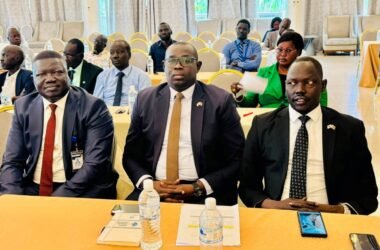
Speaking at the opening of the National Stakeholders’ Consultative Dialogue on Accelerating Peace Initiatives and De-escalating Violence in South Sudan, he urged citizens and leaders alike to commit to peace as the foundation for the country’s survival.
Recalling his own life story, Dau described himself as a “child of war,” born in 1958, three years after Sudan’s first civil war began.
“My children are children of war; my grandchildren are children of war. I pray that my great-grandchildren will be children of peace,” he said with hope.
The bishop outlined six principles for peace: making peace a priority, diligently pursuing it, striving to live peacefully with all people, providing visionary leadership, mobilizing resources, and praying earnestly.
“If leadership is not provided, whether at NGO, government, church, or family level, there will be no peace,” he emphasized.
He also linked economic instability to the struggle for peace, noting the collapse of the South Sudanese pound.
“Is it a wonder that we are struggling with peace because resources are not there? The pound has gone crazy… if it is wrong with the economy, it will be wrong with the offering and tithes in the church,” he said, urging partners to increase support for peacebuilding efforts.
Jackline Nasiwa, Executive Director of the Centre for Inclusive Governance, Peace and Justice, echoed the urgency, warning that the implementation of the 2018 Revitalised Agreement on the Resolution of the Conflict in South Sudan remains “fragile and sluggish.”
She reminded participants that the High-Level Standing Committee for the Peace Agreement had referenced only 10 percent of the accord being implemented to date.
“This sobering figure underscores the need for coordinated actions, genuine intentions, and inclusive national consensus,” she said.
Nasiwa noted that repeated extensions of the transitional period and the postponement of elections to 2026 have eroded public trust.
“Peace remains essential to realising the aspirations of the population of South Sudan, scarred by decades of struggles for liberation,” she added, calling for stronger grassroots initiatives, inclusive participation of women and youth, and renewed commitment to transitional justice, constitutional reform, and security sector unification.
Adding a government perspective, Mary Nawai, National Minister of Youth and Sports, stressed the central role of young people in peacebuilding.
“The youth of South Sudan are the greatest stakeholders in our peace and our future. Young people make up more than two-thirds of our population. Their energies, creativity, and resilience are unmatched,” she said.
Minister Nawai warned that unemployment, lack of education opportunities, and trauma from conflict continue to marginalize youth, leaving them vulnerable to cycles of violence.
“But if we empower our youth, we empower our nation,” she said, outlining plans to expand skills training, support youth-led peace initiatives, and strengthen sports programmes as tools for unity.
“Sports have a unique and powerful role in unifying communities. Through sports, young people learn teamwork, discipline, respect, and peaceful cohesion,” she added.
The Minister also highlighted the role of women in peacebuilding, noting their contributions as negotiators, mediators, and stabilisers.
“Our women are the pillars of resilience and the foundation of lasting peace. Strengthening their leadership is not negotiable,” Nawai affirmed, pledging her ministry’s support for gender equality and youth empowerment.
The National Stakeholders’ Dialogue, is focused on reducing political tensions, mitigating risks, promoting tolerance, countering hate speech, and addressing implementation gaps in the Revitalized Agreement on the Resolution of Conflict in South Sudan (R-ARCSS).
Signed in 2018, the agreement was intended to end years of civil war and pave the way for democratic elections. However, progress has stalled, with the United Nations recently warning that only limited provisions have been implemented and that political competition ahead of the 2026 elections risks reigniting violence.
The war in neighbouring Sudan has further strained South Sudan’s fragile systems, with more than 1.2 million people crossing the border since 2023, adding pressure to already limited resources.
Both Bishop Dau and Nasiwa concluded with hope, urging South Sudanese to remain steadfast.
“This cloud will pass. This country will emerge victorious. The best is yet to come,” said Dau.
Nasiwa echoed: “Peace is in our hands.” Minister Nawai reinforced the call: “South Sudan young people, women, and communities are counting on us. Let us not disappoint them.”