


By Kei Emmanuel Duku
A growing shadow of intimidation is silencing women and journalists across South Sudan, turning digital spaces meant for empowerment into arenas of fear.
As the South Sudan Human Rights Defenders Network (SSHRDN) joins the global community in marking the 2025 16 Days of Activism against Gender-Based Violence, activists are sounding alarm over a surge in digital violence designed to intimidate, shame, and isolate women.
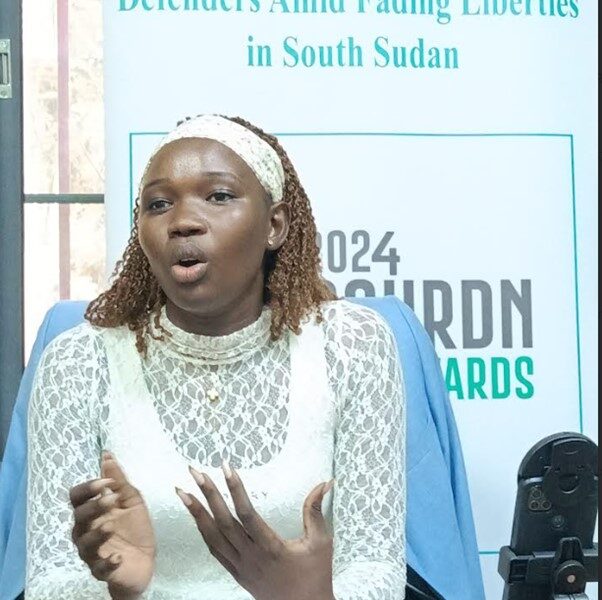
Adut Andrew, Administrative Assistant for the SSHRDN explained that digital platforms meant for learning and empowerment are increasingly being used to target women and girls through online harassment, cyberbullying, misinformation, online stalking, hate speech, and image-based abuse.
“Gender-based violence is evolving, and as technology advances, so do the forms of abuse faced by women and girls, which today includes severe online backlash,” stated Adut.
According to her these acts are not merely disruptive they are devastating. “We have seen situations of psychological breakdown, loss of dignity, and the breakdown of family relationships among many others,” she noted, detailing the effects on young women in South Sudan.
She added that the threats are specifically aimed at women human rights defenders, journalists, and activists to intimidate, shame, and isolate them and these digital attacks pose a serious risk to their safety, dignity, and freedom of expression fundamental human rights guaranteed under national and international law.
The network has called for urgent, collective action to ensure digital spaces become safe environments, demanding that no woman should be “forced into silence or fear simply for using the internet.”
The activist highlighted that this impunity extends beyond online trolls, affecting the work of women and journalists on the ground. Women reporters encounter threats during fieldwork, and there are concerns over surveillance and disappearances.
“So many of us are going through threats, not only the women here but even some journalists as well,” the Network stated. “Sometimes, your conversation is being followed or monitored, or your communication is always being followed by security officers, and your movement is being followed and always targeted.”
The core reason for the rise in threats, according to SSHRDN, is the lack of accountability. “These threats are on the increase because most of these perpetrators are not brought in to book or prosecuted, they are not brought to law,” Adut Andrew asserted.
She said the SSHRDN and its civil society partners are actively pushing for key legislation that could curb digital violence. They are urging the government, technology companies, and community leaders to strengthen legal protection and ensure effective enforcement.
The Anti-Gender Based Violence (GBV) bill, they noted, has remained silent because it is “not yet being signed into a law.”
The Network stressed that parliamentary action is vital: “we need to open up and put in the pressure for the people at the national parliament to enact all these bills, it will be easier for the human rights defenders, the journalists, and anyone in this country as well who is encountering the threat and all hate speech.”
Currently, the Computer and Cybercrime bill is on its third reading at the parliament and once signed, the Network believes it will significantly reduce threats, misinformation, and cyberbullying.
The organization currently offers protection services to women whose rights have been violated. When cases involve family issues where SSHRDN finds it difficult to intervene directly they rely on member organizations, like the Community Empowerment Progress Organization (CEPO), to take the lead.
Adut noted that the Network is actively providing practical support and protection to survivors “The South Sudan Human Rights Defenders Network will engage the women’s HRD in digital safety and women’s HRD protection,” Adut Andrew said. This includes training women on constructive use of social media platforms and how to respond to threats. “We have other organizations that deal with the direct protection of these women. They can take them to the safer homes,” Adut Andrew explained.