


By Alan Clement
Members of Parliament (MPs) have criticised some of the newly introduced traffic charges claiming that the traffic director act outside the law.
Some of the parliamentarians raised the concern during the 23rd ordinary sitting of the Transitional National Legislative Assembly (TNLA) on Tuesday December 16, 2025.
Recently the Director of traffic police issued orders including introduction of new fees for driving tests and alter the renewal periods for vehicle logbooks and driving licences.
Other new orders by Director of Traffic that are alleged to have angered the citizens include “driving test certificate required even for holders of valid driving licences and renewable every three months.
During the 23rd ordinary sitting of the Transitional National Legislative Assembly (TNLA) on Tuesday December 16, lawmaker Giel Thou Nyuoth of Mayom County (SPLM-IO) accused the Director of Traffic Police of “violating the law” by shortening renewal periods without legislative approval.
“Two years ago, we agreed the logbook should be permanent. Now he says it will be renewed every five years. And even worse, licences must be renewed every three months. What kind of law is this?” Thou asked, warning that the Director was acting outside his mandate.
Deputy Chairperson of the Specialized Committee on National Security and Public Order, Samuel Buhori Lotti, went further, accusing the Director General of “complete intransigence.
He explained that traffic operations are still governed by the outdated 2003 New Sudan law signed by John Garang, despite parliament’s instructions to update legislation.
“All that has taken place in traffic today is against the law,” Lotti told lawmakers. “We instructed the Minister to amend that law and bring us the traffic law. Up to today, nothing has taken place,” he added.
Lotti added that the Director had resisted transfer orders and continued to impose new requirements, including additional driving tests and certificates. “There are almost two documents now that have already been created,” he said, warning that the situation was spiralling beyond parliamentary oversight.
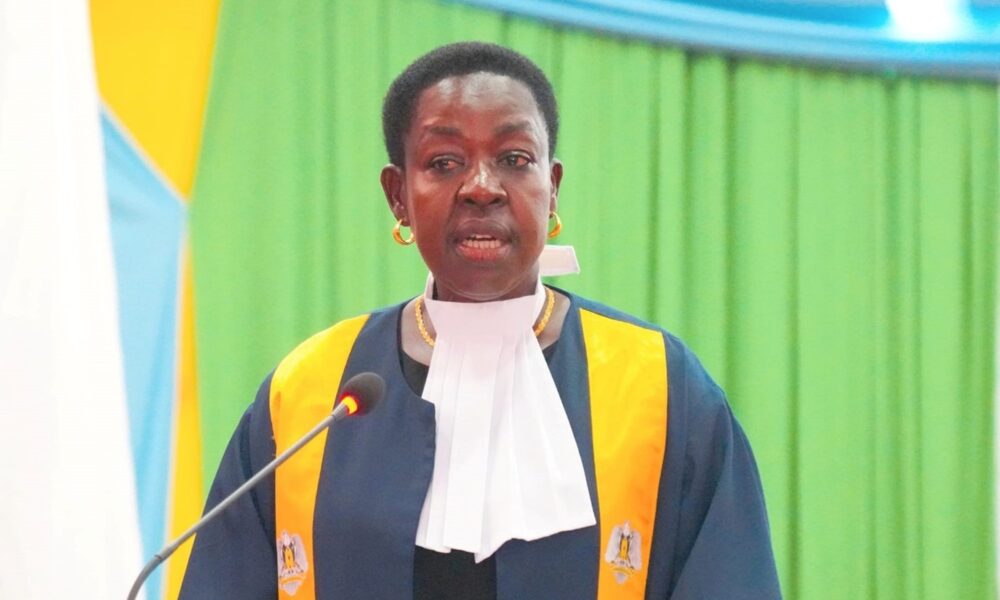
Speaker Jemma Nunu Kumba told MPs that the Interior Minister should be summoned to explain why the Director of Traffic Police continues to impose new fees and requirements without parliamentary approval.
“Citizens should follow the law, but those implementing it must also follow what has been passed by this parliament. Not creating things every year, every time,” Kumba said.
“If there is anything contrary to that, that is illegal,” she told the August house.
The Speaker emphasized that parliament had already legislated that vehicle logbooks are permanent and driving licences valid for five years. Yet the traffic police have introduced shorter renewal periods, sparking widespread frustration among drivers.
“The citizens are already suffering. You cannot add more suffering on them,” she said adding “Every day there is a new law. I don’t know where it comes from besides what we pass in this parliament.”
This is not the first time the traffic police have faced backlash. In January 2025, South Sudan’s Traffic Police Director Maj-Gen Kon John Akot issued an order reducing the validity of driving licences from five years to one year for nationals and six months for foreigners.
The directive was widely condemned by drivers, activists, and lawyers, and later rescinded by Inspector General of Police Gen. Abraham Manyuat Peter, who declared it unlawful.
Despite that reversal, lawmakers say arbitrary directives have continued, undermining parliamentary authority and burdening citizens with new costs.
Speaker Kumba warned that arbitrary directives not only burden citizens but also distort the country’s fiscal planning. “What we pass in the budget is what constitutes a resource envelope for the country. If other tax bases are created in the middle of the fiscal year, then we want to know also the extra income – how it is being spent,” she said.
The controversy has reignited public anger, with citizens taking to social media to denounce what they describe as harassment on the roads. Posts on Facebook and X (formerly Twitter) criticized the traffic police for “turning every checkpoint into a toll gate” and accused officials of exploiting drivers through arbitrary fines and renewals.
Parliament’s decision to summon the Interior Minister marks a significant escalation in the standoff. Lawmakers said they want clarity on why directives continue to contradict parliamentary law and how additional revenues collected by traffic police are being spent.
With the Interior Ministry now under pressure to respond, the issue has become a test of whether parliament can assert its authority over enforcement agencies and protect citizens from arbitrary directives.
“The citizens are already suffering,” Speaker Kumba reiterated continuing that, “If things are illegal, what is passed by the law, let people follow it; both citizens and those who are implementing the law.”
As the TNLA prepares to question the Interior Minister, the outcome will signal whether South Sudan’s legislature can rein in enforcement agencies that have long operated with little oversight.
For many citizens, the confrontation is about more than licences and logbooks; it is about whether parliament can defend the rule of law against arbitrary power.