


By Kei Emmanuel Duke
The South Sudan Council of Churches (SSCC) has issued a stinging demand for the government to lead by example by immediately releasing all political opponents currently facing trial in Juba, framing the gesture as a non-negotiable step toward national healing.
In a powerful press statement released on December 22, 2025, the influential religious body argued that the nation’s path to stability is currently blocked by legal and political vendettas. The Church leaders emphasized that the release of detainees, regardless of the severity of their charges, is the only way to signal a genuine commitment to peace.
“And every dialogue starts with true forgiveness,” the Council stated, adding that the government of South Sudan must take the first step. “The government should lead by example by releasing all those political opponents, with whatever political charges, detained and undergoing court trials in Juba. There must be a new page open for inclusive political dialogue within and with the held-out groups.”
The Council’s plea extended beyond domestic borders, calling on global stakeholders to maintain their pressure and support for the young nation. Recognizing that South Sudan cannot navigate these turbulent waters alone, the clergy invoked scriptural mandates to invite international mediators back to the table with renewed bravery.
“Let us dialogue and live in peace, Isaiah 1, verse 18,” the Council urged. Addressing the region and international communities, they added: “We thank you for your support and continued journey with the people of South Sudan for peace. The current situation in our country needs your support with courage.”
This call for courageous support comes at a time when the moral fabric of the nation is under immense strain. The Council noted that the repeated failure of political elites to implement genuine peace has resulted in “deep-eroded public trust.” They warned that the population has reached a breaking point, exhausted by years of broken promises and cyclical violence.
“The people of South Sudan are getting more frustrated and are in a state of hopelessness,” the Council observed. “They have suffered a lot and they deserve to be given peace. We appeal for inspiration of your political authorities and all persons of goodwill to devise suitable ways to resolve the social and political conflicts in our country.”
Beyond the political corridors, the Church highlighted a desperate humanitarian situation, where citizens are caught between the dual hammers of conflict and devastating floods. As Christmas and the New Year approach, the SSCC urged a conversion of hearts and an immediate end to the rhetoric of war.
Addressing the leadership directly, the statement was blunt: “We urge our political leaders to stop all forms of war, for there is no victory in war. We urge them to embark on genuine and truthful dialogue in addressing all forms of conflict.”
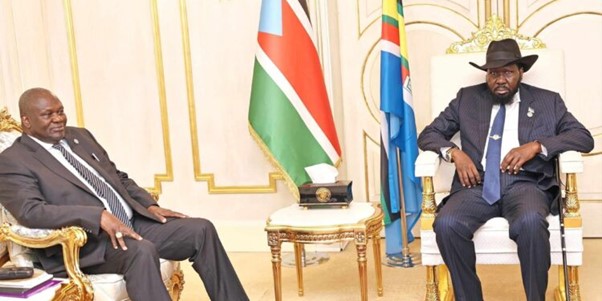
The Church’s demand for the release of political prisoners arrives as a high-stakes legal battle continues in Juba. Currently, Dr. Riek Machar and seven co-accused allies are facing a complex court trial that has polarized the nation. These legal proceedings are deeply rooted in the violent escalations that rocked Nasir County in the Upper Nile region, as well as other volatile pockets across the country.
The arrests of Dr. Machar and his associates followed a series of clashes in Nasir, where government forces and opposition-aligned groups engaged in heavy combat, leading to significant civilian displacement and a breakdown of local security. The government has linked Dr. Machar and his co-accused to the instigation of these hostilities, charging them with treason and undermining the state.
However, the South Sudan Council of Churches views these trials not as a pursuit of justice, but as a barrier to the inclusive political dialogue necessary for a lasting settlement.
The religious further added that the release of the prisoners is crucial in preventing the trial from becoming a catalyst for further bloodshed in the Upper Nile and beyond.