


By Kei Emmanuel Duku
In a powerful demonstration that peace dividends are taking root in one of South Sudan’s most fragile regions, a high-level international delegation visited Leer and Mayendit in Southern Unity on November 26, 2025. The mission, led by UN Deputy Special Representative of the Secretary-General (DSRSG), Resident Coordinator, and Humanitarian Coordinator, Anita Kiki Gbeho, observed the tangible success of the Reconciliation, Stabilization and Resilience Trust Fund (RSRTF) in building local capacity and social cohesion.
The RSRTF, a multi-partner pooled fund supported by nations including Canada, the EU, and the Netherlands, has turned the volatile, flood-affected region from a conflict hotspot into a living example of effective humanitarian-development work.
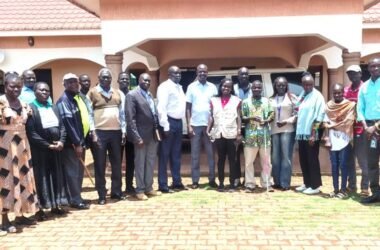
The delegation members met with communities, local authorities, youth groups, women’s associations, and peace structures, hearing firsthand how RSRTF-supported initiatives are reducing tensions, building trust, and promoting community-led resilience. They also visited newly funded infrastructure, including a Police Station and Community Market Shade in Mayendit and a Women’s Centre in Leer.
The European Union and the Netherlands highlighted the importance of localization designing and implementing programs with direct community input—as the foundation of stability. Barbara Egger, Team Leader for Cooperation at the European Union, confirmed the positive impact of this approach.
“This visit and in particular the exchanges with the communities have confirmed that the area-based initiatives supported by the RSRTF provide an important contribution for the process of stabilization of these counties,” Egger stated, underscoring that the programs are actively “contributing to the peaceful relations within and between communities, and preparing the ground for good governance and justice, as well as economic resilience.”
Similarly, Floor Nuiten, Deputy Head of Mission at the Embassy of the Kingdom of the Netherlands, stressed that working directly with communities is essential for long-term success.
“This visit for me emphasizes once more the importance of localization: working with the community in designing and implementing a program,” Nuiten said. She added, “To sustain the benefits and expand them in an efficient way will be an important next step for the RSRTF.”
A critical success factor highlighted during the visit was the way joint projects are dissolving longstanding political and military divisions. Youth and women leaders shared stories of collaborating on projects like dyke construction, which brought together communities residing in areas previously divided between SPLA-IO and SPLA-IG forces.
Furthermore, RSRTF support is strengthening the rule of law. Police officers, prison staff, customary court chiefs, and members of peace committees described how they are now part of a more coherent system for justice delivery. The growing recognition of the formal justice system was particularly visible during the recent successful mobile court session in Leer.
The humanitarian-development nexus the link between emergency aid and long-term development is clearly visible on the ground. Ingrid Østensen Ernø, Senior Adviser at the Norwegian Ministry of Foreign Affairs, expressed her insight on the model.
“The RSRTF field visit to Leer was one of the first’s visits I’ve been on where I have been able to see the humanitarian-development nexus truly in practice,” Ernø observed.
At the Women’s Centre, the delegation met with survivors of gender-based violence and women formerly associated with armed groups who are now rebuilding their confidence and livelihoods through support programs. They also engaged with Village Savings and Loan Associations and youth peace networks that actively work across political and military lines to prevent conflict.
Jennifer Cooper, Head of Cooperation at the Embassy of Canada, highlighted the emotional weight of the progress, noting that true change begins at the community level.
“The courage of the girl who stood up to speak in front of the chiefs and other senior members about how she now feels safe from violence in her community… and the elder ‘Mama’ who shared how families are no longer so quick to marry off their daughters at a young age, are powerful reminders that resilience and peace begin in communities,” Cooper reflected. “These changes are the real markers of progress.”
DSRSG/RC/HC Anita Kiki Gbeho underscored the strategic importance of the RSRTF’s work in a country continually threatened by widespread violence.
“What the RSRTF is doing at the local level, helping communities stabilize and preventing people from getting involved in wider conflict, is exactly what we need more have in the future,” Gbeho stressed. With conflicts breaking out in many states, supporting local communities to resist broader violence is essential, and she suggested that “strengthened engagement at the state level could make a significant difference.”
The Southern Unity RSRTF program, led by a consortium including World Relief, UNMISS, IRC, UNIDOR, DRI, and AMA, reaches 42 payams and 269,008 people across Leer, Mayendit, Panyijiar, and hot spots in Mayom and Koch, as well as nearby counties in Lakes State. The program’s unique success lies in its strategy: combining peace and security work, rule of law support, and livelihoods in the same areas, thus helping communities stay in place, reducing incentives for armed mobilization, and linking climate-flood response directly to conflict prevention.
The Fund’s approach does not treat Leer, Mayendit, and Panyijiar as permanent humanitarian emergencies, but as areas where peace dividends and local resilience can be built, even under extreme fragility. Continued donor support to the RSRTF is therefore necessary not only to continue saving lives but also to contribute to changing the trajectory of some of the hardest-hit parts of South Sudan.