



By Kei Emmanuel Duku
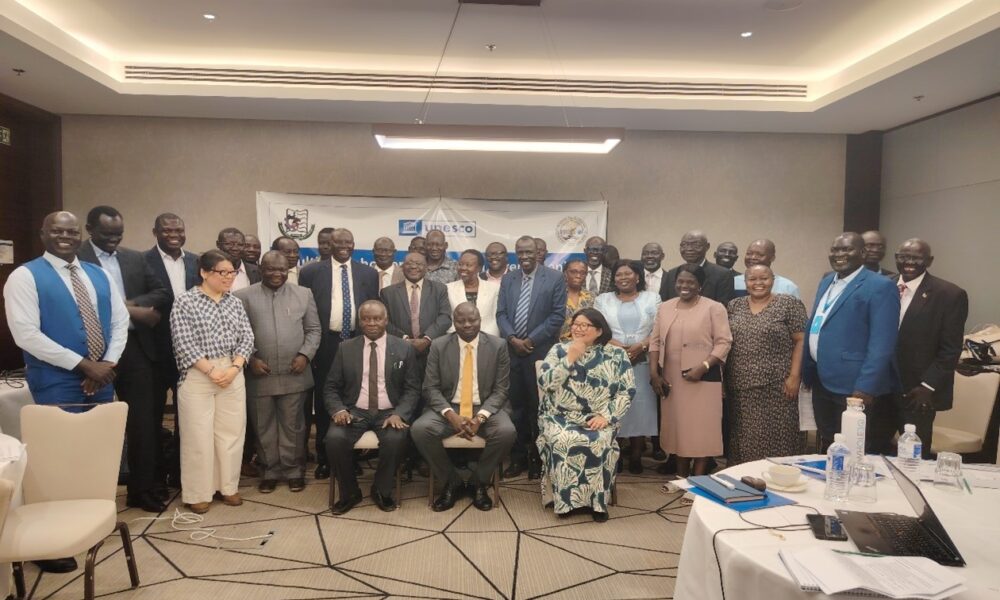
Higher education is no longer a luxury but a fundamental necessity for South Sudan’s survival, UNESCO’s top representative warned during an opening session of education workshop in Juba, as new data reveals a staggering 99% of the country’s population remains locked out of university-level learning.
Speaking at a high-level multi-stakeholder dialogue in Juba, Yayo Segi Vitchek, the UNESCO Country Representative to South Sudan, issued a clarion call to transform the nation’s educational landscape. She argued that without a robust tertiary system, the country cannot meet its commitments to the UN Agenda 2030 for Sustainable Development or regional peace priorities.
“Higher education is not a luxury. It is a right and a necessity,” Vitchek stated. “It is central to building human capital, restoring state institutions, strengthening public services, and laying the foundation for long-term peace.”
The crisis is most acute among the displaced. Thousands of young men and women living as refugees or Internally Displaced Persons (IDPs) possess secondary certificates or partially completed degrees, yet find themselves stuck in a humanitarian waiting room. Vitchek emphasized that these individuals must be viewed as assets rather than just aid recipients.
“These young people are not only beneficiaries. They are future teachers, health workers, engineers, administrators, and entrepreneurs,” she said, noting that if their prior learning is recognized, they can drive social cohesion. However, systemic barriers most notably a lack of documentation for those who fled conflict keep them sidelined.
While South Sudan has begun following the examples of Uganda, Zambia, and Kenya in recognizing prior learning, the current access rate for tertiary education in South Sudan remains a dismal 1% according to 2018 data. To counter this, the government took a landmark step in 2024 by introducing “provisional admissions,” allowing over 1,000 displaced students to enroll despite missing paperwork.
“South Sudan’s policy of provisional admission is extremely progressive,” Vitchek remarked, though she cautioned that admission alone is insufficient without accredited credentials to ensure future employment.
The struggle for higher education trickles down to the primary and secondary levels, where the Ministry of General Education is grappling with a massive shortage of qualified personnel.
Kachuol Mabil Piok, the Undersecretary for the Ministry of General Education and Instructions, revealed that the quality of schooling is currently under threat because more than half of the workforce lacks formal training.
“About 40 percent of the teachers we have currently are the only ones trained, but over 60 percent are not trained,” Piok estimated. He explained that the Ministry is now collaborating with the University of Juba to certify these educators through a new Teacher Training Institute.
Adding to the complexity is the national transition from Arabic to English as the language of instruction. “The majority of these people, especially teachers, were educated in Arabic,” Piok noted. “So we are also introducing English training programs to enable them to transition.”
He warned that addressing these gaps requires a continental conversation at the African Union (AU) and IGAD levels, as the Horn of Africa’s “crisis after crisis” continues to displace populations that should be in classrooms.
The Ministry of Higher Education echoed these concerns, pointing to a severe lack of resources that has brought university admissions to a standstill. Prof. Adil Athman Paidino, the Undersecretary for Higher Education, disclosed that while over 100,000 students are registered across public and private universities with 40,000 at the University of Juba alone the system is clasping under financial pressure.
“We are now going to two years without admission because of finance,” Prof. Paidino stated bluntly. He highlighted that even for the students already enrolled, poor social services like lack of electricity and high transport costs are driving away lecturers and diminishing the quality of teaching.
Paidino also addressed the “rare specializations” that displaced students bring with them, which South Sudan currently lacks the infrastructure to support. He argued that the solution lies in regional integration and the revival of a specific financial safety net for the youth.
“One of the solutions is the Student Support Fund,” Paidino said. “In the past, it used to be called the student welfare fund… we need to unify all these aspects.”
As South Sudan moves within four years of the Agenda 2030 deadline, the message from leaders is clear: higher education is the bridge to dignity. Without urgent investment from the government, private sector, and international partners, the strategic necessity of a trained workforce will remain out of reach.