


By Yiep Joseph
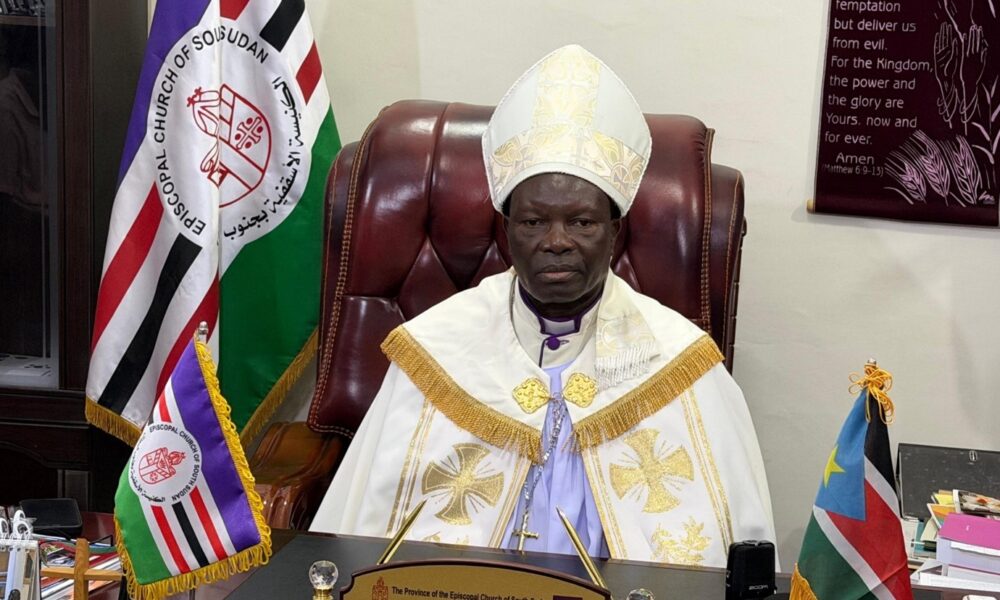
The Primate and Archbishop of the Episcopal Church of South Sudan, Justin Badi Arama, has renewed his call on the South Sudanese to reconcile.
The faith-based leader made the call as the world enters festive season.
In his Christmas and New Year message to the media, Badi reiterated the Church’s commitment toward peace and reconciliation in the country and the world at large.
“As we celebrate the birth of our Lord Jesus Christ, we give thanks for the priceless gift of God’s love made flesh amongst us,” Badi said.
“This celebration comes at a time when our nation is facing harsh economic challenges and widespread insecurity,” he added.
Quoting from the Bible’s Gospel of Luke, Badi said Christmas remains a symbol of hope, peace, and renewal despite the country’s challenges.
“Light shines in the darkness, hope is renewed, and peace is offered to all humanity,” he said.
Badi called on the communities to reconcile with one another through forgiveness.
In a separate statement readout by religious leaders, the South Sudan Council of Churches (SSCC) issued a stinging demand for the government to lead by example by immediately releasing all political opponents currently facing trial in Juba, framing the gesture as a non-negotiable step toward national healing.
The influential religious body argued that the nation’s path to stability is currently blocked by legal and political vendettas. The church leaders emphasized that the release of detainees, regardless of the severity of their charges, is the only way to signal a genuine commitment to peace.
“And every dialogue starts with true forgiveness,” the Council stated, adding that the government of South Sudan must take the first step. “The government should lead by example by releasing all those political opponents, with whatever political charges, detained and undergoing court trials in Juba. There must be a new page open for inclusive political dialogue within and with the held-out groups.”
The Council’s plea extended beyond domestic borders, calling on global stakeholders to maintain their pressure and support for the young nation. Recognizing that South Sudan cannot navigate these turbulent waters alone, the clergy invoked scriptural mandates to invite international mediators back to the table with renewed bravery.