



By Alan Clement and Chol D Johnson
The South Sudan People’s Defence Forces (SSPDF) has ordered civilians to evacuate opposition-held areas in Jonglei State as clashes with SPLA-IO intensify.
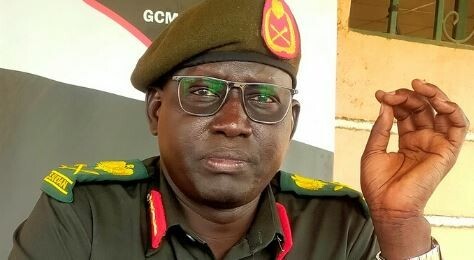
SSPDF spokesperson Maj. Gen. Lul Ruai Koang announced Tuesday that residents in Nyirol, Uror, and Akobo counties must leave areas under the control of SPLA-IO forces.
He warned civilians against remaining near opposition barracks, assembly points, or rally sites.
“The SSPDF command/leadership hereby orders civilians to immediately evacuate areas under the control of SPLA-IO,” Ruai stated in a press release.
“Especially those in close proximity to barracks, assembly and rally areas as well as resist deliberate efforts aimed at making them human shields,” he continued.
The directive comes amid renewed fighting in Jonglei, where SPLA-IO forces loyal to opposition leader Riek Machar alleged to have captured Waat town in Nyirol County earlier this week.
In response, it was alleged that SSPDF launched bombardments in Lankien town, which opposition officials alleged to have killed civilians residing in SPLA-IO–controlled territory.
The clashes mark a sharp escalation in hostilities between government and opposition forces, threatening fragile stability in Jonglei.
Fighting has spread across multiple counties, with both sides trading accusations of ceasefire violations.
Military analysts note that the evacuation order reflects SSPDF’s concern over civilian casualties as operations intensify.
However, rights groups argue that such directives often leave communities displaced and vulnerable, compounding humanitarian crises in already fragile regions.
Jonglei is among South Sudan’s most conflict-affected states, with communities facing food insecurity, flooding, and displacement.
According to the United Nations Mission in South Sudan (UNMISS), over 1,500 civilians were killed in conflict-related violence in 2024, while thousands more were displaced.
Humanitarian organizations warn that forced evacuations could worsen conditions for civilians, many of whom lack safe passage or access to aid.
Relief agencies already struggle to reach populations in contested areas due to insecurity and restrictions on movement.
The renewed clashes highlight ongoing strains in the Revitalized Agreement on the Resolution of the Conflict in South Sudan (R-ARCSS), signed in 2018 to end years of civil war.
Both SSPDF and SPLA-IO have been accused of breaching ceasefire provisions, undermining trust in the peace process.
Earlier in the week, SPLA-IO officials in Jonglei warned of a possible advance toward Yuai, the headquarters of Uror County, where SSPDF forces have been stationed since before the signing of the peace deal.
Northern Jonglei has seen a sharp rise in hostilities in recent weeks.
Civil society leaders have condemned the evacuation order as a dangerous precedent.
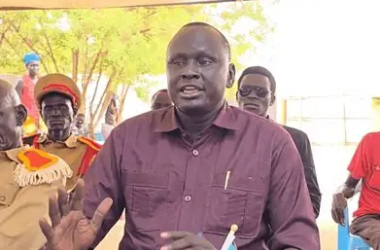
Edmund Yakani, Executive Director of the Community Empowerment for Progress Organization (CEPO), described the directive as “worrying and deeply disturbing,” saying it signals a renewed military approach to resolving political disputes.
“It is sad that the safety and protection of civilians in some parts of the country is no priority of the warring parties because they opted for a military approach to resolving political disputes,” Yakani said.
He called on both the SSPDF and SPLA-IO to halt hostilities and embrace dialogue, involving citizens, national stakeholders, and regional bodies such as IGAD, the African Union, and the United Nations.
Residents in Jonglei now face a stark choice: remain in contested areas at risk of bombardment, or flee into displacement with uncertain access to food and shelter.
For many, the evacuation order is less a protection measure than a forced uprooting. As SSPDF and SPLA-IO forces continue to battle for control of strategic towns, civilians remain trapped between warring factions.
The directive to evacuate may minimize collateral damage in theory, but in practice, it deepens the humanitarian crisis and exposes the fragility of South Sudan’s peace.