


By Kei Emmanuel Duku
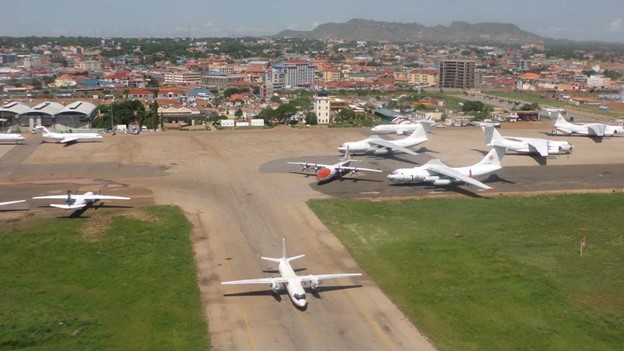
The graveyard of metal currently choking the taxiways of Juba International Airport is about to be forcibly dismantled, as the nation’s aviation watchdog issues a brutal “fly or fry” ultimatum to aircraft operators.
Owners of unserviceable “ghost planes” have exactly thirty days to either resurrect their fleets or face a state-led eviction that promises to be as costly as it is permanent.
The directive issued by the aviation authority is contained in a stern official circular, Ref No.: SSCAA/JIA/OPS/02/2026, issued on January 10, 2026 and was sgned by the Director General of the South Sudan Civil Aviation Authority (SSCAA), Dr. Ayiei Garang Deng Ayiei.
According to the official circular, the current congestion caused by abandoned aircraft has transitioned from a nuisance to a national security hazard. The SSCAA explicitly stated that the presence of such aircraft on movement areas, taxiways, aprons, or non-designated locations poses serious safety and operational risks.
These metallic carcasses are not merely taking up space; they are actively restricting the efficient use of vital airport infrastructure that is required for the safe transit of active commercial and humanitarian flights.
“We are sending a clear message that Juba International Airport is an active gateway to the world, not a storage yard for broken wings,” remarked a senior enforcement official within the authority. This statement reinforces the regulator’s position that the standard operating procedures of the airport must be respected to maintain its international standing. “For too long, these stationary vessels have occupied the very arteries of our aviation hub, and we will no longer compromise the safety of active passengers for the sake of abandoned assets.”
The authority was explicit in its prohibition, noting that taxiways, runways, and movement areas are strictly not authorized for aircraft parking under any circumstances. To facilitate the cleanup, the SSCAA has ordered all operators with grounded or unserviceable units to coordinate immediate recovery, towing, or disposal arrangements with Airport Operations Management. The document warns that any action taken must be performed in accordance with approved safety procedures to prevent further damage to the airport’s recently upgraded surfaces.
The financial consequences for those who ignore the February 9 deadline are expected to be devastating. The circular warns that failure to comply will trigger immediate regulatory enforcement, including the physical removal of the aircraft by the authority. In a move designed to protect the national treasury, the SSCAA confirmed that all associated costs—including specialized towing and disposal fees will be recovered directly from the delinquent operators.
“This is an issue of accountability as much as it is about aviation safety,” an industry analyst noted, explaining why the ‘recovery of expenses’ clause is so significant. By placing the financial burden on the operators, the government is ensuring that private negligence does not become a public expense. “If an operator cannot afford to fix their plane, they certainly cannot afford the bill the government will send them for hauling it away as junk.”
This crackdown is synchronized with a massive inter-agency effort with copies of the circular have been distributed to the Ministry of Transport, the Ministry of Interior, the National Security Service (NSS), and the Organized Forces at JIA to ensure that the 30-day window is strictly enforced with the full weight of the state.
The current drive to clear the tarmac is the final piece of a larger puzzle aimed at elevating Juba International Airport to meet elite international and regional standards.
Over the last several years, the facility has transitioned from a series of tents to a modern aviation hub under a comprehensive government master plan. This transformation was significantly accelerated following the inauguration of the new terminal building in October 2018, which provided the much-needed capacity to handle the surge in post-independence air traffic.
A critical component of this upgrading project has been the extension and rehabilitation of the airport’s main runway. Originally limited in its capacity for larger long-haul vessels, the runway was extended from 2,400 meters to 3,100 meters with Chinese-led financing and engineering. This extension, coupled with the installation of a new state-of-the-art lighting system and improved drainage, has prepared the airport for the transition to 24-hour operations.
Further enhancing safety, the airport recently witnessed a mammoth effort in November 2025 as UNMISS handed back a significant parcel of land previously occupied by the peacekeeping mission.