


By Lodu William Odiya
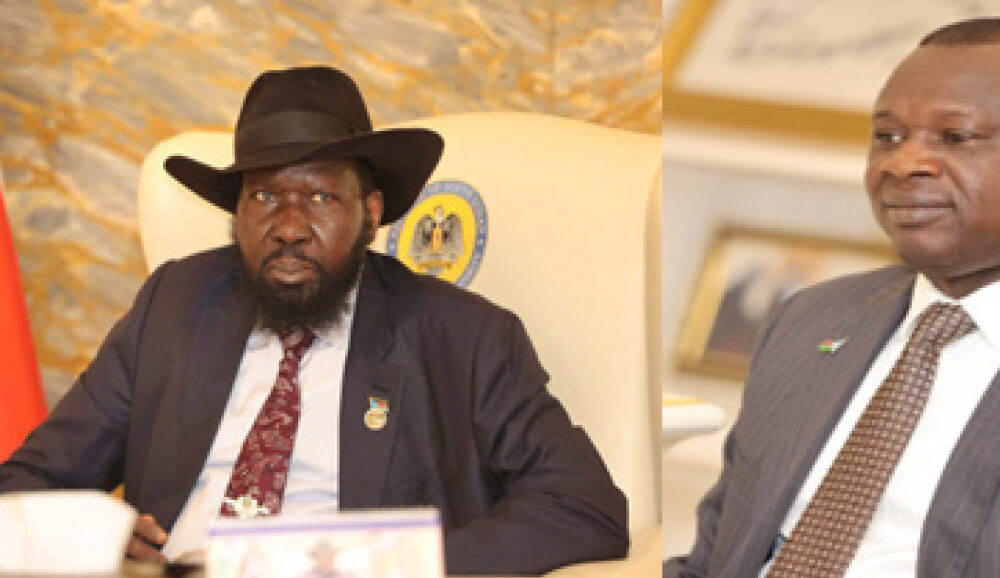
President Salva Kiir Mayardit has instructed the Management of the National Revenue Authority to intensify efforts in collecting revenue and ensuring strict adherence to the regulations as provided for under the existing law.
In a statement issued by the presidential press unit on Wednesday, the directive came after receiving a report on progress and challenges from the Commissioner General of the National Revenue Authority, William Anyuon Kuol.
“Anyuon reported to the President that National Revenue Authority was capable of collecting revenues sufficient to cover government salaries, finance operations, and other important national projects” the statement partly read.
According to the statement, the commissioner general cited a number of challenges hampering what he described as effective revenue collection.
“These, the CG said included undue and unnecessary tax exemptions, lack of cooperation from the business community, other taxpayers, and limited support from some stakeholders” the statement read.
The Commissioner General noted that such exemptions accorded to a few wealthy individuals and entities have made the government to lose billions of dollars in potential revenues.
Tax exemptions in the country has come under renewed scrutiny amid growing concerns that they are weakening domestic revenue collection and limiting the government’s ability to deliver essential services.
While tax exemptions were meant to stimulate investment and support humanitarian and development activities, poor monitoring and lack of regular review has allowed the practice to expand beyond its intended purpose.
On 3 September 2025, former Commissioner General Simon Akuei Deng addressed staff in Juba, stressing that generous tax exemptions erode South Sudan’s fiscal space and delay essential infrastructure upgrades.Top of Form
Economists in Juba argued the reform aligns with regional efforts to widen tax nets and stabilise currencies.
They point to Uganda’s 2021 phase-out of blanket waivers as a demonstration that disciplined policy can boost investor confidence without deterring trade.
South Sudan’s government hopes the same approach would help fund health clinics and roads, key deliverables outlined in the Revitalised Peace Agreement’s economic chapter.
Analysts emphasized that transparent collection could also ease donor fatigue by proving domestic commitment to self-reliance.
As governments face rising expenditure demands and limited borrowing options, reforming tax exemptions will be critical to strengthening domestic revenue mobilization and ensuring long-term economic stability.