


By Alan Clement
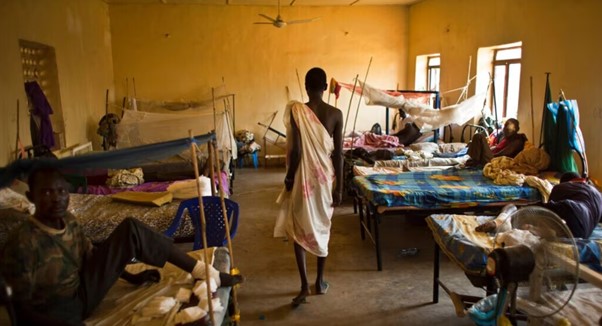
South Sudan’s fragile health system is facing a critical test as the Health Sector Transformation Project (HSTP) withdraws support from 102 facilities, exposing deep funding gaps and raising urgent concerns over the government’s ability to sustain basic services.
In a circular dated January 13, 2026, Health Minister Sarah Cleto Rial formally notified state governors and chief administrators of the scale-down. Acknowledging the weight of the decision, Rial emphasized that the ministry sought to minimize the fallout through prior dialogue.
“We are conscious that these decisions will have real impacts on communities,” Rial wrote. “For this reason, the inputs provided by many of you during the consultation process were critical in shaping the final outcomes and in avoiding, as far as possible, the creation of significant service gaps.”
The HSTP, a donor-funded initiative managed by UNICEF and WHO, has long been a lifeline for South Sudan, particularly in hard-to-reach and conflict-affected areas. The ministry explained that the decision to cut support followed an exhaustive review of the project’s financial position.
According to the circular, the government first attempted to reduce programmatic and indirect costs. “Only after these measures proved insufficient, and as a last resort to preserve the project and protect essential health services, a further set of adjustments was agreed,” the letter outlined.
The finalized austerity measures include, of HSTP support to 102 facilities to six major hospitals,to health worker incentives and for operational costs and in-service training.
The ministry stated these steps are necessary to keep the HSTP viable through June 2027.
To determine which facilities would lose funding, the ministry cited specific criteria, including security conditions, prolonged closures, and proximity to other services.
“Facilities that had been closed due to insecurity and remained non-operational for extended periods were therefore considered for discontinuation,” the circular noted, adding that the goal was to preserve primary referral pathways wherever possible.
While some facilities may transition to state or county management, many face an uncertain future due to limited domestic financing and weak local capacity to absorb the costs.
The human cost of these cuts is already weighing on those on the front lines. Health workers warn that for rural populations; the loss of a single clinic is catastrophic.
“In rural counties, even a single clinic can be the difference between life and death. When you remove support, you remove hope,” said a senior medical officer, speaking on condition of anonymity.
As the scale-down takes effect, the Ministry of Health has called on state leadership to fill the gap, stating: “Your role at the state level remains central to maintaining the continuity of essential health services during this period.”
However, for many South Sudanese, the transition means longer journeys for basic care and fewer staff to treat them. In a country where the health system is already stretched to its limit, these “adjustments” may be more than bureaucratic they are a matter of survival.