




By Alan Clement
South Sudan is edging closer to a large-scale humanitarian catastrophe as food insecurity reaches alarming levels, despite an extensive aid operation by the World Food Programme (WFP), a new situation report has warned.
According to the December 2025 WFP South Sudan External Situation Report, 5.86 million people are currently facing acute food insecurity at crisis level or worse, classified as Integrated Food Security Phase Classification (IPC) Phase 3 and above, between December 2025 and March 2026
Of these, 1.4 million are in IPC Phase 4 (Emergency), while 28,000 people are already experiencing IPC Phase 5 (Catastrophe); the most severe classification, marked by extreme hunger and risk of starvation.
The situation is projected to deteriorate further during the April–July 2026 lean season, when 7.55 million people are expected to face crisis-level food insecurity or worse, the report states
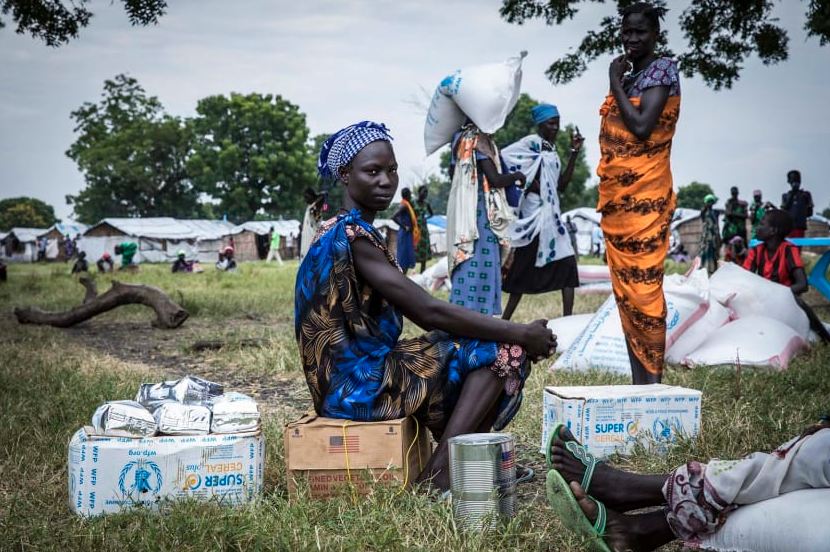
Despite these grim indicators, WFP says it mounted one of its largest operations in the country in 2025, assisting 4.2 million people nationwide. In December alone, the agency distributed 5,316 metric tonnes of food and USD 6.1 million in cash-based transfers, reaching about 700,000 people, or 70 percent of its monthly target
“South Sudan is facing a severe humanitarian crisis, marked by events that continue to push the country towards new levels of vulnerability,” the report noted, citing armed conflict, localized violence, climate shocks such as flooding, economic instability, and the spillover effects of the war in Sudan as key drivers of need
The displacement crisis remains a central factor worsening food insecurity. By the end of December 2025, South Sudan was hosting about 2 million internally displaced people, following clashes and flooding that forced hundreds of thousands from their homes.
Fighting in Upper Nile, Jonglei and Central Equatoria states displaced 326,000 people between March and December, while renewed violence in Jonglei late last year, including airstrikes, displaced 100,000 people in a matter of days, according to WFP
At the same time, the ongoing conflict in neighboring Sudan has pushed 1.3 million people into South Sudan since April 2023, sharply increasing pressure on food supplies, markets, water systems and basic services.
As of December, the country was hosting 601,000 refugees, 95 percent of them Sudanese, many concentrated in border counties such as Renk and Maban
WFP reported that it assisted 1.19 million of the new arrivals since the Sudan crisis began, providing 26,109 metric tonnes of food and USD 39.3 million in cash transfers. However, the agency warns that the continuous influx is compounding an already dire humanitarian situation.
Malnutrition levels are also described as critical with an estimated 3.2 million women and children acutely malnourished across the country.
In response, WFP provided specialized nutritious food to 912,000 malnourished children aged 6–59 months and pregnant and breastfeeding women and girls by the end of 2025, while 515,000 young children and mothers received preventive nutrition support
While famine prevention efforts were concluded in six of the seven targeted counties, reaching 250,000 people, this represented only 66 percent of the intended target, with operations in Panyijar County set to continue into 2026
WFP raised serious concerns about its ability to sustain operations as the agency faces a USD 341 million funding shortfall in 2026, threatening food assistance, nutrition programmes and critical logistics, including the prepositioning of supplies ahead of the rainy season, when large parts of the country become inaccessible
“In 2026, at least 75 percent of planned food assistance must be prepositioned before the start of the rains in May,” the report stated, warning that failure to do so would increase reliance on costly air operations and limit reach to the most vulnerable communities
As South Sudan enters another lean season marked by conflict, displacement and climate shocks, humanitarian agencies caution that without urgent and sustained international support, the country risks sliding further toward famine conditions, despite one of the largest aid responses in the region.