

By Alan Clement
South Sudan risks sliding back into full-scale conflict as political divisions deepen and violence escalates, senior UN and regional peace monitors warned the Security Council Tuesday, raising alarm months before scheduled December elections.
Briefing the Council virtually, the Interim Chairperson of the Reconstituted Joint Monitoring and Evaluation Commission (RJMEC), Amb. Maj. Gen. George Aggrey Owinow (rtd), said the political and security situation “has continued to deteriorate, placing the implementation of the R-ARCSS in serious jeopardy.”
His warning was echoed by the United Nations Under-Secretary-General for Peace Operations, Jean-Pierre Lacroix, who told the Council that “major developments have taken place in South Sudan that require particular attention, given the country’s continued fragility.”
At the heart of the crisis, both officials said, is a deepening political deadlock among the principal signatories to the 2018 Revitalised Agreement on the Resolution of the Conflict in the Republic of South Sudan (R-ARCSS).
“As described in the report, political deadlock among the main signatories to the Revitalized Peace Agreement continues to drive heightened tensions, manifesting in armed confrontations in many parts of the country,” Lacroix said.
Amb. Owinow detailed what RJMEC described as the erosion of power-sharing arrangements within the Revitalised Transitional Government of National Unity (RTGoNU), citing “removals and replacements of opposition representatives” from executive and legislative positions at national and state levels.
He further informed the Council that First Vice President Dr. Riek Machar Teny, leader of the SPLM/A-IO, “remains in detention and on trial together with other SPLM/A-IO officials,” a development that has deepened mistrust among signatories.
According to Lacroix the SPLM/A-IO has indicated it was unable to participate in discussions on proposed changes to the peace agreement “in light of the ongoing legal proceedings involving First Vice President, Riek Machar,” and has reiterated that its participation in political dialogue is contingent upon his release.
The UN peacekeeping chief also expressed concern over “recent unilateral initiatives to amend the Agreement, including proposals to defer key outstanding tasks, such as the constitution-making process, until after the elections.”
If pursued, he warned, “such changes would alter the primacy of the Agreement and its precedence over national legislation,” he emphasized. On the ground, the political impasse has been accompanied by a sharp surge in violence.
“In recent weeks, we have witnessed a sharp escalation of violence, particularly in Jonglei, with clashes between Government and opposition forces,” Lacroix told the Council.
“Both sides claim to be acting in self-defence, while at the same time preparing for the possibility of large-scale hostilities,” added the UN peacekeeping chief.
RJMEC’s monitoring data paints a similar picture. According to Owinow, the permanent ceasefire “has been severely violated since March 2025,” with clashes between the South Sudan People’s Defence Forces (SSPDF) and the SPLA-IO showing “no signs of abating.”
The Ceasefire and Transitional Security Monitoring and Verification Mechanism (CTSAMVM) documented 76 alleged ceasefire violations in December 2025 and 87 in January 2026 alone in its latest report.
In January, 30 incidents involved hostilities between signatory parties, while 26 were incidents of violence against civilians and humanitarian actors.
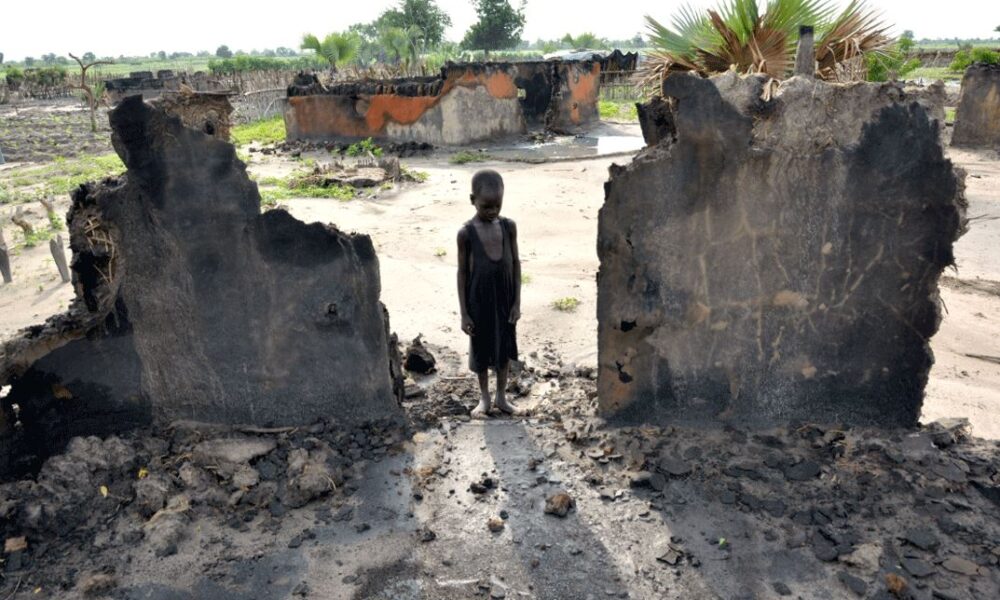
Lacroix underscored the human toll of the renewed fighting, particularly in Jonglei State. “The reports of aerial bombardments, inflammatory rhetoric, mass displacement, and severe restrictions on humanitarian access observed in Jonglei are of great concern,” he said.
“Communities that remember all too well the violence of 2013 and 2016 are again on the move with over 280,000 people displaced from fighting in Jonglei alone as per government sources,” added Lacroix.
He revealed that on 25 January, government forces in Jonglei instructed the temporary relocation of civilians and UN and humanitarian personnel from several counties, including from the UNMISS base in Akobo, citing an anticipated military operation.
Although the directive was later denied by the government spokesperson, Lacroix said the episode illustrated the volatility of the situation.
The humanitarian fallout is severe as well. “South Sudan remains one of the most dangerous places in the world for humanitarian workers,” Lacroix said, noting that 350 attacks on humanitarian staff and facilities were recorded in 2025, up from 255 the previous year.
The violence comes amid what he described as the country’s worst cholera outbreak, with over 98,000 reported cases since September 2024 and a resurgence in Jonglei. Flight restrictions and blocked movements, he added, are “preventing medical evacuations and delaying the delivery of life-saving assistance.”
In Uror and Nyirol counties, violence forced the closure of 24 nutrition sites, cutting off care for 7,868 children, including 2,633 suffering from severe acute malnutrition, and 2,764 pregnant and breastfeeding women.
At least eight health facilities have been affected; on 3 February, a hospital in Lankien was struck during an airstrike, destroying medical supplies and injuring staff.
Meanwhile, RJMEC warned that the very mechanisms meant to monitor and deter violations are under strain. Owinow told the Council that CTSAMVM faces “serious financial and operational challenges,” with its investigative capacity “critically reduced due to continuous cuts in donor support.”
With elections scheduled for December, both officials stressed that time is running short.
“A coordinated, strong approach by the international community will help ensure the integrity and supremacy of the Revitalized Agreement and will eventually lead to the long overdue and successful implementation of its security arrangements and the holding of free, fair and inclusive national elections,” Lacroix said.
But he issued a stark caution: “Without consensus, without the participation of all those who have placed their hopes into this peace process, any election is likely to be not credible and therefore worthy of our support.”
Owinow similarly warned that failure by the RTGoNU to address the political stalemate and commence “genuine and inclusive dialogue on a viable way forward” poses “a great risk to the Peace Agreement.”
Despite the grim assessment, both officials reaffirmed that the 2018 agreement remains the only viable path to stability. “To date, the R-ARCSS has delivered significant peace dividends,” Owinow said, urging the Council to use its influence to support full implementation “in letter and spirit.”
Lacroix reinforced that message, stressing that “there is no military solution and that the Revitalized Peace Agreement remains the only viable framework for peace and stability.”
For millions of South Sudanese already displaced, food insecure or battling disease, the coming months may determine whether the country consolidates a fragile peace or slides once more into the cycles of violence that scarred its first decade of independence.