

By Alan Clement
South Sudan’s vast oil wealth has failed to translate into citizens prosperity, leaving the country mired in poverty, instability and economic decline, according to the World Bank South Sudan Public Finance Review 2026.
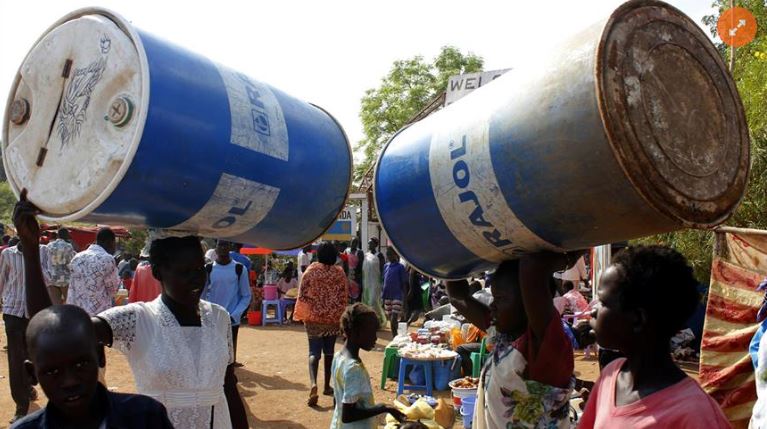
The latest World Bank report paints a stark picture of a nation where oil accounts for nearly all government revenue, yet nine out of ten people live below the poverty line and basic services remain in collapse.
Since independence in 2011, South Sudan has relied almost entirely on oil, which contributes 60 percent of GDP, 99 percent of exports and 85 percent of government revenues. But instead of fueling broad-based growth, oil has entrenched corruption, elite capture and rent-seeking behavior.
“South Sudan remains trapped in overlapping humanitarian and macroeconomic crises, with exceptionally high poverty,” the World Bank South Sudan Public Finance Review report stated.
Per capita GDP has plummeted by 76 percent, while only 5 percent of the population has access to electricity. Literacy rates hover at 34 percent, underscoring what the report described as a failure to invest in human capital despite billions in oil earnings.
The review highlighted systemic mismanagement of oil revenues. Although the Petroleum Revenue Management Act requires all oil income to be deposited into a single account, proceeds are often diverted into multiple undisclosed commercial bank accounts. This lack of transparency made the sector highly susceptible to corruption and diversion.
Between FY21 and FY24, the government spent US$1.8 billion on its Oil-for-Infrastructure scheme, yet delivered only limited results. Roads contracted under the program remain largely incomplete, with just 10 kilometers finished out of more than 2,700 kilometers planned according to the report.
“Oil revenues are frequently earmarked for opaque Oil-for-Infrastructure expenditures, diverting resources from essential services such as health and education,” the World Bank South Sudan Public Finance Review report noted.
The report further stated that crude-oil tendering processes also lack transparency, with contracts awarded to firms other than winning bidders. Advance oil sales, often on non-concessional terms, also cost the government an estimated US$150 million between 2018 and 2020.
By 2020, half of the government’s in-kind share of oil production was committed to repaying oil-backed loans, further undermining fiscal sustainability.
South Sudan’s dependence on Sudan’s pipeline infrastructure has left it exposed to regional instability. In 2024, conflict in Sudan forced the shutdown of the Petrodar pipeline, cutting South Sudan’s oil exports by two-thirds.
Though exports resumed in 2025, intermittent disruptions including drone attacks underscoring the fragility of the sector.
It further revealed that revenue losses have been compounded by unresolved overpayments to Sudan amounting to US$510 million, and chronic underinvestment in oil operations and maintenance.
According to the report, the state-owned oil company, Nilepet has never published financial statements or undergone an independent audit, despite reportedly earning at least US$400 million in government revenue between 2013 and 2019. None of these funds were transferred to accounts associated with the national budget.
While oil wealth circulates among elites and opaque contracts, ordinary citizens face worsening deprivation.
“Nine out of ten people live below the poverty line,” the World Bank South Sudan Public Finance Review report stated, adding that diversion of oil revenues has translated into chronic underinvestment in infrastructure and public services.
Salary arrears mounted, with public sector wages falling from US$1,000 at independence to US$500 in FY25, leaving workers unpaid for months. Meanwhile, health and education spending remained minimal, with just 4 percent and 2 percent of GDP allocated respectively.
The report calculated that the US$1.8 billion spent on oil-for-infrastructure projects could have funded 16 years of teacher salaries or 3.2 years of essential medicines. Instead, life expectancy remains at 57.6 years, literacy at 35 percent, and school completion rates at just 20 percent.
The World Bank urged South Sudan to restore transparency and accountability in oil revenue management, stressing the need for reforms to ensure that resources are properly directed to national priorities.
Among its recommendations were publishing quarterly oil production and revenue data, transferring all oil revenues directly to the National Revenue Fund, and requiring parliamentary approval for crude oil prepayment agreements.
The report also called for halting new loans or contracts backed by future oil production unless deemed essential and approved by parliament. Without such reforms, the country risks deepening its dependence on oil rents while citizens continue to suffer.
“The severe imbalance between the country’s resource wealth and its limited capacity to manage these resources has critically undermined South Sudan’s ability to transform its oil wealth into meaningful development,” the World Bank South Sudan Public Finance Review report concluded.
The paradox of oil riches amid mass poverty remains the defining feature of South Sudan’s economy. Unless governance failures are addressed and revenues redirected toward human capital, the country’s oil wealth will continue to enrich a few while leaving millions in deprivation.