




By Alan Clement
In a move to dispel public confusion, Housing Minister David Morbe Aquilino of Central Equatoria explained that the suspension of land demarcation is intended to streamline planning, not halt all land-related work.
In Ministerial Order No. 005/2026, Morbe directed all six counties of Central Equatoria State, Juba City Council, and Wonduruba Administrative Payam to stop independent land surveying, planning, and demarcation.
The directive froze county-level demarcations, signaling a shift toward centralized oversight of urban expansion and land management.
However, sections of the public interpreted the order as a blanket halt. “The outcome of the Ministerial Order was misunderstood. Many people have raised concerns and complaints that the minister suspended all activities. This is not correct,” Morbe told the press.
He emphasized that the Ministry of Housing, Lands and Public Utilities remains the sole authority mandated to manage land issues in Central Equatoria. “The order is clear: any demarcation or surveying of land must be done through the Ministry,” he said, stressing that communities and local authorities will be engaged as grassroots custodians of the land.
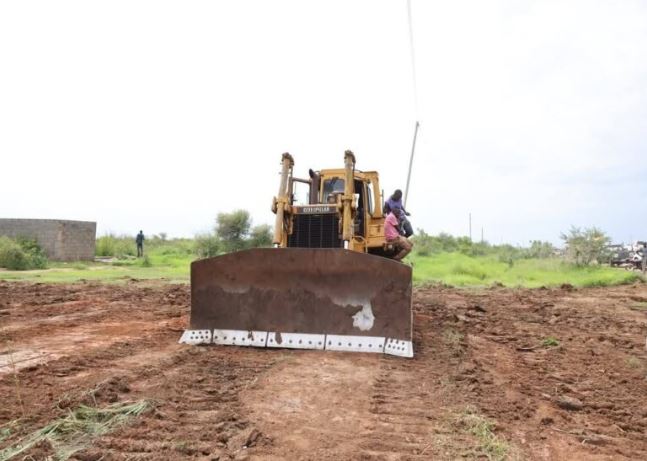
The directive does not suspend legitimate activities such as road openings or showing of plots, provided they are coordinated with the ministry. Instead, it seeks to restore order and prevent conflicts arising from overlapping allotments, encroachment, and unauthorized re-demarcations.
According to Morbe, all surveying and demarcation must now be approved by the state ministry. Lands already demarcated or registered must be submitted for review to align with the master plan, while ongoing independent demarcations are halted until harmonized with state policies.
“This order is about organizing plans and improving coordination, not suspending work,” he said.
He noted recurring problems, including plots initially classified as fourth class but later re-demarcated as third class without proper coordination, fueling disputes. In several cases, multiple plans have been issued for the same plots, compounding confusion and undermining residents’ security.
Community lands and residential zones have also been seized or merged into new development plans, often by armed groups. “Encroachment, overlapping, and re-demarcation are the main causes of conflict, often escalating into insecurity,” Morbe warned.
He cited violent clashes in Lokonyo (Matangai) as an example of how unmanaged land disputes can spiral into chaos.
The Minister underscored that the order is backed by the Land Act (2009), particularly Article 46, which vests land management authority in the Ministry of Housing. “The constitution and Land Act make it clear: land management is the responsibility of the Ministry,” he said.
While counties are required to establish land authorities, their plans must be approved by the state ministry before implementation.
County commissioners, payam administrators, and local engineers have been instructed to submit all plans to the state town planning board for harmonization. “By enforcing this order, no plan will be executed without approval,” Morbe stated.
He criticized the involvement of unqualified personnel in county-level planning, noting that “local engineers recruited in counties and payams are often not professionals, which has worsened the situation.”
Morbe acknowledged that more than thirteen areas including Lokwilili, Molobur, Korok West, Yaro, Durupi, Kapuri, and Hai Salam were demarcated long ago but remain contested due to illegal occupation.
“We have not less than thirteen areas already demarcated and allotted, with rightful owners holding documents. However, they have not yet received their plots due to obstruction by illegal occupants,” he said.
Many of these areas were demarcated before 2013, but during the crisis years, some allottees left and new settlers moved in, triggering resistance when the ministry attempted showing exercises.
“In Korok West last year, when we organized showing of plots, we faced resistance from people residing without proper documents,” Morbe said, adding that many were soldiers or armed individuals, creating insecurity.
He maintained that the rightful owner is the individual legally allotted land, issued official documents, and who has paid government fees. “Anyone residing on that plot without a title deed has no legal right,” he said, adding that such cases can be resolved through the law.
Morbe assured citizens that rightful owners will be shown their plots beginning Monday, with the program continuing through the dry season. Those without legal documents may be considered in future plans, either through relocation or compensation.
He condemned groups issuing fake documents and selling land illegally, calling such activities “criminal.” “Land management is the government’s responsibility, whether customary or community land, and only the government can organize and demarcate it,” he stated.
The minister reiterated that harmonization of plans and data is essential to prevent encroachment and overlapping, ensuring that the master plan remains the guiding framework for development.
He reassured residents that the state master plan remains active and under continuous review. “The master plan exists under the custody of the Ministry,” he said, noting that it will be updated to reflect new demarcations and development priorities.
A structured program of showing plots to rightful owners is scheduled to begin in cleared areas during the dry season. Morbe urged security organs to support implementation to prevent confrontations.
“Our priority is the safety of citizens. People should not worry. We are harmonizing plans to ensure smooth upgrading and future development,” he said.
The clarification reframes Order No. 005/2026 not as a suspension of development but as a corrective measure to restore order, legality, and security in land management.
By reasserting state control, the Ministry of Housing aims to harmonize urban growth, safeguard rightful ownership, and prevent conflicts that have plagued Central Equatoria’s land sector.