


By Kei Emmanuel Duku
South Sudan’s financial recovery is being choked by a culture of “weak spending discipline” that prioritized luxury vehicles and bloated administrative costs over the country’s crumbling schools and roads, according to a scathing new report by the World Bank Group.
The report, titled “A Narrow Path to Recovery: The Key Role of Restoring Public Finances South Sudan: Public Finance Review,” reveals a startling disconnect between the nation’s urgent developmental needs and its actual expenditures during the 2024 fiscal year.
In a year marked by mounting salary arrears and deteriorating infrastructure, the World Bank found that public investment remains poorly prioritized. Nowhere is this more evident than in the government’s procurement choices.
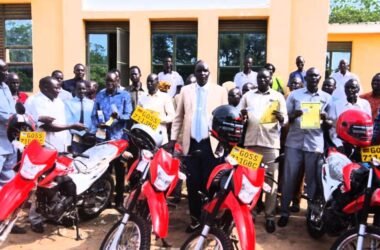
“In FY24, 72 percent of capital outlays went to vehicles, far above the planned 10 percent, while land, infrastructure, and specialized equipment were underfunded,” the World Bank stated. This surge in spending on transport assets occurred as overspending became most significant in defense, security, and public administration. Meanwhile, priority areas such as human capital development remained severely underfunded.
The report highlights a deepening crisis within the civil service, where the government has prioritized non-essential spending over its own workforce. More than 50,000 staff across 22 agencies have been left unpaid as agencies exhausted resources on supplies and materials, exceeding their allocations and neglecting mandated service delivery.
The World Bank noted that the low wage share in current spending reflects falling nominal pay and mounting arrears rather than improved efficiency. “Average public sector wages dropped from US21 in 2025,” the report detailed, adding that salary arrears have reached nearly 3 percent of GDP. These large arrears, now standing at eleven months, remain unresolved as oil revenue is constrained by obligations from oil-backed loans and advanced crude sales.
Much of the nation’s wealth continues to be funneled into the “Oil-for-Infrastructure” scheme, a program the World Bank claims has delivered “limited results” despite approximately US$1.8 billion being recorded as spent between FY21 and FY24.
The scheme, which was intended to use Nile Blend crude oil proceeds to build roads and bridges, has faced intense scrutiny over transparency and financial oversight. According to the report, the direct involvement of the Office of the President has reduced the role of line ministries, leading to “highly centralized contract management.”
The results on the ground tell a story of vast discrepancies. “As of early 2025, only 106 km of paved and painted inter-city roads had been completed out of 2,330 km required,” the World Bank observed, contrasting this with the 2,760 km claimed in various contracts.
Investigations into seven priority projects estimated to cost US2.5 billion—substantially below the US1.4 billion.
The report further alleges that road lengths are routinely overstated and unit costs are markedly higher than comparable projects in neighboring countries. “Contracting for Oil-for-Infrastructure projects has bypassed competitive tendering, violating the Public Procurement and Disposal of Assets Act, 2018,” the World Bank stated, noting that some contracted firms and their beneficial owners have previously been sanctioned for corruption.
Beyond infrastructure, the report paints a picture of a public sector that is heavily overstaffed yet functionally ineffective. The government headcount rose by 60 percent between 2020 and 2024, reaching 720,000. This proliferation is largely attributed to a “proliferation of Directorates and Departments oriented to accommodate various political factions” and a lack of clear definitions for responsibilities.
As the nation struggles with volatility in capital expenditures due to an increased reliance on oil revenues, the World Bank warns that the current trajectory is unsustainable. While efforts to restore credibility through projects like the Building Institutions for a Functional Public Service (BIFEPS) are underway, the report makes it clear that the path to recovery remains narrow and obstructed by the very spending habits intended to pave it.