




By Alan Clement
South Sudan has been placed under “Extreme Caution” for heat stress as temperatures climb above seasonal norms, even as neighboring countries brace for heavy rains and flooding.
The IGAD Climate Prediction and Applications Centre forecast covering February 4–11, 2026, warned that South Sudan will experience warmer-than-usual conditions across the entire country.
IGAD singled out the country’s Eastern regions for elevated heat stress, categorized as “Extreme Caution,” a threshold where prolonged exposure can trigger dehydration, heat exhaustion, and other health risks.
Mean temperatures are expected to range between 20–32℃, placing much of the population in zones of moderate to high heat.
For a country already grappling with fragile health infrastructure, the warning raises alarm about the capacity of clinics and hospitals to respond to heat-related illnesses. Aid agencies have long cautioned that climate extremes compound humanitarian crises, and this forecast underscores the urgency of preparedness.
While South Sudan heats up, neighboring countries face a different challenge. IGAD projects wetter-than-usual conditions from February through April across Somalia, Ethiopia, Kenya, Uganda, Rwanda, northern Tanzania, and southern South Sudan.
This divergence highlights a climate split within the Greater Horn of Africa: South Sudan’s heat stress contrasts sharply with flood risks elsewhere.
Such uneven climate shocks pose a test for regional cooperation. Floods in Kenya or Somalia can displace communities and disrupt trade routes, while South Sudan’s rising heat threatens agriculture and water supplies.
Together, these extremes illustrate how climate variability is destabilizing livelihoods across borders.
South Sudan’s agricultural sector, heavily reliant on rainfall patterns, faces heightened risks. Warmer-than-usual conditions can shorten growing seasons, reduce yields, and stress livestock.
Farmers in Jonglei, Upper Nile, and Eastern Equatoria regions already vulnerable to conflict and displacement may struggle to adapt to shifting climate conditions.
Regionally, the Horn of Africa’s food security outlook is precarious as wetter-than-usual conditions in Ethiopia and Kenya could lead to localized flooding, damaging crops and infrastructure. Meanwhile, South Sudan’s heat anomalies threaten to worsen food shortages, potentially driving up prices and increasing reliance on humanitarian aid.
The “Extreme Caution” heat stress category signals significant health risks. Prolonged exposure to high temperatures can cause heat cramps, exhaustion, and in severe cases, heatstroke.
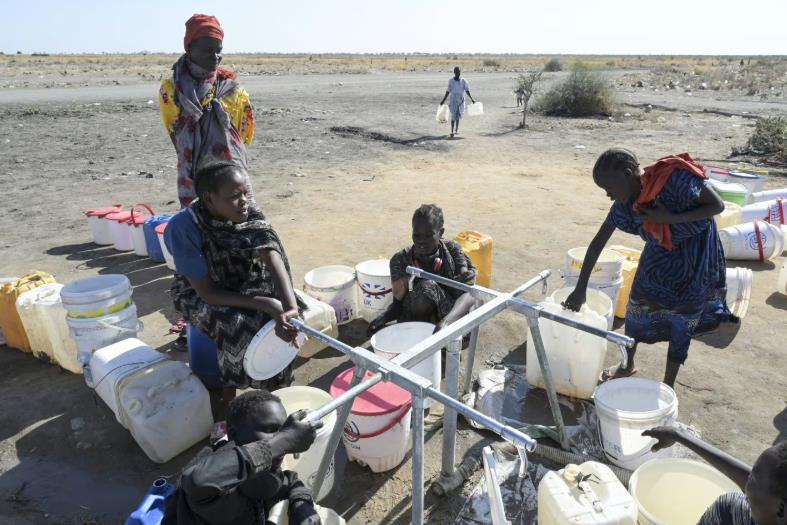
In rural areas where access to clean water is limited, the risks are compounded. Children, the elderly, and those with pre-existing conditions are particularly vulnerable.
Regional health systems face parallel challenges as flooding in Uganda or Somalia can trigger outbreaks of waterborne diseases such as cholera, while South Sudan’s heat stress raises the likelihood of dehydration and vector-borne illnesses.
The dual crises highlight the need for coordinated health responses across IGAD member states.
The forecast places pressure on governments to act. In South Sudan, authorities must prioritize public awareness campaigns, ensure water availability, and strengthen health services to mitigate heat impacts.
Regionally, IGAD’s role in coordinating climate adaptation strategies becomes critical. The organization has repeatedly emphasized the importance of early warning systems, cross-border cooperation, and investment in resilience.
South Sudan’s situation also underscores the broader governance challenge: how to integrate climate forecasts into national planning. With infrastructure already strained by conflict and underdevelopment, climate extremes risk overwhelming state capacity unless proactive measures are taken.
Communities across South Sudan have long demonstrated resilience in the face of hardship, from conflict displacement to floods. The current forecast adds another layer of stress, but it also highlights opportunities for regional solidarity.
Shared climate risks can drive cooperation in water management, agriculture, and health preparedness.
For citizens in Juba, Bor, and Malakal, the immediate concern is coping with rising temperatures. For their neighbors in Nairobi, Mogadishu, and Addis Ababa, the challenge is preparing for floods.
Together, these realities reflect the interconnected nature of climate emergencies in the Horn of Africa.
The IGAD forecast paints a stark picture: South Sudan is heating up under “Extreme Caution” stress levels, while much of the Horn braces for floods. This climate divide is more than just a meteorological anomaly but a humanitarian and governance test.
How South Sudan and its neighbors respond will determine whether climate extremes deepen crises or catalyze stronger regional cooperation.