



By Alan Clement
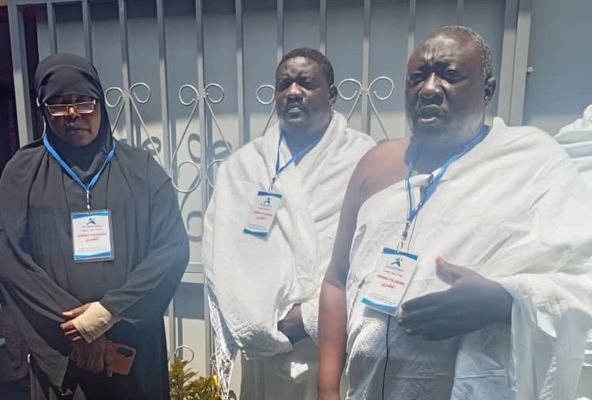
The group of South Sudanese Muslims has departed for Saudi Arabia to perform Umrah, marking the country’s inaugural direct pilgrimage and eliminating the need for transit through neighboring states.
The inaugural group is led by Sheikh Juma Said Ali, a former presidential advisor on Islamic affairs in South Sudan, who framed the journey as both spiritually significant and practically important for widening access to pilgrimage.
“Umrah is very important to us as Muslims. It is part of our religion, and Prophet Muhammad (peace be upon him) performed Umrah,” Sheikh Juma said before departure.
“For those who cannot afford Hajj because of the high cost, Umrah is a way to fulfill part of that obligation,” he added.
Umrah, often described as the “lesser pilgrimage,” can be performed at any time of the year, unlike Hajj, which takes place during specific Islamic months and is considerably more expensive. While it does not replace Hajj; one of Islam’s five pillars, it is widely regarded as a deeply meaningful act of worship.
For years, South Sudanese pilgrims have faced logistical barriers and with no Saudi embassy operating in Juba, applicants typically traveled to Uganda, Sudan or Ethiopia to secure visas, arrange documentation and board international flights.
The process added costs and delays, limiting participation largely to those with sufficient financial means and travel flexibility. However, the new arrangement facilitated by Alwatan Limited allows pilgrims to depart directly from Juba International Airport, streamlining both visa coordination and travel.
Sheikh Juma described the development as long overdue. “We want to enjoy the same privileges as other countries, because we too have sovereignty. It is important for us to benefit from this sovereignty and not depend on others.”
With 8 members consisting of 5 males and 3 females departing in this historic journey, the Muslim leader said the shift could gradually increase participation, particularly among young Muslims.
In South Sudan, Muslim communities have longstanding roots in urban centers such as Juba, Wau and Malakal. Sheikh Juma said access to Umrah may strengthen religious engagement among youth.
“Islam has five pillars: Shahada, prayer, Zakah, fasting, and Hajj,” Sheikh Juma said adding, “If you cannot manage Hajj, you can still go for Umrah, which is a vital part of our faith. This is why we encourage the youth to save and go for Umrah, even if they cannot yet afford Hajj.”
The Muslim community view Umrah as both a devotional act and a formative experience, particularly for first-time international travelers. For young participants, the journey represents exposure to the broader Muslim world and participation in rituals performed at Islam’s holiest sites in Mecca.
Travel coordination for the inaugural group was handled by Al-Watan, a local organization that facilitated visa processing, flights and accommodation arrangements in Saudi Arabia. Organizers say health and safety measures were prioritized to ensure compliance with Saudi requirements.
While the launch of direct travel is being welcomed within the Muslim community, broader structural challenges remain. South Sudan’s limited diplomatic footprint abroad and ongoing economic constraints continue to complicate international mobility for many citizens. High inflation and foreign currency shortages have also made overseas travel costly.
Nevertheless, the religious leader said the new pathway reduces administrative uncertainty and removes one of the most significant obstacles: reliance on third-country transit.
For Sheikh Juma, leading the first direct group carries symbolic weight. “I cannot express my happiness at being the first South Sudanese Sheikh to lead this trip. Inshallah, others will follow,” he concluded.
For participants, the journey is primarily spiritual. For the community at home, it signals a practical shift; one that could make annual Umrah travel more accessible in the years ahead.
Whether the initiative expands will depend on sustained coordination with Saudi authorities and affordability for would-be pilgrims. For now, the departure marks a first: South Sudanese Muslims traveling directly from their capital to perform one of Islam’s most cherished acts of worship.