

By Alan Clement
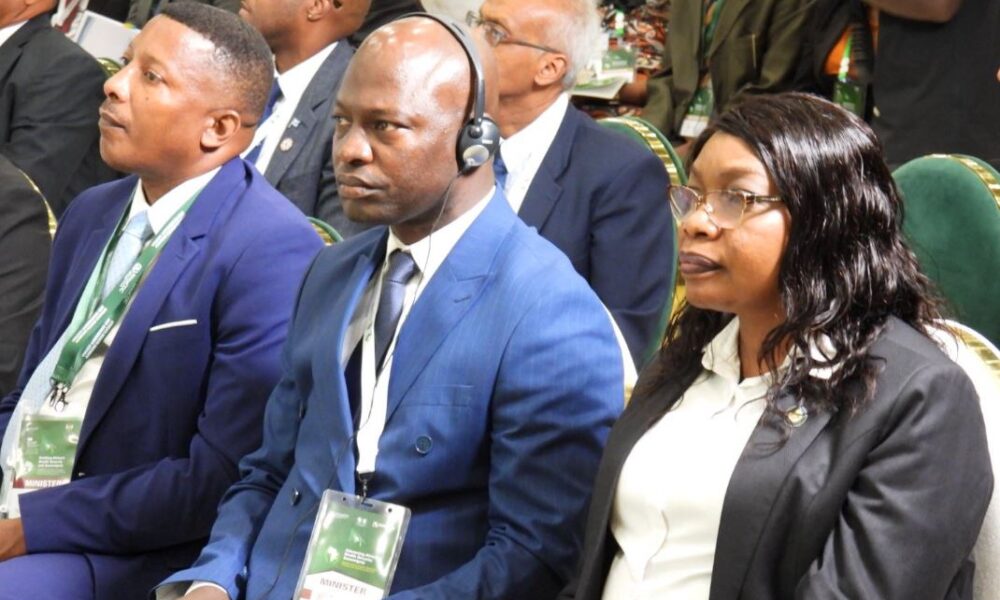
South Sudan’s Minister of Health, Sarah Cleto Rial, has joined continental leaders in backing a bold African Union (AU) framework to strengthen health systems, with a particular focus on expanding the health workforce.
The commitment, made during a high-level side event on the margins of the AU Summit, places community health workers at the center of efforts to improve child survival, nutrition, and universal health coverage across Africa.
The side event, convened under the theme “Recommitting Africa to Child Survival through Strategic Investment in Prevention of Malnutrition,” brought together heads of state, ministers, and development partners.
Hosted by the Kingdom of Lesotho and co-organized by the AU Commission, the African Development Bank, FAO, Nutrition International, and World Vision, the gathering underscored the urgency of tackling malnutrition and preventable child deaths through stronger health systems.
Recommendations included institutionalizing domestic financing for health, aligning national budgets with the Abuja Declaration’s target of allocating at least 15% of government spending to health, and creating dedicated budget lines for workforce development.
The AU also reaffirmed its 2017 decision to recruit, train, and deploy two million community health workers across the continent, and reinforced the 2022 establishment of the AU Health Workforce Task Team to coordinate efforts at continental level.
For South Sudan, these commitments are particularly urgent. The country remains critically underserved in its health workforce, with only 7.6 skilled health workers per 10,000 people; far below the WHO-recommended threshold of 45.5 needed to achieve universal health coverage.
This shortage has left rural communities, conflict-affected populations, and displaced families with limited access to essential services, including maternal care, immunization, and nutrition programs.
Minister Rial emphasized that scaling up community health workers could be transformative for South Sudan, where fragile infrastructure and insecurity often prevent citizens from reaching hospitals or clinics.
“Community health workers are the bridge between households and the health system. They are trusted, accessible, and vital for delivering vaccines, nutrition counseling, and basic care in hard-to-reach areas,” she said in a statement.
The AU’s side event on child survival and nutrition highlighted the devastating impact of malnutrition across Africa, where millions of children remain at risk of stunting, wasting, and preventable death.
In South Sudan, years of conflict, flooding, and economic crisis have left more than 1.4 million children acutely malnourished, according to humanitarian assessments. By investing in community health workers, South Sudan hopes to strengthen frontline capacity to deliver nutrition interventions, monitor child growth, and provide early referrals.
This aligns with AU’s push to integrate workforce expansion with sustainable immunization programs, ensuring that vaccines against measles, polio, and other childhood diseases reach every community.
A major challenge remains financing. South Sudan’s health sector is heavily dependent on external aid, with limited domestic resources allocated to health. The AU’s call for member states to dedicate 15% of national budgets to health in line with the Abuja Declaration will test South Sudan’s fiscal capacity.
Yet, Minister Rial noted that institutionalizing domestic financing is essential for sustainability. “We cannot rely indefinitely on humanitarian funding. Building a resilient health system requires predictable, domestic investment in our workforce and services,” she said.
The AU Health Workforce Task Team offers South Sudan an opportunity to coordinate with peers, share best practices, and access technical support for workforce planning.
For Juba, participation in continental initiatives could help address chronic shortages, improve training standards, and integrate immunization and nutrition programs into long-term health system strengthening.
South Sudan’s endorsement of the AU’s health workforce agenda reflects both urgency and opportunity. With one of the lowest health worker-to-population ratios in Africa, the country faces immense challenges in delivering care.
Yet, by scaling up community health workers, aligning financing with continental commitments, and linking workforce expansion to child survival and nutrition, South Sudan could begin to close the gap between policy and practice.
As the AU pushes forward with its framework, the test will be whether South Sudan can translate continental commitments into tangible improvements for its citizens ensuring that every child, even in the most remote cattle camp or flood-affected village, has access to life-saving care.
South Sudan Backs AU Drive to Expand Community Health Workforce
More in Health:
-
 CES Health Ministry opens free Medical Camp, blood donation drive
September 19, 2026
CES Health Ministry opens free Medical Camp, blood donation drive
September 19, 2026
-
 HEALTH: Over 50 women receive fistula surgery as Juba Fistula Camp closes
September 15, 2026
HEALTH: Over 50 women receive fistula surgery as Juba Fistula Camp closes
September 15, 2026
-
 Health authorities assess Ebola preparedness in Yei
September 11, 2026
Health authorities assess Ebola preparedness in Yei
September 11, 2026