



By Alan Clement
The Teachers’ Professional Union of Central Equatoria State has accused authorities of illegally selling land for teachers’ quarters to private individuals, warning the move threatens educators’ welfare and undermines education delivery in Juba.
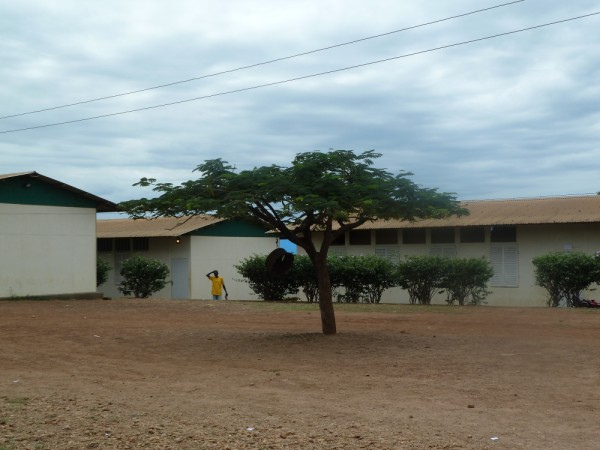
According to a statement from the State’s Housing ministry, the Chairman of the union, Emmanuel Lado Steven, said the disputed land involves teachers’ premises at Juba Day Secondary School, where surveyors allegedly demarcated houses that are currently occupied by teachers and their families.
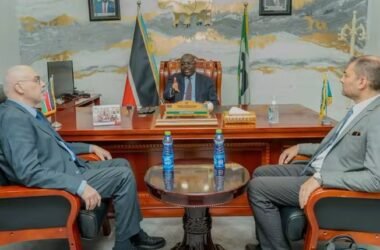
“It is good enough that we have come here as a team to visit our Minister of Housing, regarding our issue concerning our land, which is the teachers’ quarters that were being sold out,” Emmanuel said after meeting the state Minister of Housing, Land and Public Utilities.
He stated that the union had earlier raised the complaint with the Ministry of General Education and also petitioned the former governor but had not received feedback. “We raised this complaint to our Minister and the Minister of General Education, but there has been no response.”
He added that the matter was also forwarded to former Governor Rabbi Mujung, who promised to look into it but offered no resolution. “We also forwarded it to our former Governor, Rabbi Mujung, who said they were going to look into the issue. Up to now, we don’t know where to go,” he said.
According to Emmanuel, the situation escalated when engineers went to the site and began demarcating plots within the teachers’ residential area. “People went there and demarcated the area. The first time I went, I stopped them. The second time, they refused and went ahead with their activities,” he said.
He further alleged that plots at Juba Day Secondary School had already been allocated to individuals who are not part of the institution, raising fears of possible eviction.
“What happened in Juba Secondary School is that all plots were allocated to individuals, which is not good. Now they want to send the teachers out. Where are those teachers supposed to stay?” he asked.
The union leader warned that the loss of institutional housing would create serious logistical challenges, especially during routine transfers of teachers from other counties to Juba. He argued that government housing plays a critical role in staff deployment and retention.
“When we have a general transfer, maybe someone from Yei wants to come to Juba where will they find a place?” he said.
Beyond housing, Emmanuel said land belonging to other education facilities had also been affected. He cited concerns about areas around Juba One, Juba Commercial; land he claimed had been allocated for non-educational use.
“At least the Ministry of Education, the Budget and Planning Department, should work with Housing to open the place for education, so that students will get a field. At the moment, we don’t have one, and sometimes we have competitions,” he said.
He framed the dispute as a matter of national development, linking education infrastructure to the country’s future. “If you want to develop a country, it is through education. But if you don’t want to develop the country, that is another thing,” he said, adding that the union’s aim is to prevent actions that could weaken the education sector.
In response to the allegations, the Minister of Housing, Land and Public Utilities confirmed that he had received a formal petition from the Teachers’ Professional Union and acknowledged the seriousness of the matter.
“The administration of the Teachers’ Professional Union of Central Equatoria State, under the leadership Emmanuel, came to my office, and we had a meeting. The meeting was about the petition or complaint they raised regarding land in Juba Day, which is the teachers’ premises or houses,” the minister said.
He explained that, according to the union’s complaint, some survey engineers went to the site and began demarcating houses, claiming they had been allotted to individuals outside the institution. He described the issue as sensitive and said the ministry had intervened to prevent escalation.
“When engineers went to the ground, there was resistance from teachers, and we are keen not to allow any inconveniences or conflict to happen within the teachers’ residences, because it could involve many issues,” he said.
The minister announced that he would establish an investigation committee comprising officials from the survey and housing departments to determine who authorized the alleged allocations and whether due process was followed.
“We need to know who those engineers or surveyors were who went to Juba Day to start taking the teachers’ houses. Already, some houses have been demarcated for individuals while teachers are residing there. Such activity may have gone the wrong way, not through the right procedures,” he said.
He clarified that houses belonging to institutions are not handled unilaterally by the Ministry of Housing and must be initiated by the concerned institution and approved through proper channels, including the Council of Ministers.
He added that he would brief the Governor of Central Equatoria State and consult with the Minister of General Education before any final decision is made.
“I would like to inform the Teachers’ Union and all professionals to remain calm. Their voice and concern will reach the administration and leadership. We will take our part as a Ministry to inform engineers not to go to the ground, in order to avoid misunderstandings,” he said.
Land disputes remain a recurring source of tension in Central Equatoria State, particularly in urban areas where demand for plots continues to rise and competition over public land has intensified in recent years.
While the Minister of Housing has pledged an investigation and further consultation with relevant authorities, the Ministry of General Education had not publicly responded to the specific allegations at the time of publication. Efforts to reach the Minister of General Education for comment were unsuccessful.
The outcome of the promised inquiry is expected to determine whether the disputed teachers’ quarters will remain under the Ministry of Education or be reassigned through formal government procedures.
For now, the Teachers’ Professional Union says it will await the findings while pressing for the return of any land or houses allocated without institutional consent, maintaining that protecting teachers’ welfare is inseparable from safeguarding the future of education in the state.