


By Alan Clement
A disturbing pattern of targeted killings against humanitarian workers has emerged across South Sudan, prompting sharp condemnation from international partners and raising urgent questions about the safety of aid delivery in one of the world’s most fragile states.
In a joint statement from eight diplomatic missions including the embassies of Canada, France, Germany, Japan, UK and the US on the killings of humanitarian workers, in the span of just ten days, three humanitarian staff members were murdered in separate incidents across Upper Nile, Jonglei, and Baliet counties.
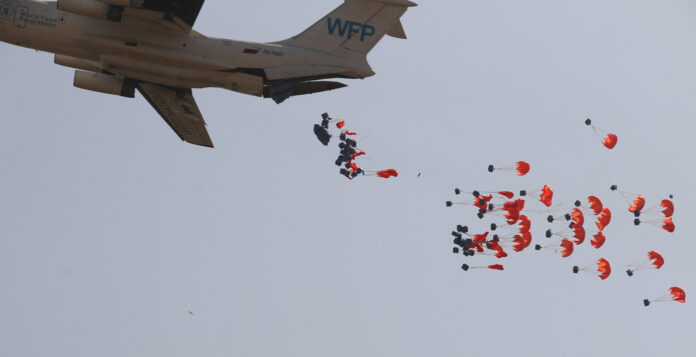
The statement detailed that on February 7, a UNICEF project staff member was killed in Baliet County; six days later, armed assailants murdered an IMA World Health nurse in Ayod County, Jonglei State; and on February 16, a WFP contractor serving as a Drop Zone Coordinator was shot dead in Nasir County, Upper Nile State.
“These heinous attacks on humanitarian workers are unacceptable, as are the high risks those seeking to help South Sudanese people have long been exposed to,” declared a joint statement issued by the foreign missions including the Delegation of the European Union.
The foreign missions urged the transitional government to act swiftly, stressing that continued attacks on aid workers threaten both humanitarian operations and the survival of millions already facing acute food insecurity.
“We call on the transitional government to take immediate action to end the escalating conflict, prevent further targeting of humanitarian personnel, hold perpetrators accountable, and ensure the safety of those providing life-saving assistance to the South Sudanese people,” read the statement.
The killings underscore the precarious environment in which aid agencies operate. South Sudan, already grappling with widespread food insecurity and displacement, relies heavily on humanitarian organizations to deliver essential services.
The targeting of frontline staff threatens to disrupt these lifelines, leaving vulnerable communities at even greater risk.
Humanitarian groups have long warned of the dangers their personnel face. Aid convoys are frequently ambushed, supplies looted, and staff harassed by armed groups. The recent spate of killings marks a chilling escalation, suggesting that humanitarian workers are increasingly being singled out rather than caught in crossfire.
The coordinated diplomatic response reflects growing frustration among South Sudan’s international partners. The joint statement is one of the strongest issued in recent months, signaling that patience with the transitional government’s handling of security is wearing thin.
“We renew our call for the transitional government to prioritize peace and take urgent steps to prevent further escalation of violence,” the embassies stated, offering condolences to the families and colleagues of the victims.
The message places responsibility squarely on South Sudan’s leaders to rein in armed groups and restore confidence in the country’s fragile peace process. Such rare unified messaging underscored the gravity of the situation.
The killings come at a time when South Sudan faces one of its worst humanitarian outlooks in years. According to UN estimates, millions remain food insecure, with conflict and climate shocks compounding the crisis. Aid agencies warn that without safe access, relief operations could stall, leaving communities without critical assistance.
The World Food Programme, UNICEF, and IMA World Health are among the organizations directly affected by the recent attacks. Each has lost staff members who were working to deliver health care, nutrition, and food aid.
Their deaths not only represent personal tragedies but also weaken the operational capacity of agencies already stretched thin.
For South Sudan’s transitional government, the killings present a stark test of credibility. International partners are demanding accountability, but past promises to improve security have often gone unfulfilled.
The embassies’ statement reflects a broader concern: that unchecked violence against humanitarian staff could unravel fragile progress toward peace.
The pattern of killings has cast a shadow over South Sudan’s humanitarian landscape, raising fears that aid agencies may be forced to scale back operations. For families mourning the loss of colleagues, and for communities dependent on relief, the consequences are immediate and devastating.
For the transitional government, the message from the international community is clear: act now, or risk losing the trust and support of those who have long stood by South Sudan in its struggle for peace.