


By Alan Clement
In a landmark development for regional cooperation, the Republic of South Sudan has officially assumed the Chairmanship of the Nile Equatorial Council of Ministers (NEL-COM), marking a historic first for the young nation.
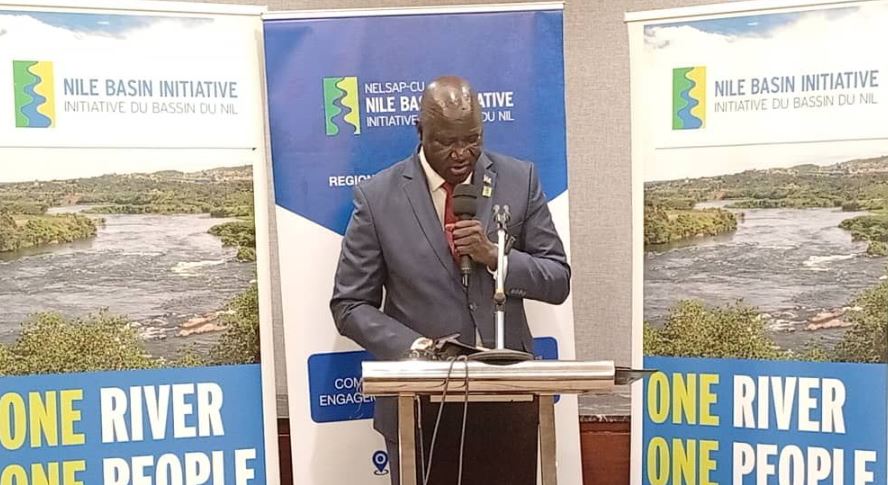
According to the ministry’s communication department, the announcement was made on Friday, February 20, 2026, during a high-level meeting convened in Juba, where James Mawich Makuach, Minister of Water and Irrigation, was unanimously elected Chairman by his counterparts from across the Nile Basin.
The decision represents a significant vote of confidence in South Sudan’s leadership capacity and its growing role in shaping regional dialogue on the sustainable management of shared water resources.
The Nile Basin Initiative (NBI), which brings together riparian states to foster cooperation over the world’s longest river, has long been a platform for both technical collaboration and political negotiation.
For South Sudan, assuming the chairmanship is more than a ceremonial milestone; it is a strategic opportunity to demonstrate its commitment to unity, solidarity, and shared prosperity among member states.
Minister Mawich expressed deep gratitude for the trust placed in him and pledged to steer the Council toward greater cohesion. “This chairmanship is not only an honor for South Sudan but also a responsibility to ensure that the Nile remains a source of life, peace, and development for all our peoples,” he said in a statement.
He emphasized that his tenure would prioritize dialogue, equitable resource management, and the strengthening of institutional frameworks that safeguard the river’s future.
The Nile Basin, stretching across eleven countries and supporting hundreds of millions of people, has often been at the center of complex debates over water allocation, infrastructure development, and climate resilience.
South Sudan’s leadership comes at a time when regional cooperation is increasingly critical, with rising demand for water, rapid urbanization, and the mounting pressures of climate change threatening to exacerbate tensions.
The chairmanship offers South Sudan a platform to project stability and constructive engagement, reinforcing its image as a responsible stakeholder in continental affairs.
The Chairmanship underscored the symbolic weight of the unanimous election for a country that only gained independence in 2011. South Sudan’s elevation to chair NEL-COM signals a maturation of its regional standing.
It also reflects the willingness of neighboring states to entrust Juba with a role that requires balancing national interests against collective priorities.
The chairmanship is expected to involve delicate negotiations over water use, hydropower projects, and environmental safeguards, all of which demand consensus-building and technical expertise.
The meeting in Juba was attended by ministers and senior officials from across the Basin, who lauded South Sudan’s readiness to host and lead.
Delegates highlighted the importance of continuity in advancing NBI’s strategic goals, including the equitable utilization of Nile waters, the promotion of joint investment projects, and the strengthening of institutional mechanisms for dispute resolution.
The atmosphere was described as one of solidarity, with member states reaffirming their commitment to dialogue over unilateral action.
For South Sudan, the chairmanship also carries domestic significance as tt positions the country’s Ministry of Water and Irrigation at the forefront of regional policymaking, potentially opening avenues for technical assistance, investment, and capacity-building.
This leadership role could help South Sudan address its own water management challenges, from urban supply systems to rural irrigation, while simultaneously contributing to broader Basin-wide strategies.
As Minister Mawich takes up the mantle, expectations are high that his stewardship will reinforce the principles of cooperation that underpin the NBI. His emphasis on unity and shared prosperity resonates with the broader vision of transforming the Nile from a source of contention into a driver of collective development.
The coming months will test South Sudan’s ability to navigate competing demands, but the unanimous support extended by fellow ministers suggests a strong foundation for collaborative progress.
The chairmanship of NEL-COM rotates among member states, but South Sudan’s assumption of the role is widely regarded as historic. It underscores the country’s determination to move beyond its internal challenges and assert itself as a constructive player in regional affairs.
As the Nile Basin faces mounting pressures, the leadership of James Mawich Makuach will be closely watched, both within the region and by international partners invested in the stability and sustainability of Africa’s most vital river system.