


By James Innocent
Leaders from Tore Payam in Yei River County have formally raised concerns over what they describe as insufficient consultation and lack of inclusivity in ongoing activities linked to the establishment and management of Lantoto National Park.
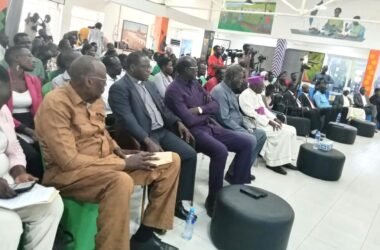
During a stakeholders’ meeting held in Yei Town, Tore Community Chairman Ali Hassan presented a position paper dated September 30, 2025, stating that while the community supports conservation and development initiatives, the current process risks sidelining residents who live in and around the proposed park area.
He emphasized that environmental protection and infrastructure development are welcome, but meaningful engagement and the consent of host communities must remain central to projects of such scale.
The park area lies approximately 60 miles along the Yei–Maridi road in Yei River County of Central Equatoria State.
The region forms part of the wider Congo Basin ecosystem and is known for its biodiversity and ecological significance. However, Tore leaders argue that without clear boundary demarcation, transparent dialogue, and proper social impact assessments, the park’s expansion could threaten existing settlements and livelihoods.
The community also raised concerns about what they described as uneven stakeholder engagement. Representatives alleged that recent consultations appeared to involve actors from Western Equatoria State more prominently than those from Central Equatoria, where the area in question is located. They cautioned that such an approach could create administrative tensions if not handled carefully.
At the center of the discussions is a demand for clarity and formal agreements. Community leaders are calling on the national Ministry of Wildlife Conservation and Tourism and its implementing partner, Enjojo Foundation, to clearly define park boundaries and establish buffer zones to safeguard nearby settlements.
They insist that no displacement should occur and that any activities be guided by a Memorandum of Understanding signed by the government, partners, and the host community.
Nusura, a Member of Parliament present at the meeting, said she concurred with the position of the Tore leadership, stressing that operations within the payam should not proceed without a formal agreement. She called on stakeholders to ensure that any arrangement is legally recognized to prevent disputes over land ownership. “Without a document of understanding, nothing has been done for the community,” she said.
Joice Bakuwa, a concerned resident of Tore Payam, urged Enjojo Foundation to adopt a community-based approach.
She emphasized that Tore is inhabited land and that community rights must be respected. “Tore is not a no man’s land,” she said, adding that development efforts must not undermine the people who live there.
Simon Taban Archangello, another community member, said residents are not opposed to conservation efforts but want assurances that their interests will be protected in the long term.
He expressed concern about potential displacement if Tore is formally designated as a game park, noting that uncertainty over settlement arrangements has created anxiety among residents.
Yei River County Commissioner Emmanuel Taban Seme acknowledged the concerns, saying that Tore Payam residents must be recognized as key stakeholders to avoid future conflict. He clarified that the intention is not to expel Enjojo Foundation from the area but to ensure inclusiveness and community ownership of the project. “No development succeeds without openness and awareness,” he said, adding that there is a need for greater public sensitization about the park and its boundaries.
The commissioner further assured residents that he stands with the community and supports dialogue aimed at finding common ground between conservation goals and local interests.
Conservation initiatives in South Sudan are widely regarded as essential for protecting wildlife and promoting eco-tourism.
However, international best practices emphasize community participation, transparency, and benefit-sharing as fundamental to sustainable environmental management.
As of the time of reporting, representatives of the Ministry of Wildlife Conservation and Tourism and Enjojo Foundation had not publicly responded to the specific concerns raised during the meeting.