


By Alan Clement
South Sudan faces a June 30 deadline to finalize consultations on the EAC Political Confederation Constitution, a requirement set at the 25th Ordinary Summit in Arusha.
The move carries significant implications for the country’s trade and economic cooperation within the region, where integration is seen as vital to sustaining supply chains.
The summit communiqué directed South Sudan to finalize the domestication of the EAC Treaty and fast‑track its integration roadmap, alongside Somalia and the Democratic Republic of Congo.
Regional leaders said these steps are critical for enabling effective participation in community programmes and advancing the bloc’s wider integration agenda.
The communiqué also renewed the appointment of Andrea Aguer Ariik Malueth of South Sudan as Deputy Secretary General for Infrastructure, Productive, Social and Political Sectors, effective June 17th, 2026 reinforcing the country’s institutional presence within the EAC.
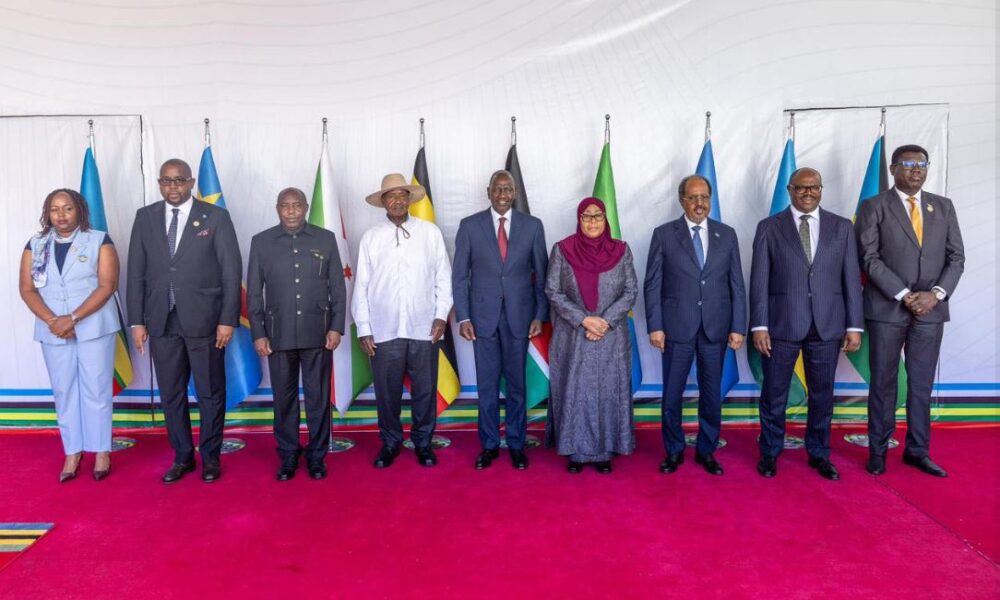
The Arusha summit, held on March 7, brought together leaders from across the region to review progress on integration and assess the implementation of key programmes designed to deepen economic and trade cooperation.
Held under the theme “Deepening Integration for Improved Livelihoods of EAC Citizens,” the summit reflected the bloc’s ambition to translate regional policies into tangible benefits for ordinary citizens.
For South Sudan, which joined the EAC in 2016, the progress of regional integration carries significant implications for trade and access to regional markets. As a landlocked country, South Sudan relies heavily on imports from neighbouring states, particularly through transport corridors linking it to Uganda and Kenya.
Much of the country’s essential commodities, including fuel, food items and manufactured goods, are transported through the Nimule border crossing with Uganda, making regional trade cooperation critical to sustaining supply chains.
Disruptions along these corridors have previously triggered price increases in domestic markets, highlighting the importance of smooth cross‑border trade arrangements between South Sudan and other EAC member states.
Effective integration into the bloc’s trade and customs frameworks could help stabilize supply chains and reduce the vulnerability of South Sudan’s economy to shocks.
The summit also discussed regional peace and security concerns, particularly the ongoing instability in eastern Democratic Republic of Congo, which leaders warned could undermine economic activity and cooperation across the region.
The communiqué called on all parties to cease hostilities and commit to peaceful resolution of the conflict. Leaders stressed that continued violence in the region threatens stability and risks undermining progress made in advancing regional integration and economic cooperation.
Conflict in eastern Congo has displaced millions of civilians and disrupted economic activities in parts of the Great Lakes region, affecting trade routes and humanitarian operations across neighbouring countries.
For South Sudan, which shares borders with Uganda and the DRC, instability in the wider region poses risks to its own fragile economy and security environment.
Beyond peace and security, the summit adopted a new EAC financing formula requiring partner states to fund half the budget equally and the other half based on economic capacity.
They also launched the 7th EAC Development Strategy (2026/27–2030/31) and rolled out the EAC Customs Bond to facilitate trade.
Regional leaders reaffirmed their commitment to strengthening collaboration among member states and advancing initiatives designed to improve infrastructure connectivity, harmonize trade policies and promote economic growth across the bloc.
Such initiatives are particularly important for countries like South Sudan, where regional transport corridors serve as vital economic lifelines connecting the country to ports and markets in neighbouring states.
South Sudan’s summit obligations underscore both the opportunities and challenges of integration, with treaty domestication and political consultations requiring coordinated national action across government, civil society, and political actors.
Successful completion of these processes would enable South Sudan to fully align with EAC frameworks and benefit more directly from regional programmes.
The summit concluded with leaders pledging to deepen integration and address challenges that could hinder economic progress and stability within the East African Community.
The EAC currently brings together eight member states; Burundi, the Democratic Republic of Congo, Kenya, Rwanda, Somalia, South Sudan, Tanzania and Uganda working toward closer economic, political and social cooperation across East Africa.