



By Alan Clement
Central Equatoria State (CES) Leaders have pledged to work together regardless of their different party affiliations.
The group vowed to put efforts to strengthen unity with hope to strengthen service delivery for their people.
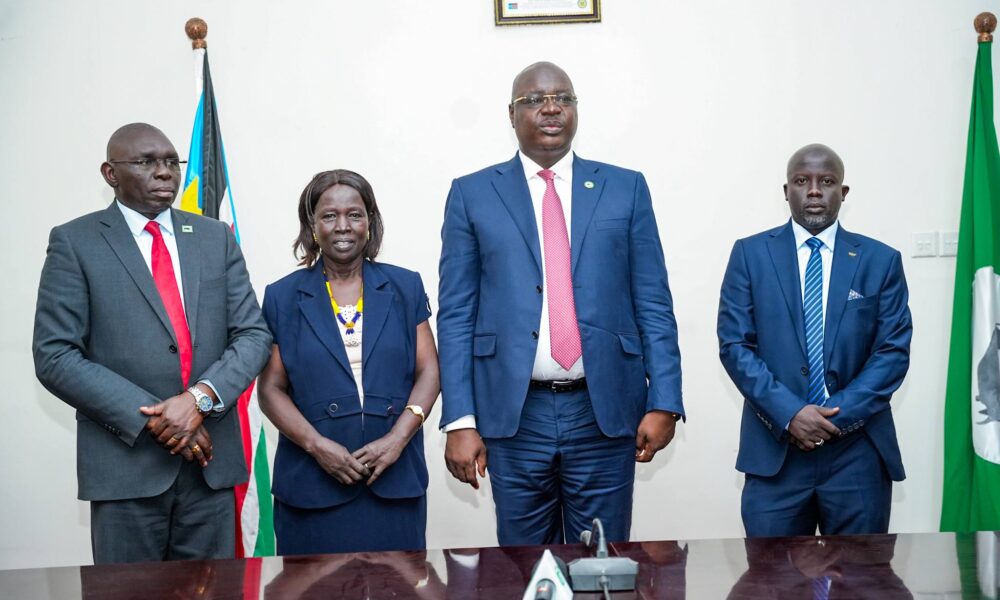
The officials used the March 16, 2026 swearing-in ceremony of the recently appointed State officials to project unity, emphasizing cooperation, continuity, and urgent priorities for stability and elections despite political differences.
Speaking at the ceremony, Anna Kaku Samson, the state Advisor on Political Affairs, framed political divisions as manageable and non-disruptive to governance, insisting that leaders must prioritise public service over party interests.
“Our agenda in this state is the people of Central Equatoria State, and the common agenda of ours is to be united and work for the people of the state,” she said.
She continued, “We are supposed to serve as one. But the difference of the political parties, these are administrative differences, political differences.”
Her remarks reflect a broader effort by state authorities to present a unified front at a time when political fragmentation has continued to shape governance dynamics across South Sudan. While acknowledging differences, Anna emphasised collective responsibility and loyalty to national leadership.
“We are going to work together, we work as a team, united, so that we can take Central Equatoria ahead,” she added, pledging support to both state and national leadership “so that this country can move ahead and move together.”
The unity messaging comes against the backdrop of ongoing preparations for long-delayed elections, which remain a central pillar of South Sudan’s fragile peace process. Political competition among parties has often complicated efforts to deliver services and implement reforms at both national and sub-national levels.
Anna’s call for unity was echoed by Deputy Governor Paulino Lukudu who went further, linking the credibility of government institutions to their ability to deliver tangible services, particularly in facilitating the return of displaced populations.
“We have a lot of roles to do,” Lukudu said adding, “We need to bring, going forward, our refugees and the IDPs back as we are preparing the country for elections. And we will bring them back through service delivery.”
His remarks underscore a key policy direction where improved access to basic services such as healthcare, education, infrastructure, and security will be central to encouraging the voluntary return of millions of South Sudanese displaced by years of conflict and instability.
South Sudan continues to face one of the largest displacement crises in the region, with millions of citizens either internally displaced or living as refugees in neighbouring countries. Returns have remained slow, often hindered by insecurity, lack of infrastructure, and limited access to essential services in areas of origin.
By tying returns to service delivery, state officials appear to be signalling a shift toward development-driven reintegration however, such efforts require sustained investment and coordination, particularly in a context marked by economic strain and institutional weaknesses.
Lukudu acknowledged the broader challenges facing the country, describing the current moment as critical. “This appointment came at a critical time. The time that the country is disunited, the time that the country is facing huge economic challenges,” he said.
He pointed to multiple priority sectors requiring urgent attention, including road rehabilitation, agricultural development, human rights protection, and education; areas that directly affect both resident and returning populations.
“The services that we will give to our people will build the confidence of our people in their government,” Lukudu said.
“Because we must build confidence of our people back to the government. And this is our work collectively,” he continued.
Governor Emmanuel Adil Anthony reinforced the emphasis on continuity and coordination within government institutions, urging newly appointed officials to ensure smooth transitions and cooperation across offices.
“The progress we have achieved together has been built upon commitment and sacrifice,” he said, calling for proper handovers and consultation to avoid disruption of government programmes and tasked the Political Affairs Advisor to foster dialogue and harmony among political actors to maintain stability.
The convergence of messages of unity despite differences, service delivery as a priority, and the return of displaced populations highlights the state government’s attempt to align governance efforts with the broader national goal of preparing for elections.
Yet questions remain about the feasibility of these commitments. The scale of displacement, coupled with economic constraints and persistent insecurity in parts of the country, poses significant challenges to both service delivery and large-scale returns.
As the election timeline approaches, the effectiveness of these pledges may prove critical in shaping public confidence not only in Central Equatoria but across South Sudan where citizens have long called for improved services, accountability, and lasting peace.
For now, state leaders are betting that unity in governance and a renewed focus on service delivery can bridge political divides and lay the groundwork for both the return of displaced populations and a credible electoral process.